
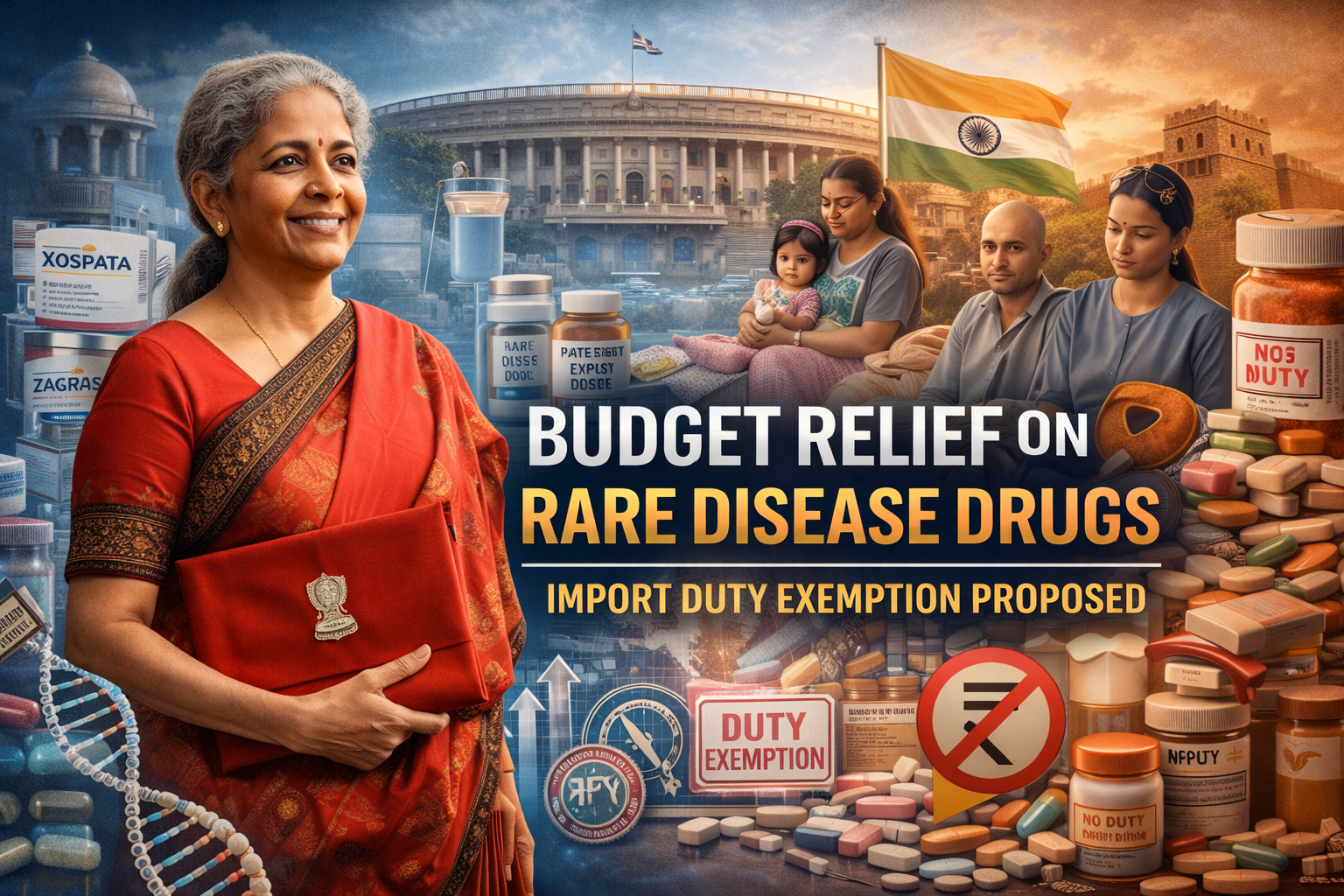
India’s Union Budget has delivered a much-needed policy signal for patients battling rare and life-threatening diseases. By proposing import duty exemptions on seven rare disease drugs, along with full duty waivers on 17 anti-cancer medicines, the government has taken a step toward easing the financial burden associated with high-cost treatments. While patient groups and industry stakeholders have largely welcomed the move, experts caution that duty relief alone may not be enough to ensure true affordability for most Indian families.
What the Budget Proposal Includes
In her budget speech, the Finance Minister announced the addition of seven more rare diseases to the list eligible for customs duty exemption on personal imports of drugs, medicines, and food for special medical purposes (FSMP). These exemptions apply specifically to treatments used for managing complex and often lifelong conditions.
The newly covered rare disease conditions include:
-
Congenital hyperinsulinemia hypoglycaemia
-
Familial homozygous hypercholesterolemia
-
Alpha mannosidosis
-
Primary hyperoxaluria
-
Cystinosis
-
Hereditary angioedema
-
Primary immune deficiency disorders
In parallel, the budget also proposes complete customs duty waivers on 17 anti-cancer drugs, continuing the government’s broader effort to rationalize import duties on critical, patented medicines.
Why Rare Disease Drug Costs Are So High
Rare diseases affect a small percentage of the population, but their treatments are among the most expensive in modern medicine. Limited patient pools, complex biologic manufacturing, long R&D cycles, and patent protections all contribute to high prices. In India, where insurance coverage for rare diseases remains limited, most patients rely on out-of-pocket spending, making affordability a major challenge.
Customs duties, typically ranging between 10–15%, further inflate the cost of imported medicines. Removing this layer of taxation directly reduces the final price paid by patients, offering immediate, though partial, relief.
Relief for Patients, But Not a Complete Solution
Patient advocacy groups have acknowledged that the duty exemption is a meaningful step, particularly for families purchasing medicines on their own. A 10–15% reduction in cost can translate into significant savings over the course of long-term treatment.
However, many stakeholders emphasize that duty cuts do not change the base price of rare disease therapies, which can run into several lakhs or even crores of rupees annually. For the majority of Indian households, even a reduced price remains far beyond reach.
This highlights a broader policy gap—while tax relief helps, it does not address structural issues such as price negotiation, reimbursement mechanisms, or domestic manufacturing of complex therapies.
Anti-Cancer Drug Duty Waivers: A Continued Trend
The inclusion of 17 anti-cancer drugs under full duty exemption aligns with the government’s actions over the past few years. Customs duties on several patented oncology and rare disease medicines have been gradually reduced or eliminated to improve access.
In previous budgets, dozens of medicines were added to the exemption list, reflecting a consistent policy direction: prioritizing access to life-saving treatments over revenue collection. Cancer, like rare diseases, often involves prolonged treatment and high cumulative costs, making tax relief particularly impactful for patients.
The Bigger Question: Long-Term Affordability
While the budget proposal provides immediate financial relief, healthcare economists argue that sustainable affordability requires a multi-pronged approach. This could include:
-
Expansion of public funding under rare disease policies
-
Stronger price control or negotiated pricing for essential therapies
-
Encouraging domestic development and manufacturing of orphan drugs
-
Improved insurance coverage and reimbursement frameworks
-
Public–private partnerships for advanced and biologic therapies
Without these complementary measures, duty exemptions risk becoming symbolic rather than transformative.
Impact on the Pharmaceutical Ecosystem
From an industry perspective, duty exemptions improve short-term accessibility but also underscore India’s dependence on imported high-end therapies. The move indirectly reinforces the need to strengthen domestic capabilities in advanced pharmaceuticals, biologics, and orphan drug development.
A more robust local ecosystem could, over time, reduce reliance on imports, stabilize pricing, and improve availability—benefiting both patients and the healthcare system as a whole.
Patient Voices and Policy Expectations
Patient organizations have welcomed the intent behind the budget proposal, recognizing it as a sign that rare diseases are gaining policy attention. For many families, even modest savings can mean the difference between continuing or discontinuing treatment.
At the same time, advocacy groups are urging policymakers to go further—by aligning tax relief with funding support, faster approvals, and long-term access programs that reflect the realities of rare disease care in India.
Conclusion
The proposal to exempt seven rare disease drugs and waive duties on multiple anti-cancer medicines marks a compassionate and pragmatic step in India’s healthcare policy. It provides tangible relief to patients facing overwhelming medical expenses and signals the government’s commitment to improving access to critical therapies.
However, duty exemptions alone cannot solve the affordability crisis surrounding rare diseases. To truly change outcomes, this fiscal relief must be part of a broader, sustained strategy that addresses pricing, funding, and domestic capability building. Only then can life-saving medicines move from being marginally cheaper to genuinely accessible for the millions who need them most.