
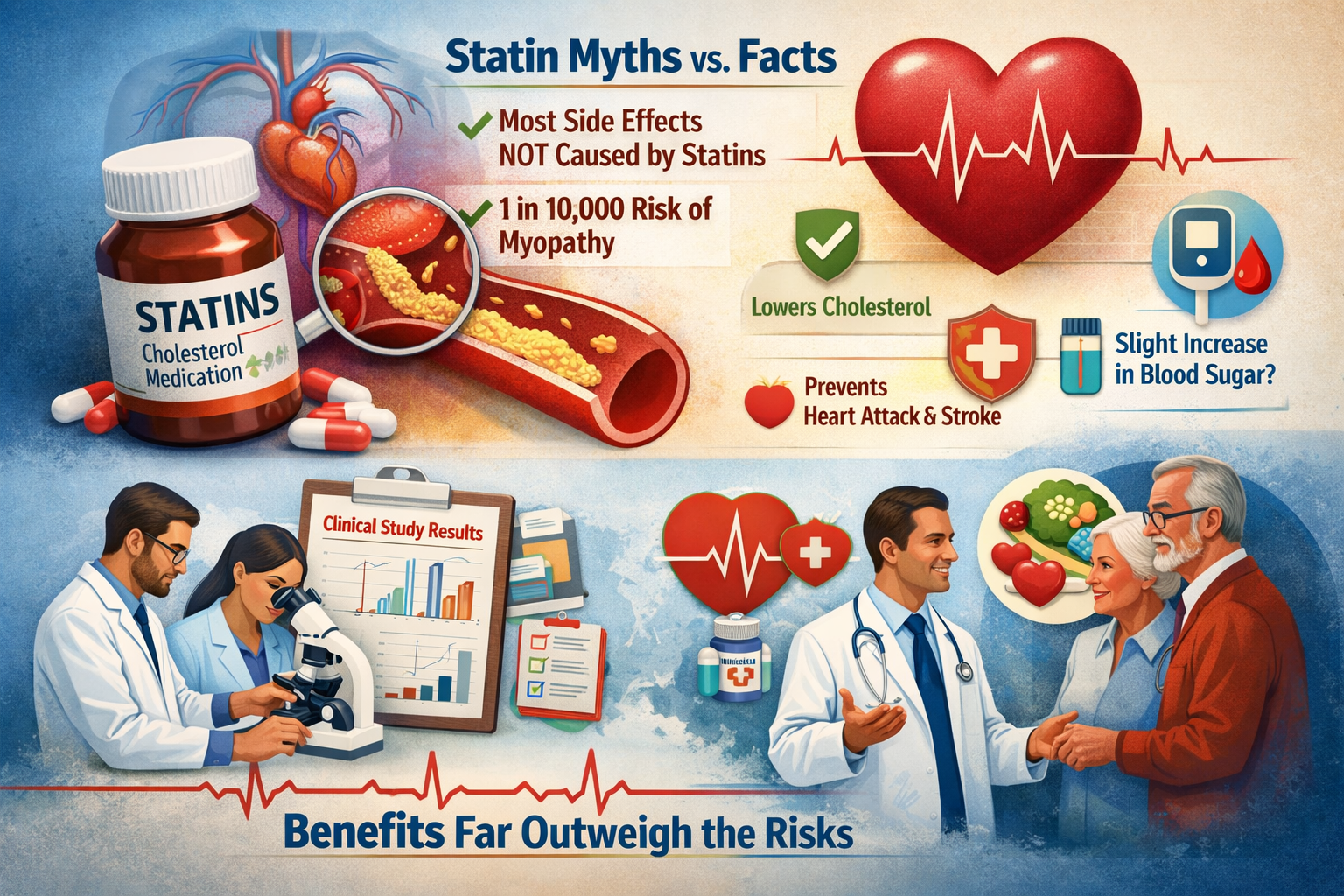
Statins are among the most widely prescribed medicines in the world for lowering cholesterol and reducing the risk of heart attacks and strokes. Despite decades of use and strong clinical evidence, fear around statin-related side effects has led many high-risk patients to avoid or discontinue treatment. Recent large-scale analyses of clinical trial data provide much-needed clarity, showing that most side effects commonly blamed on statins are not actually caused by these drugs.
This article explains what the latest evidence reveals, why misconceptions persist, and how patients and healthcare professionals can make better, evidence-based decisions.
Why Statins Have a Reputation for Side Effects
Over the years, statins have been linked—often through anecdotal reports and non-randomized studies—to a wide range of symptoms. Package inserts list dozens of possible adverse effects, from muscle pain and memory issues to sleep disturbances and digestive problems. While these lists aim to ensure transparency, they can unintentionally create anxiety and discourage adherence.
As a result, many individuals at high cardiovascular risk hesitate to start statin therapy or stop it prematurely, increasing their chances of heart attack or stroke.
What the Large Clinical Analysis Found
A comprehensive analysis of randomized clinical trials involving more than 154,000 participants followed for at least two years provides a clearer picture. Randomized trials are considered the gold standard in medical research because they minimize bias and allow direct comparison between people taking statins and those taking placebos.
Key findings include:
-
Most reported side effects occur at similar rates in people taking statins and those taking placebos.
-
Out of more than 60 potential adverse effects listed on statin labels, only four showed a slightly higher occurrence with statin use.
-
For the vast majority of symptoms—such as memory loss, depression, sleep issues, sexual dysfunction, weight gain, gastrointestinal complaints, and nervous system symptoms—there was no meaningful difference between the statin and placebo groups.
This suggests that while patients may experience these symptoms during statin therapy, there is no strong evidence that statins are the direct cause.
Muscle Problems: Rare but Real
One genuine side effect associated with statins is myopathy, a muscle disorder. However, the risk is much lower than commonly believed:
-
Occurs in approximately 1 out of every 10,000 patients per year
-
Most likely to appear during the first year of treatment
-
Severe muscle damage remains extremely rare
For the overwhelming majority of patients, muscle-related risks are minimal when statins are used appropriately and monitored correctly.
Small Increases in Certain Risks
The analysis did identify a very small increase in a few laboratory-related findings:
-
Liver enzyme abnormalities increased by about 0.1%
-
No increase in serious liver diseases such as hepatitis or liver failure
-
Minor changes in urine composition were seen in less than 1% of users
-
Slight increase in fluid retention (edema), with an absolute risk difference of just 0.07%
Importantly, these changes were typically mild, reversible, and not associated with long-term organ damage.
Blood Sugar and Diabetes Risk
Statins have been associated with a small rise in blood sugar levels. In some individuals, this may contribute to a higher risk of developing type 2 diabetes. However, experts emphasize that the cardiovascular benefits far outweigh this modest risk, especially in patients already prone to heart disease.
Why Confusion Still Exists
Many adverse effects listed on medicine labels originate from observational or non-randomized studies, which are more prone to bias. When patients expect side effects, they may be more likely to notice and report normal day-to-day symptoms, attributing them to the medication. This phenomenon, often referred to as the nocebo effect, plays a significant role in statin intolerance.
This ongoing confusion affects not only patients but also healthcare providers, leading to underuse of one of the most effective tools for cardiovascular risk reduction.
Proven Benefits That Cannot Be Ignored
Statins consistently demonstrate the ability to:
-
Lower “bad” cholesterol levels
-
Reduce the risk of first and recurrent heart attacks
-
Lower the likelihood of strokes
-
Improve long-term cardiovascular survival
For people at moderate to high cardiovascular risk, avoiding statin therapy due to unfounded fears can have serious consequences.
The Bigger Picture in the Indian Pharmaceutical Landscape
Evidence-based medicines play a critical role in public health, especially in countries with a high burden of cardiovascular disease. Reliable access to quality-assured medicines is equally important. This is why discussions around supply, affordability, and distribution—such as those involving a
monopoly medicine company in India—are increasingly relevant to ensuring consistent treatment outcomes nationwide.
Conclusion
High-quality clinical evidence clearly shows that statins do not cause most of the side effects commonly attributed to them. While a small number of risks exist, they are rare, manageable, and significantly outweighed by the life-saving benefits these medicines provide.
Patients should not discontinue statins based on fear alone. Instead, decisions should be guided by robust clinical data, individual risk assessment, and informed discussions with healthcare professionals. Clearer communication and updated medicine labeling can go a long way in restoring confidence and improving long-term cardiovascular health outcomes.