
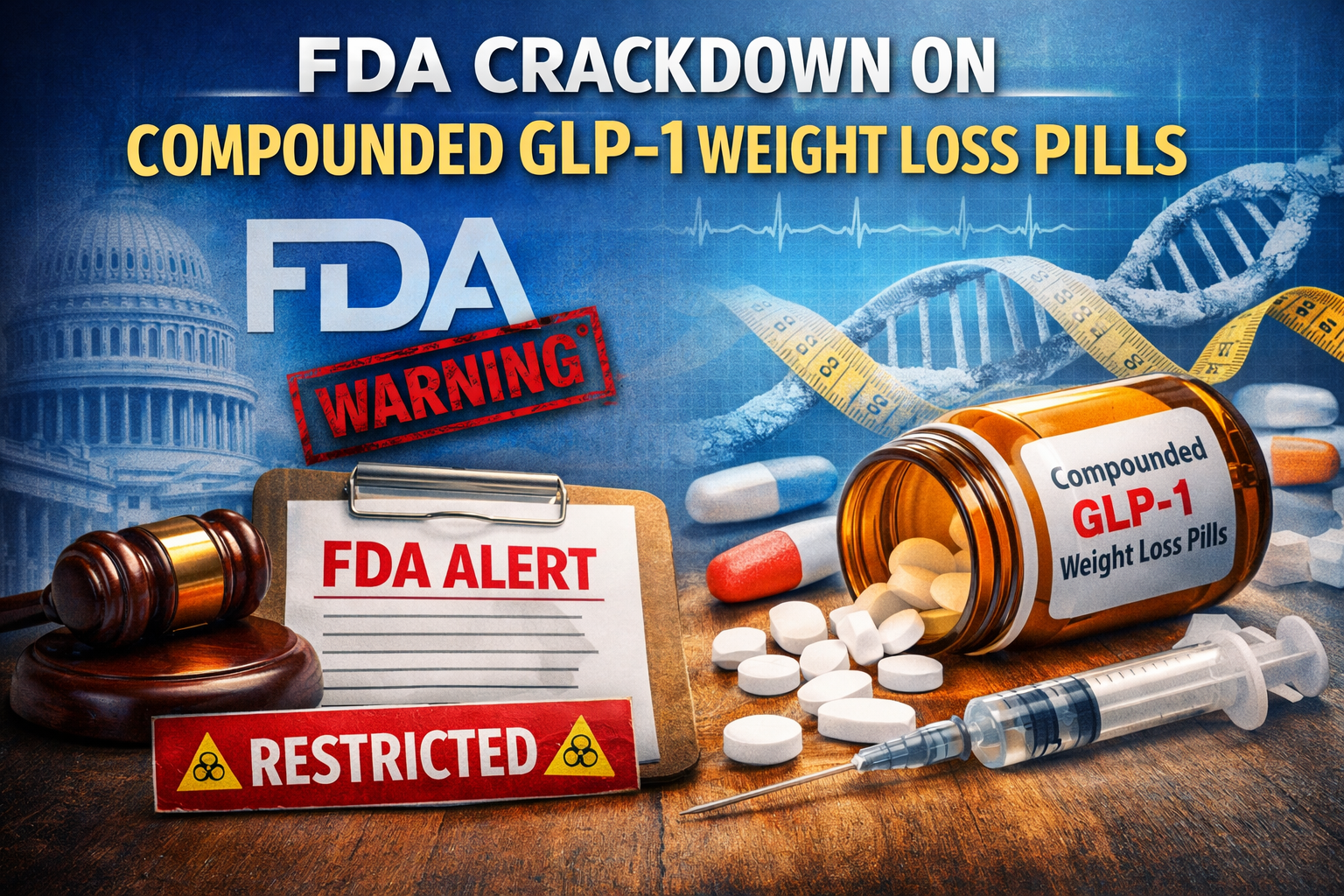
The global weight-loss drug market has been expanding at an unprecedented pace, driven largely by the popularity of GLP-1–based therapies. These medications, originally developed for diabetes management, have shown significant effectiveness in supporting weight reduction. However, rising demand, high prices, and limited availability have encouraged alternative supply routes—most notably compounded GLP-1 formulations offered through online telehealth platforms.
In a major regulatory development, a leading U.S. telehealth platform recently announced that it will stop offering a compounded GLP-1 weight-loss pill after the U.S. Food and Drug Administration (FDA) issued a warning about stricter enforcement. This decision highlights growing concerns around patient safety, regulatory compliance, and the legal boundaries of drug compounding.
Understanding Compounded GLP-1 Drugs
Compounding is a long-standing pharmaceutical practice in which licensed pharmacies mix or alter drug ingredients to meet specific patient needs, such as customized dosages or alternative dosage forms. Under the Federal Food, Drug, and Cosmetic Act, compounding is permitted only in limited and clearly defined circumstances.
In recent years, compounding has expanded beyond niche medical needs into the mass market, particularly for high-demand weight-loss drugs. Many patients have turned to compounded versions because they are often significantly cheaper than FDA-approved options. However, these products are not FDA-approved, have not undergone clinical trials, and lack robust data proving safety, quality, and efficacy.
FDA’s Concerns: Safety, Quality, and Legal Compliance
The FDA has made it clear that it plans to restrict the use of GLP-1 ingredients in compounded medicines, citing several critical concerns:
-
Quality control issues due to inconsistent manufacturing standards
-
Safety risks arising from untested formulations
-
Unsubstantiated claims made directly to consumers
-
Potential violations of federal law, especially when compounded drugs are marketed as equivalents to approved therapies
Regulators emphasized that compounded drugs should not be promoted as substitutes for FDA-approved medicines, particularly when no clinical evidence supports such claims. As a result, enforcement actions, including referrals to the Department of Justice, are now being considered.
Impact on the Weight-Loss Drug Market
News of the FDA’s stance has had ripple effects across the pharmaceutical and healthcare sectors. Investors reacted quickly, leading to short-term volatility in the weight-loss drug market. At the same time, healthcare professionals and patients have been reminded of the importance of evidence-based treatment options.
This development also underscores a broader issue: the tension between drug affordability and regulatory oversight. While lower-cost alternatives may improve access, they cannot come at the expense of patient safety.
Why FDA Approval Matters
FDA approval is not a formality—it is a rigorous, multi-phase process designed to ensure that medications are:
-
Clinically effective
-
Safe for long-term use
-
Manufactured under strict quality standards
Compounded drugs bypass this process. Without clinical trials, there is no reliable data on dosing accuracy, side effects, or long-term outcomes. This is why regulators continue to caution patients against relying on compounded copies of popular therapies, especially for chronic conditions like obesity.
Lessons for the Pharmaceutical Industry
The recent crackdown serves as a wake-up call for telehealth platforms, online pharmacies, and pharmaceutical stakeholders worldwide. Sustainable growth in healthcare requires regulatory alignment, ethical marketing, and patient-first decision-making.
In markets like India, where affordability and access are also key challenges, companies are increasingly exploring compliant business models such as ethical contract manufacturing and exclusive product distribution. For example, working with a trusted pharma contract manufacturing company allows businesses to develop high-quality medicines while adhering to national and international regulations.
Similarly, the concept of a monopoly medicine company in India—where a single distributor has exclusive rights to market a product in a specific region—offers a compliant way to balance profitability with quality assurance, without compromising regulatory standards.
What This Means for Patients
For patients seeking weight-loss solutions, this situation reinforces several important takeaways:
-
Always verify whether a medicine is FDA-approved or regulator-approved
-
Be cautious of extremely low-priced alternatives that lack clinical evidence
-
Consult qualified healthcare professionals before starting any weight-loss therapy
While innovation in digital health is essential, it must operate within established safety frameworks.
Conclusion
The decision to halt the sale of compounded GLP-1 pills following FDA warnings marks a significant moment in the evolution of the weight-loss drug market. It highlights the fine balance between innovation, affordability, and patient safety. As regulators tighten oversight, pharmaceutical and telehealth companies will need to adopt transparent, compliant, and evidence-based strategies to maintain trust and long-term growth.
Ultimately, sustainable healthcare progress depends not just on faster access or lower prices, but on medicines that are safe, tested, and responsibly delivered to the people who need them most.