
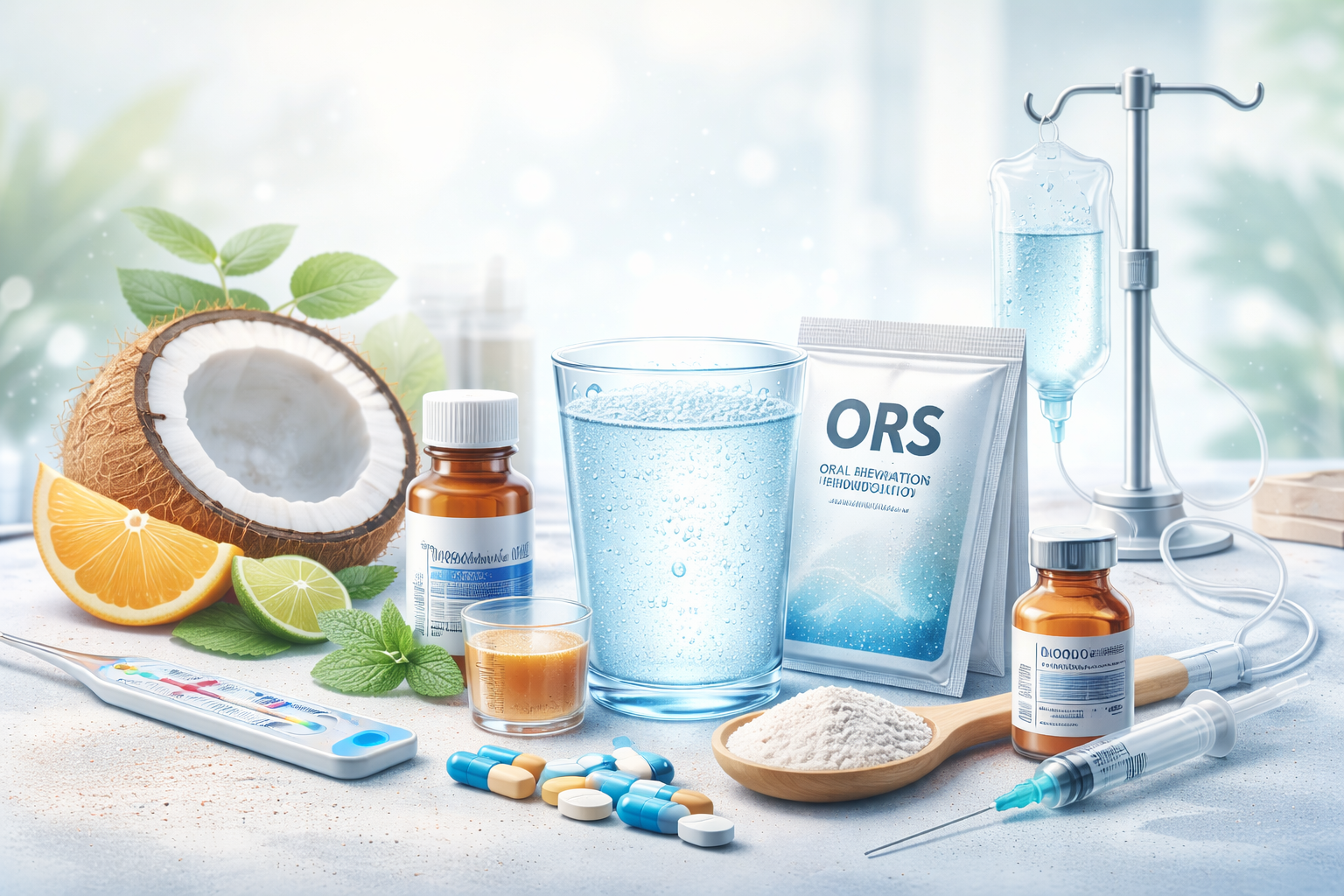
Summer brings a sharp rise in summer health problems, especially dehydration, heat exhaustion, loose motion, vomiting, viral fever, and skin infections. Among these, dehydration treatment becomes one of the most searched healthcare concerns, particularly in hot and humid regions.
Search trends show high interest in keywords like dehydration treatment, dehydration therapy, oral rehydration, oral rehydration solution, dehydration medicine, and IV fluids for dehydration. This indicates growing awareness—but also highlights the need for accurate guidance.
This blog explains symptoms, home management, medical treatment options, and recommended products for effective dehydration management.
Symptoms of Dehydration
Recognizing the symptoms of dehydration early can prevent complications. Common signs include:
-
Excessive thirst
-
Dry mouth and lips
-
Dark yellow urine
-
Fatigue and dizziness
-
Headache
-
Low blood pressure
-
Rapid heartbeat
In severe cases, patients may require urgent dehydration therapy, including hospital-based care.
Oral Rehydration: First-Line Dehydration Treatment
The most effective first response for mild to moderate dehydration is oral rehydration. It restores lost fluids and electrolytes quickly and safely.
What is Oral Rehydration Solution (ORS)?
Oral Rehydration Solution (ORS) contains a scientifically balanced mix of:
-
Glucose
-
Sodium
-
Potassium
-
Chloride
-
Citrate
This combination enhances water absorption in the intestine and prevents electrolyte imbalance.
Recommended ORS Products
For effective rehydration solutions, the following formulations are widely used:
-
AMZOR-ORS – Contains Dextrose, Potassium Chloride, Sodium Chloride, and Sodium Citrate. Suitable for dehydration caused by diarrhea, vomiting, or heat exposure.
-
JWL ORS – Enriched with electrolytes, calcium, magnesium, and Vitamin C, making it ideal for dehydration treatment at home and daily electrolyte replenishment during extreme summer heat.
Both options support safe oral rehydration therapy and are appropriate for adults and children.
Dehydration Treatment at Home
For mild cases, home remedies for dehydration may help:
-
Drinking ORS solution
-
Coconut water
-
Lemon water with salt and sugar
-
Buttermilk
-
Clear vegetable soups
However, if symptoms persist beyond 24 hours or worsen, medical intervention becomes necessary.
When Is IV Fluid Required?
Severe dehydration, persistent vomiting, diarrhea, or heatstroke may require:
-
IV fluids for dehydration
-
Intravenous fluids for dehydration
-
Hospital-based dehydration management
In cases of bacterial infection causing high fever or systemic complications, injectable antibiotics may be prescribed. For example:
-
NEPA-1000 – An injectable antibiotic used in managing serious bacterial infections that may accompany severe dehydration due to gastrointestinal infections.
IV infusion helps rapidly restore fluid balance when oral rehydration is insufficient.
Dehydration Medicine for Adults & Children
Sometimes dehydration is linked with fever, viral infection, or body pain. In such cases, supportive medications may be required.
-
IBUYAN Suspension – A Paracetamol & Ibuprofen combination suspension effective for fever and body pain relief. Useful in cases where dehydration is associated with viral fever or infection.
For gastrointestinal discomfort, acidity, and bloating common in summer:
-
PANON (Pantoprazole 40 mg) – Helps manage acid reflux and GERD.
-
PROWAD-DSR – Combines Pantoprazole and Domperidone for relief from acidity and nausea.
-
AMZOPAN-DSR – Gastro-resistant Pantoprazole with Domperidone for prolonged action.
These medications help address digestive disturbances that can worsen fluid loss.
Liver & Immunity Support During Summer
Recurring infections and viral illnesses can weaken immunity. Supportive herbal syrups may assist recovery:
-
PLATEWALT SYP – Contains herbal extracts such as Papita, Tulsi, Giloy, Ashwagandha, and Aloe Vera, traditionally used for immune support and general wellness.
While not a direct dehydration cure, immunity support plays a role in reducing infection-related fluid loss.
Skin Protection During Dehydration
Summer dehydration also affects the skin. Excess sweating can cause:
-
Skin irritation
-
Heat rash
-
Fungal infections
Supportive products include:
-
CALASIK Lotion – Contains Calamine, Allantoin, and Vitamin E for soothing irritated skin.
-
KETOWARD SOAP – Ketoconazole-based soap useful in preventing fungal infections caused by excessive sweating.
Maintaining skin hygiene helps prevent secondary infections during hot weather.
Rehydration Solutions for Adults
Search data also shows increasing interest in:
-
ORS solution for adults
-
Rehydration solution ORS
-
Dehydration medicine for adults
Adults working outdoors, athletes, and elderly individuals are particularly vulnerable. Regular use of oral rehydration solutions during high heat exposure reduces risk significantly.
Preventive Tips for Dehydration Management
Effective dehydration management includes:
-
Drinking 2.5–3 liters of water daily
-
Avoiding excessive caffeine and alcohol
-
Wearing light cotton clothes
-
Consuming electrolyte drinks during heat waves
-
Eating water-rich fruits like watermelon and cucumber
Early intervention reduces the need for aggressive dehydration therapy such as IV fluids.
Final Thoughts
With rising temperatures, cases requiring dehydration treatment, oral rehydration therapy, and even IV fluids for dehydration are increasing. The first step is recognizing symptoms early and starting immediate oral rehydration solution.
For mild cases, ORS and home care are sufficient. Severe dehydration, persistent fever, or infection may require medical supervision and advanced treatment.
Frequently Asked Questions (FAQ)
1. What is the best dehydration treatment?
The best dehydration treatment depends on severity. Mild to moderate dehydration can be treated with oral rehydration solution (ORS) and increased fluid intake. Severe dehydration may require IV fluids for dehydration administered in a hospital setting.
2. What is oral rehydration solution (ORS)?
Oral rehydration solution (ORS) is a scientifically formulated mixture of glucose and electrolytes that helps restore lost fluids and minerals caused by diarrhea, vomiting, fever, or excessive sweating.
3. How does oral rehydration therapy work?
Oral rehydration therapy works by using glucose to enhance sodium and water absorption in the intestines, helping the body recover hydration levels quickly and safely.
4. When are IV fluids required for dehydration?
IV fluids for dehydration are required in cases of severe dehydration, persistent vomiting, unconsciousness, or when oral rehydration is not effective. This is known as intravenous rehydration therapy.
5. What are the common symptoms of dehydration?
Common symptoms of dehydration include:
-
Dry mouth and lips
-
Dark yellow urine
-
Fatigue and dizziness
-
Dehydration headache
-
Rapid heartbeat
-
Reduced urination
Severe cases may cause confusion and low blood pressure.
6. What is dehydration treatment at home?
Dehydration treatment at home includes:
-
Drinking ORS solution
-
Increasing water intake
-
Consuming coconut water and electrolyte drinks
-
Eating water-rich fruits
-
Resting in a cool environment
If symptoms worsen, medical treatment may be required.
7. Is ORS safe for infants and adults?
Yes, oral rehydration solution for infants and adults is safe when prepared and administered correctly. Pediatric dehydration management often recommends ORS as first-line treatment.
8. Can dehydration cause headaches?
Yes. A dehydration headache occurs due to reduced fluid levels affecting brain tissue and blood circulation. Rehydration fluids and adequate rest usually relieve the pain.
9. What is dehydration management in hospitals?
Hospital dehydration management may include:
-
IV hydration therapy
-
Electrolyte monitoring
-
Intravenous fluids for dehydration
-
Treatment of underlying causes like diarrhea or infection
10. How can dehydration be prevented?
Dehydration prevention includes:
-
Drinking adequate fluids daily
-
Using ORS during diarrhea or vomiting
-
Avoiding excessive heat exposure
-
Monitoring hydration in infants and elderly