
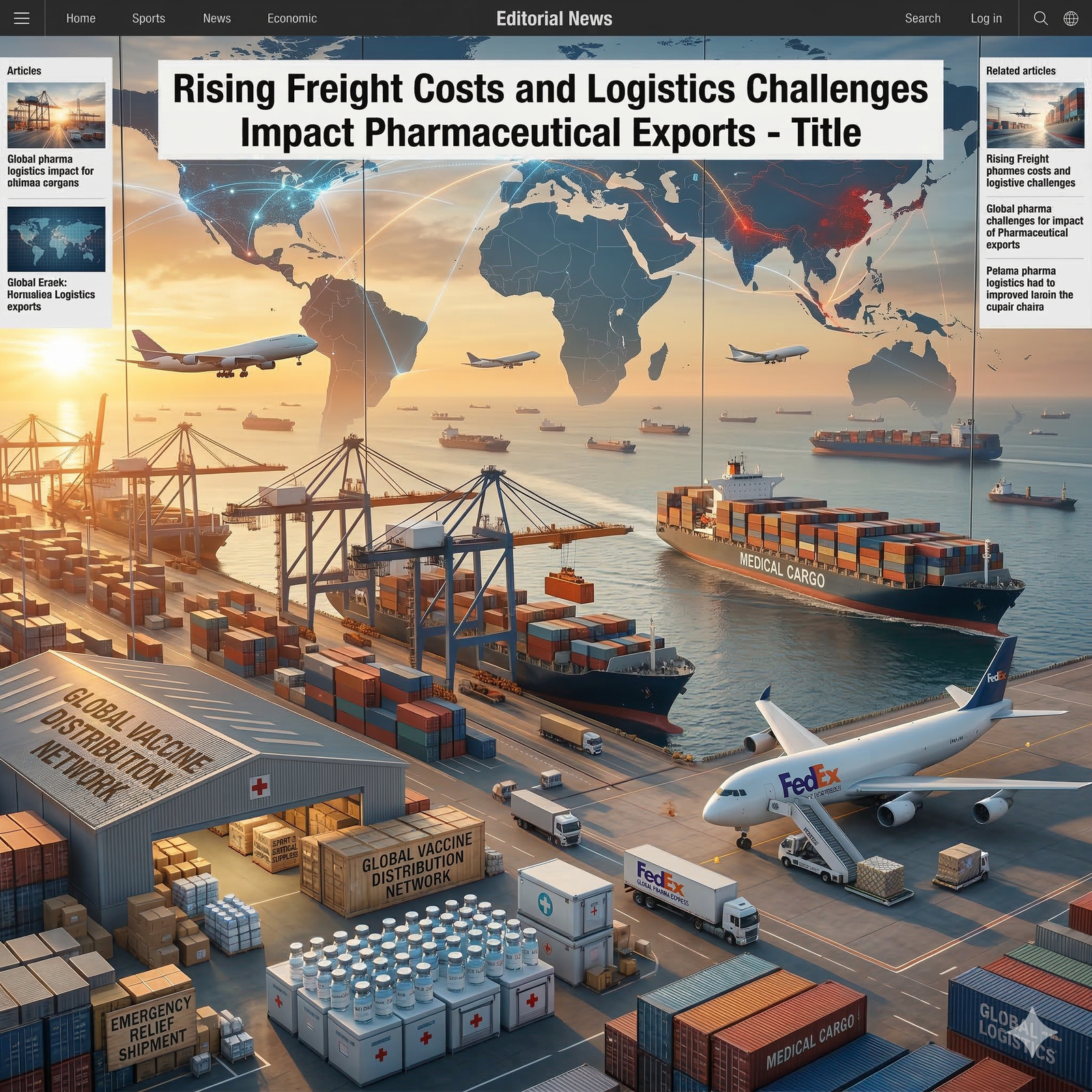
The global pharmaceutical industry depends heavily on smooth logistics and efficient supply chains to ensure the uninterrupted availability of medicines across international markets. However, recent geopolitical tensions and disruptions in major maritime routes have significantly increased freight costs and operational challenges for pharmaceutical exporters. As shipping costs surge and insurance premiums rise, exporters are seeking government support and alternative logistics strategies to maintain the supply of essential medicines worldwide.
Growing Logistics Challenges for Pharmaceutical Exports
Pharmaceutical exports rely on well-established shipping routes and stable transportation costs. However, global conflicts and instability in key regions have created logistical bottlenecks, leading to delays and higher operational expenses. Shipping companies are either rerouting vessels or reducing operations in certain regions, which has caused freight charges to increase dramatically.
In many cases, freight costs for pharmaceutical shipments have nearly doubled. Exporters now face charges ranging from $4,000 to $8,000 per shipment, depending on the destination and cargo requirements. These rising costs are putting pressure on pharmaceutical manufacturers and exporters, particularly small and medium-sized enterprises that operate on tighter margins.
Apart from freight charges, insurance premiums have also increased due to higher geopolitical risks. Transporting goods through sensitive regions requires additional coverage, which further raises the overall cost of exporting pharmaceutical products.
Importance of the West Asian Market for Pharmaceutical Exports
West Asia has emerged as one of the most important destinations for pharmaceutical exports. Countries in this region rely heavily on imported generic medicines due to growing healthcare needs and limited local manufacturing capacity.
The region includes several rapidly developing healthcare markets where demand for affordable medicines continues to rise. Over the past few years, pharmaceutical exports to these markets have grown steadily due to factors such as:
-
Increasing population and healthcare demand
-
Expansion of hospital infrastructure
-
Rising prevalence of chronic diseases
-
Greater access to generic medicines
As a result, exporters have built strong supply chains to ensure continuous availability of medicines in these markets.
However, disruptions in maritime routes that connect Asia with West Asia have created uncertainty for exporters. Delays in shipments not only affect supply timelines but also impact inventory planning and contractual commitments.
Impact of Rising Freight and Fuel Costs
One of the major challenges exporters currently face is the sharp rise in fuel prices. Higher fuel costs directly affect shipping rates, increasing the cost of transporting pharmaceutical products across long distances.
The pharmaceutical sector requires specialized packaging, temperature-controlled containers, and strict handling procedures. These requirements already make pharmaceutical logistics more expensive compared to standard cargo.
When freight rates increase, the total export cost rises significantly because exporters must also cover:
-
Cold chain logistics for temperature-sensitive medicines
-
Specialized packaging and safety compliance
-
Customs clearance and port handling charges
-
Insurance and risk coverage
For smaller exporters and manufacturers, these additional expenses can reduce profitability and make international trade more challenging.
Demand for Critical Care Medicines During Conflicts
While geopolitical conflicts disrupt supply chains, they also lead to increased demand for specific categories of pharmaceutical products. Healthcare systems in affected regions often require larger supplies of essential medicines to treat injuries, infections, and emergency medical conditions.
During such situations, demand typically rises for:
-
Trauma care medicines
-
Antibiotics and antiviral drugs
-
Pain management medications
-
Wound care products such as bandages and antiseptics
-
Surgical and emergency medical supplies
Hospitals and healthcare providers must maintain sufficient stock to handle medical emergencies and increased patient inflow during crisis situations.
Additionally, chronic disease medications remain essential because patients with conditions such as diabetes, hypertension, and cardiovascular diseases require continuous treatment regardless of external disruptions.
Diversification of Shipping Routes
To reduce the impact of disrupted maritime routes, pharmaceutical exporters are actively exploring alternative logistics solutions. Diversifying shipping routes is becoming an important strategy to maintain supply continuity.
Exporters are considering several options, including:
-
Using alternative seaports for international shipments
-
Rerouting cargo through safer maritime corridors
-
Increasing reliance on regional distribution hubs
-
Collaborating with multiple logistics providers
Although these alternatives may increase transit time, they help ensure that essential medicines continue reaching international markets.
Air Cargo as a Backup Transportation Option
When sea routes become unreliable, air cargo often serves as a critical backup option for pharmaceutical exports. Air transport offers faster delivery and better control over shipment conditions, which is particularly important for temperature-sensitive products.
However, air cargo also comes with its own limitations. Capacity constraints, higher freight charges, and operational delays can restrict the ability of exporters to rely entirely on air transport.
Despite these challenges, air cargo remains essential for transporting high-value or urgently required pharmaceutical products such as vaccines, biologics, and injectable medicines.
Managing Supply Chain Risks Through Inventory Planning
To prepare for supply chain disruptions, many exporters are strengthening their inventory management strategies. Maintaining buffer stock has become a key approach to ensuring product availability during uncertain transportation conditions.
Companies are increasing production volumes and storing additional inventory at distribution centers. This helps reduce the risk of stock shortages in export markets.
In addition, exporters are working closely with logistics partners and international distributors to monitor supply chain conditions and respond quickly to disruptions.
Rising Raw Material and Packaging Costs
Another challenge affecting pharmaceutical exporters is the rising cost of raw materials and packaging components. Supply chain disruptions often lead to shortages of key ingredients and packaging materials, which pushes manufacturing costs higher.
Packaging materials such as glass vials, plastic containers, aluminum foils, and specialized medical packaging are critical for pharmaceutical products. Any shortage or price increase in these materials can significantly impact production costs.
When combined with higher freight charges and logistics expenses, these factors create additional financial pressure on exporters.
The Need for Policy Support
Industry experts believe that government support and policy intervention can help mitigate the impact of rising export costs. Measures such as freight subsidies, export incentives, and logistical support can help exporters maintain competitiveness in international markets.
Support for small and medium-sized pharmaceutical exporters is especially important, as they contribute significantly to the global supply of affordable medicines.
With appropriate policy measures and strategic logistics planning, the pharmaceutical export sector can continue to overcome these challenges while ensuring uninterrupted access to essential medicines worldwide.
Conclusion
The pharmaceutical export industry plays a critical role in supplying affordable medicines to global markets. However, rising freight charges, geopolitical uncertainties, and supply chain disruptions are creating new challenges for exporters. By exploring alternative logistics routes, strengthening inventory strategies, and adopting efficient supply chain management practices, exporters can adapt to the evolving global trade environment.
Despite these obstacles, the long-term demand for pharmaceutical products remains strong. With continued innovation in logistics and supportive policies, the global pharmaceutical supply chain can remain resilient and capable of delivering life-saving medicines across borders.