
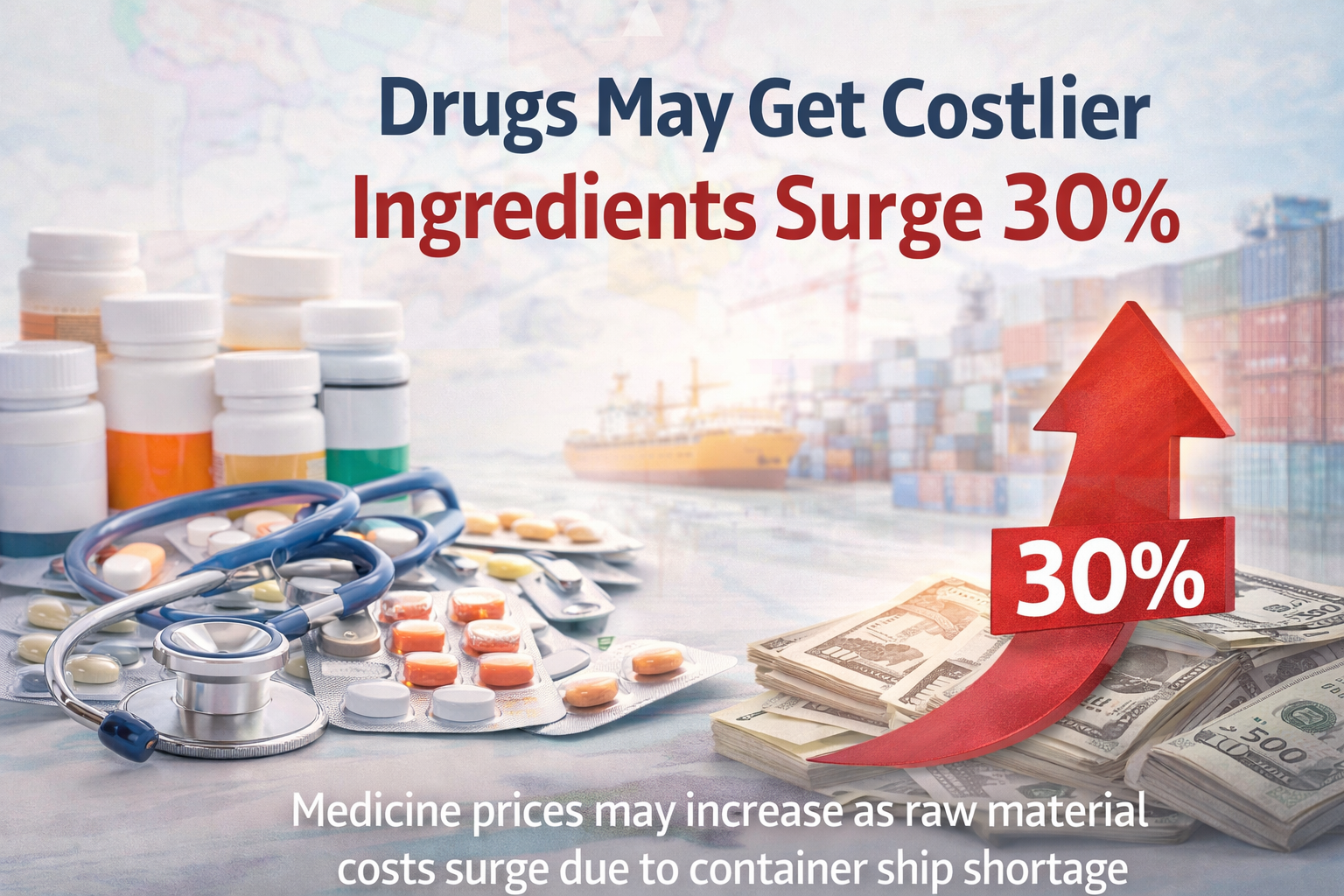
India’s pharmaceutical industry is facing a fresh wave of pressure in 2026 as the cost of raw materials—especially Active Pharmaceutical Ingredients (APIs)—has surged sharply. Reports indicate a 30% increase in input costs within just a few weeks, raising concerns about a potential rise in medicine prices across the country.
This sudden spike is largely linked to global geopolitical disruptions, particularly the ongoing tensions in West Asia. The impact is already visible in supply chains, freight rates, and production costs, forcing pharmaceutical companies to reassess pricing strategies.
Why Are Raw Material Prices Rising?
The primary reason behind the surge in raw material costs is the shortage of container ships, which has disrupted the smooth transportation of pharmaceutical ingredients. India heavily depends on imports—especially from China—for APIs and other essential raw materials.
Due to the ongoing conflict in key global regions:
-
Shipping routes have been disrupted
-
Vessel availability has declined
-
Freight charges have increased significantly
-
Delivery timelines have become unpredictable
This combination has created a supply bottleneck, pushing prices upward.
Key Raw Materials Witness Sharp Price Increase
Several critical pharmaceutical inputs have recorded substantial price hikes:
-
Glycerine: Prices increased by over 60%
-
Paracetamol API: Up by around 25–30%
-
Pharmaceutical Solvents: Surged 20–30% in a short time
Since these materials are essential for drug manufacturing, any increase directly impacts the cost of finished medicines.
Impact on Pharma Manufacturing
The rise in raw material costs is putting significant pressure on pharmaceutical manufacturers. Unlike other industries, the pharma sector operates under strict price regulations, making it difficult to pass on increased costs immediately.
Major Challenges Faced by Manufacturers:
-
Reduced profit margins
-
Increased cost of production
-
Supply chain disruptions
-
Limited pricing flexibility
Many companies are now left with two options: absorb the losses or pass the cost burden to consumers. Given the magnitude of the increase, absorbing costs is becoming increasingly unsustainable.
Rising Freight Charges Add to the Burden
Freight costs have also skyrocketed due to the shortage of shipping containers and longer trade routes. Reports suggest:
-
Freight charges have nearly doubled
-
Additional surcharges of $4,000–$8,000 per shipment
-
Delays in cargo movement
This has further escalated the overall cost of importing raw materials, compounding the problem for pharmaceutical companies.
Risk of Medicine Price Hike
With input costs rising across the board, the possibility of higher medicine prices in India is becoming more likely. Industry experts have indicated that if the situation continues, companies may be forced to increase prices to maintain operational viability.
However, drug pricing in India is regulated, which limits how much companies can raise prices. This creates a complex situation where:
-
Manufacturers struggle to maintain margins
-
Consumers may face higher costs
-
Regulatory authorities must balance affordability and sustainability
Call for Government Intervention
Industry leaders have urged the government to step in and provide relief. One of the key demands is to allow temporary price adjustments under exceptional circumstances.
Suggested Measures Include:
-
Relaxation in drug pricing regulations
-
Special approval for price hikes in essential medicines
-
Reduction in import duties
-
Support for domestic API manufacturing
Authorities may need to consider these requests carefully to ensure that the industry remains stable without compromising public access to affordable medicines.
Supply Chain Disruptions and Inventory Challenges
The pharmaceutical industry typically follows a just-in-time inventory model, where companies maintain minimal stock to optimize efficiency. However, the current crisis is exposing the risks of this approach.
With delayed shipments and uncertain supply:
-
Inventory buffers are shrinking
-
Production schedules are getting affected
-
Risk of shortages is increasing
If disruptions continue, it could impact the availability of essential medicines both in India and in export markets.
Global Impact on Indian Pharma Exports
India is a major supplier of affordable medicines to countries like the UAE, Saudi Arabia, and Oman. Any disruption in domestic production can have a ripple effect on global healthcare systems.
Rising costs and logistical challenges may:
-
Reduce export competitiveness
-
Delay international shipments
-
Impact long-term trade relationships
This makes it even more critical for the industry to stabilize supply chains quickly.
Future Outlook: What Lies Ahead?
The situation remains uncertain and largely dependent on how long geopolitical tensions persist. If the crisis continues:
-
Raw material prices may rise further
-
Freight costs could remain elevated
-
Medicine prices may increase gradually
However, this challenge also presents an opportunity for India to strengthen its domestic manufacturing capabilities and reduce reliance on imports.
Conclusion
The 30% surge in raw material costs has created a challenging environment for India’s pharmaceutical industry. From rising API prices to escalating freight charges, multiple factors are driving up production costs and putting pressure on manufacturers.
While medicine price hikes may become unavoidable in the near future, timely government intervention and strategic industry responses can help manage the impact. Strengthening domestic supply chains and investing in local production will be key to ensuring long-term stability.
In the coming months, both policymakers and industry players will need to work closely to strike a balance between affordability, sustainability, and growth in the pharmaceutical sector.