
India’s pharmaceutical sector, often regarded as the “pharmacy of the world,” is currently facing a significant challenge. A sharp rise in the prices of key chemicals and intermediates has created a cost crisis for bulk drug manufacturers, directly impacting the production of active pharmaceutical ingredients (APIs). This disruption is not only affecting manufacturers but also posing potential risks to the overall medicine supply chain.
Understanding the API Supply Chain Pressure
Active Pharmaceutical Ingredients (APIs) are the core components responsible for the therapeutic effect of any medicine. Their production depends heavily on a steady supply of raw materials such as solvents, reagents, and chemical intermediates.
Recently, the prices of these essential inputs have surged dramatically due to global supply disruptions. A major contributing factor is geopolitical tension in West Asia, which has impacted the availability and cost of crude oil and petrochemical derivatives—key inputs in API manufacturing.
As a result, pharmaceutical manufacturers are experiencing unprecedented pressure on their production costs.
Paracetamol: A Key Indicator of Industry Stress
One of the clearest examples of this crisis is the widely used drug paracetamol. Being a staple medicine in households across India, any fluctuation in its production cost signals deeper issues within the pharmaceutical supply chain.
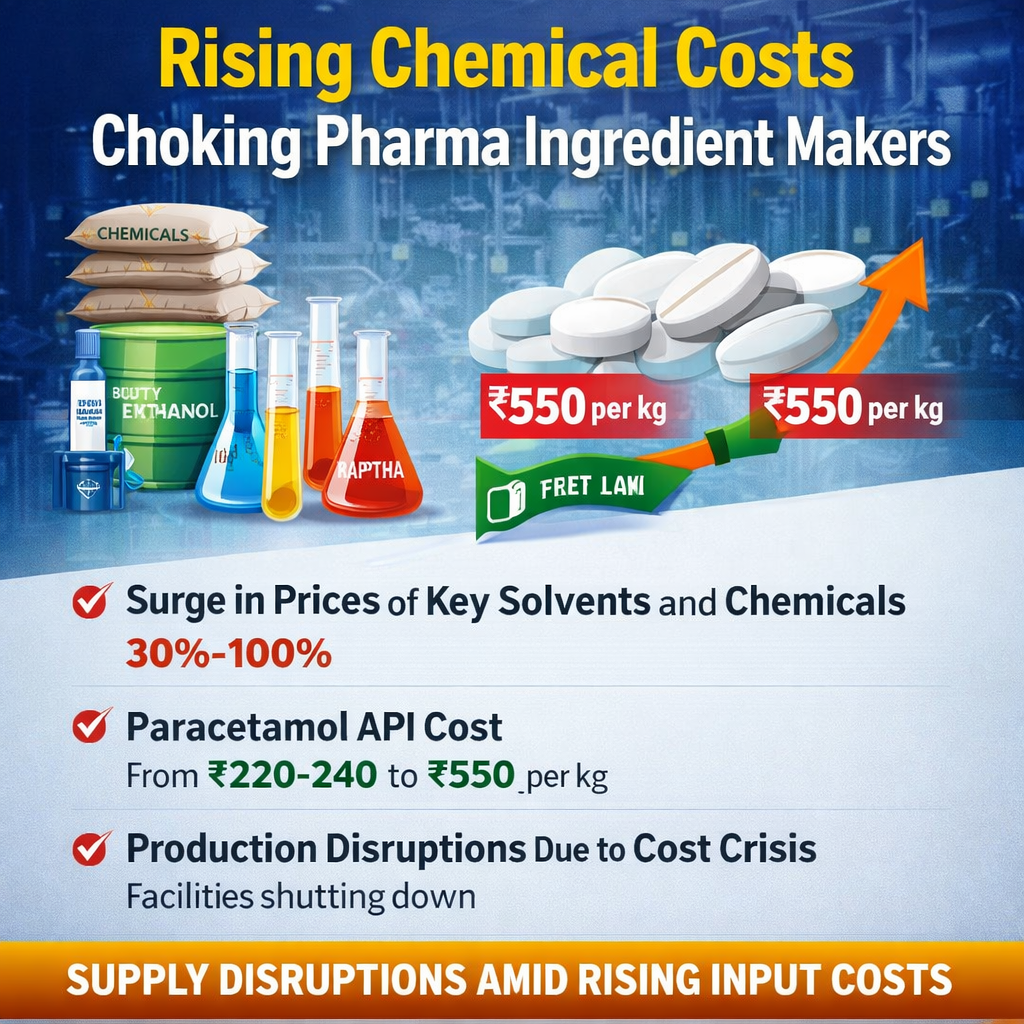
In recent weeks, the price of paracetamol API has more than doubled:
- Earlier price: ₹220–240 per kg
- Current price: ₹550–600 per kg
This steep increase is primarily driven by shortages of essential raw materials and rising energy costs. Despite this surge, the retail price of paracetamol tablets remains capped under government regulations, creating a severe margin squeeze for manufacturers.
Impact of Government Price Controls
The pharmaceutical industry in India operates under strict pricing regulations, particularly for essential medicines. The Drug Price Control Order (DPCO) ensures that critical drugs remain affordable for the general public.
However, this system also creates challenges during cost escalations. While API prices have surged, the retail price of formulations like paracetamol tablets remains fixed. This disconnect means:
- Manufacturers cannot pass on increased costs to consumers
- Profit margins shrink significantly
- Smaller players struggle to sustain operations
This imbalance is forcing many companies to reassess their production strategies.
Sharp Increase in Chemical and Solvent Prices
The cost surge is not limited to a single input but spans across multiple essential chemicals used in API manufacturing. Several key substances have witnessed price increases ranging from 30% to 100% within a short period.
Some of the most affected inputs include:
- Isopropyl alcohol
- Acetic anhydride
- Ammonia
- Naphtha
- Dimethylformamide
- Butyl ethanol
These chemicals are closely linked to crude oil and petrochemical supply chains. Any disruption in these sectors has a cascading effect on pharmaceutical production.
Double Pressure from Domestic and Global Markets
API manufacturers are currently facing a “double crisis”:
- Domestic suppliers increasing prices due to limited availability
- International suppliers, especially from major exporting countries, raising costs
This combined pressure has made it increasingly difficult for manufacturers to maintain stable production levels. In some cases, companies are being forced to temporarily halt operations due to unviable cost structures.
Production Slowdowns and Facility Shutdowns
The rapid escalation in input costs has already led to operational disruptions across the industry. Many small and mid-sized manufacturers, particularly those operating with thin margins, are:
- Reducing production capacity
- Pausing operations temporarily
- Delaying new manufacturing batches
Contract development and manufacturing organizations (CDMOs), which play a crucial role in the pharma ecosystem, are among the hardest hit. Their dependency on bulk chemicals makes them highly vulnerable to price volatility.
Rising Freight and Energy Costs Add to the Burden
In addition to raw material inflation, logistics and energy expenses have also increased significantly. Higher freight charges, fuel costs, and supply chain disruptions are compounding the problem.
Even large pharmaceutical companies are now closely monitoring their supply chains to ensure uninterrupted production. While they may have better financial resilience, prolonged cost pressure could eventually impact the entire industry.
Broader Implications for the Pharma Industry
The current crisis highlights several structural challenges within the pharmaceutical manufacturing ecosystem:
- Heavy reliance on imported raw materials
- Limited domestic production of key intermediates
- Vulnerability to global geopolitical events
- Price control mechanisms that limit flexibility
If these issues persist, they could lead to:
- Reduced availability of essential medicines
- Increased dependency on imports
- Financial stress across the value chain
Need for Strategic Intervention
To address these challenges, a multi-pronged approach is required:
1. Strengthening Domestic Manufacturing
Encouraging local production of key chemicals and intermediates can reduce dependency on imports and improve supply stability.
2. Policy Flexibility
Temporary adjustments in price control mechanisms may be necessary during extreme cost fluctuations to support manufacturers.
3. Supply Chain Diversification
Exploring alternative sourcing options can help mitigate risks associated with geopolitical disruptions.
4. Investment in Infrastructure
Improving chemical manufacturing infrastructure and energy efficiency can enhance long-term resilience.
Conclusion
The surge in chemical prices has exposed critical vulnerabilities in India’s pharmaceutical supply chain, particularly in API manufacturing. While the industry has demonstrated resilience in the past, the current situation demands immediate attention and strategic action.
Balancing affordability with sustainability will be key to ensuring uninterrupted access to essential medicines. As global uncertainties continue to influence raw material availability, strengthening domestic capabilities and improving supply chain resilience will be crucial for the future of the pharmaceutical sector.