
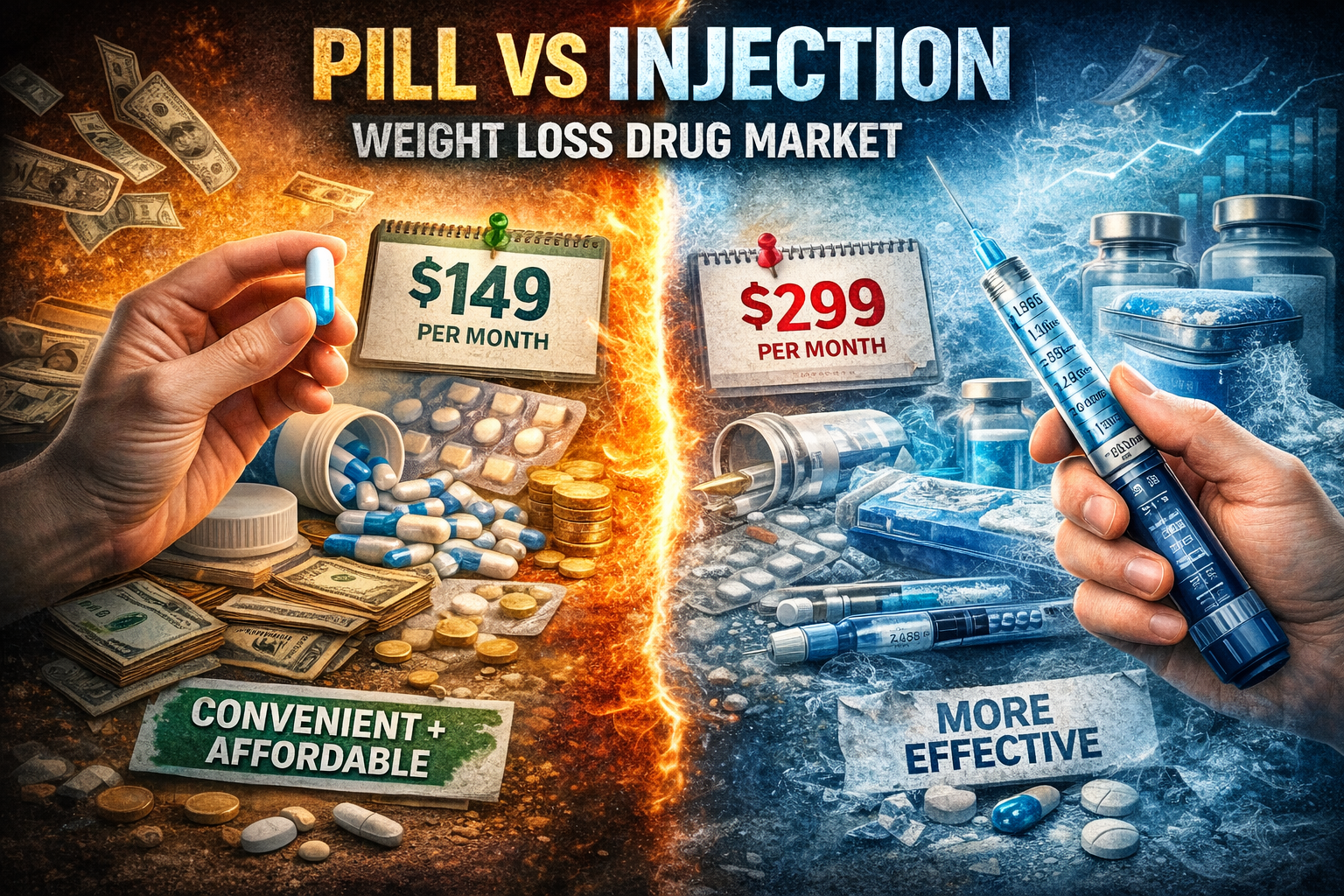
The global weight loss drug market is undergoing a major transformation as patients increasingly prioritize cost, convenience, and ease of use. With the introduction of oral medications alongside traditional injectable treatments, the industry is witnessing a shift that could redefine obesity management in the coming decade.
Experts predict that the obesity treatment market may exceed $100 billion annually, driven by rising obesity rates, increased awareness, and advancements in pharmaceutical innovation. At the center of this evolution is the growing comparison between pills and injections.
The Shift Toward Oral Weight Loss Medications
Traditionally, weight loss treatments—especially those based on GLP-1 receptor agonists—have been administered via injections. While effective, these treatments often come with limitations such as:
- Needle-related anxiety
- Storage requirements like refrigeration
- Higher costs
- Complexity in administration
The introduction of oral alternatives has started to address these concerns. Patients new to weight loss therapy are increasingly choosing pills due to their non-invasive nature and simplicity.
For many individuals, the idea of taking a daily pill feels more familiar and less intimidating than self-injecting medication. This psychological factor is playing a significant role in expanding access to treatment.
Cost Advantage: A Key Decision-Making Factor
One of the most influential factors in choosing between pills and injections is affordability.
Cost Comparison:
- Oral medications: Lower starting cost
- Injectable treatments: Significantly higher pricing
Even though both options can be expensive without insurance, oral medications are generally more accessible to a wider patient base. Lower pricing is encouraging first-time users to begin treatment, especially those who were previously hesitant due to financial constraints.
However, despite the relative affordability of pills, experts emphasize that weight loss medications still remain out of reach for a large portion of the population.
Convenience and Lifestyle Compatibility
Convenience is another major driver behind the growing popularity of oral drugs.
Benefits of Pills:
- No need for injections
- Easy to carry and store
- Discreet usage
- No requirement for refrigeration
These advantages make oral medications particularly appealing to working professionals and individuals with busy lifestyles.
On the other hand, injectable drugs often require:
- Scheduled dosing
- Proper storage conditions
- Training for self-administration
This difference in usability significantly impacts patient preference and adherence to treatment.
Effectiveness: Do Pills Match Injections?
While convenience and cost are important, effectiveness remains a critical factor.
Clinical studies indicate that:
- Injectable treatments may offer higher weight loss percentages
- Oral medications provide moderate but meaningful results
Injectables are often recommended for patients with severe obesity or complex health conditions, as they tend to deliver more substantial outcomes.
In contrast, oral medications are increasingly being prescribed for:
- Patients with mild to moderate obesity
- Individuals starting treatment for the first time
- Those uncomfortable with injections
This differentiation allows healthcare providers to tailor treatments based on patient needs.
Expanding Patient Access and Market Growth
The introduction of oral weight loss drugs is significantly expanding the market by bringing in new patient segments.
Key Trends:
- First-time users are opting for pills
- Increased adoption among primary care patients
- Greater acceptance due to ease of use
This shift is not replacing injectable treatments but rather complementing them, creating a more flexible treatment landscape.
As more options become available, patients can choose therapies that align with their preferences, medical conditions, and financial capabilities.
Challenges Still Persist
Despite the progress, several challenges remain in the weight loss drug market.
1. Affordability Issues
Even lower-cost pills can be expensive without insurance coverage, limiting accessibility.
2. Insurance Barriers
Many insurance providers impose restrictions on weight loss medications, making it difficult for patients to obtain coverage.
3. Long-Term Safety and Benefits
While some medications show additional health benefits, such as improved cardiovascular outcomes, newer oral drugs are still being studied for long-term effects.
4. Adherence to Treatment Guidelines
Certain oral medications require strict timing and consumption rules, which may affect patient compliance.
The Role of Innovation in the Pharma Industry
The ongoing competition between oral and injectable therapies is driving rapid innovation in the pharmaceutical sector.
Companies are focusing on:
- Developing more effective oral formulations
- Reducing side effects
- Improving patient convenience
- Expanding therapeutic benefits
This innovation is expected to create a more patient-centric healthcare environment, where treatments are not only effective but also easy to use and accessible.
Future Outlook of Weight Loss Treatments
The future of the weight loss drug market looks promising, with continued advancements likely to reshape treatment strategies.
Expected Developments:
- More affordable drug options
- Improved insurance coverage
- Combination therapies
- Personalized treatment plans
As awareness about obesity-related health risks grows, demand for effective and convenient treatment options will continue to rise.
Conclusion
The debate between pills and injections in the weight loss drug market reflects a broader shift toward patient-centered care. While injectable treatments remain highly effective, oral medications are gaining popularity due to their affordability and ease of use.
Ultimately, the choice between pills and injections depends on individual patient needs, medical conditions, and preferences. As the pharmaceutical industry continues to innovate, patients can expect more diverse, accessible, and effective solutions for weight management.
This evolving landscape marks a significant step forward in addressing one of the world’s most pressing health challenges.