
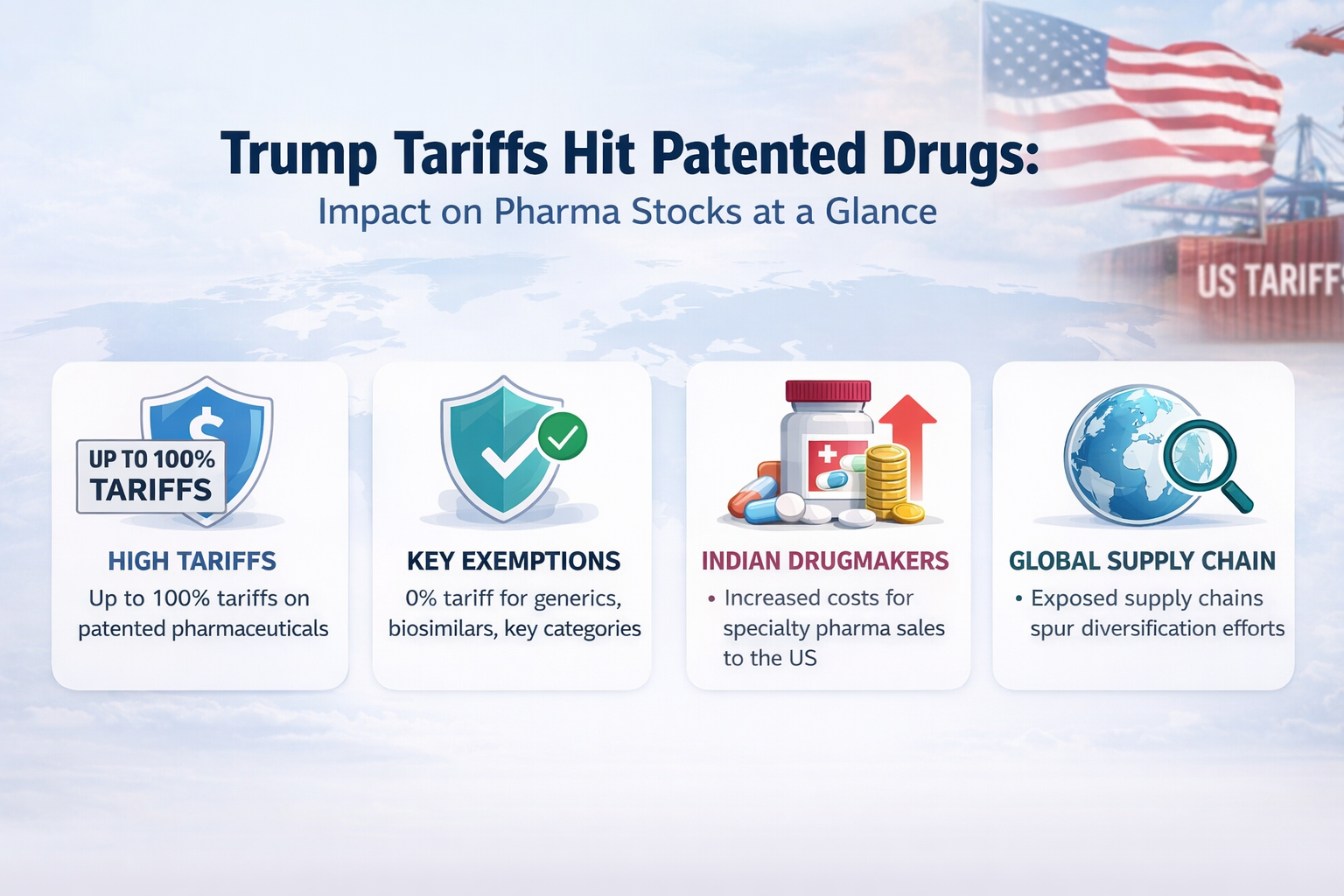
The global pharmaceutical industry is witnessing a major shift after the United States introduced new tariffs on patented drugs. These tariffs, which can go as high as 100%, are part of a broader strategy to strengthen domestic manufacturing and reduce dependence on foreign supply chains. While the move primarily targets high-value patented medicines, it has created ripple effects across global pharma markets, especially for export-driven countries.
Understanding the Tariff Structure
The newly imposed tariffs mainly apply to patented pharmaceuticals, which are typically high-margin and innovation-driven products. However, there are several exemptions that play a crucial role in shaping the overall impact. Generic medicines and biosimilars are largely excluded from these tariffs, providing relief to companies focused on volume-based production.
Additionally, certain countries benefit from reduced tariff rates due to trade agreements, while companies that commit to local investments and pricing regulations may receive temporary exemptions. These policy nuances highlight a strategic intent to encourage domestic production while maintaining supply stability.
Why the US Introduced These Tariffs
The decision stems from growing concerns about national security and supply chain vulnerabilities. A significant portion of pharmaceutical manufacturing, including active pharmaceutical ingredients (APIs), is currently based outside the United States. This dependence has raised concerns, especially during global disruptions like pandemics or geopolitical tensions.
By imposing tariffs, the US government aims to:
- Promote local manufacturing of high-value drugs
- Reduce reliance on overseas production
- Encourage investment in domestic pharma infrastructure
- Strengthen long-term supply chain resilience
Impact on Indian Pharmaceutical Sector
India plays a critical role in the global pharmaceutical supply chain, particularly in the production of generic drugs and APIs. While the exemption for generics provides a cushion, companies involved in patented or specialty medicines may face challenges.
1. Pressure on Specialty Drug Exports
Pharmaceutical firms exporting patented medicines to the US market could see increased costs due to tariffs. This may impact profit margins and pricing strategies, forcing companies to either absorb the costs or pass them on to consumers.
2. Limited Impact on Generics
Since generic drugs are exempt, the bulk of India’s pharma exports remains unaffected. This is a significant advantage, as generics constitute a major share of exports and are essential for affordable healthcare.
3. Supply Chain Adjustments
Companies may need to re-evaluate their manufacturing and distribution strategies. Shifting production closer to the US or diversifying export markets could become key priorities in the coming years.
Effect on Contract Manufacturing and APIs
Contract development and manufacturing organizations (CDMOs) and API suppliers may experience indirect effects. Although many do not export finished patented drugs directly, regulatory complexities could still impact operations.
- Some shipments may face scrutiny based on origin classification
- Supply chains could become more complex and time-consuming
- New supplier onboarding may take 12–24 months
Despite these challenges, cost advantages in countries like India remain significant, often 30–40% lower than Western markets. This ensures continued global demand for outsourced manufacturing.
Market Reaction and Investor Sentiment
Following the tariff announcement, pharmaceutical stocks experienced mild volatility. Investors reacted cautiously, particularly towards companies with higher exposure to patented drug segments. However, the overall sentiment remains stable due to the limited scope of tariffs on generics.
In the long term, markets are expected to adjust as companies implement strategic measures to mitigate risks. Pricing adjustments, operational restructuring, and policy negotiations may help offset potential losses.
Opportunities Amid Challenges
While tariffs present short-term hurdles, they also open new avenues for growth and innovation:
- Expansion into Generics: Companies can strengthen their presence in the generic drug segment, which remains unaffected
- Local Manufacturing Investments: Establishing facilities in key markets can help bypass tariff barriers
- Diversification of Export Markets: Exploring regions beyond the US can reduce dependency risks
- Innovation and R&D: Developing cost-effective alternatives and niche therapies can enhance competitiveness
Future Outlook
The introduction of tariffs on patented drugs signals a shift towards protectionism in the pharmaceutical sector. However, the global nature of the industry means complete localization is unlikely. Instead, a hybrid model combining domestic production and international sourcing is expected to emerge.
For India, the impact remains balanced. While specialty drug exporters may face temporary pressure, the strong foundation in generics and API manufacturing ensures continued global relevance. Strategic adaptation and policy alignment will be key to sustaining growth in this evolving landscape.
Conclusion
The US tariff policy on patented pharmaceuticals marks a significant turning point in global healthcare economics. It underscores the importance of resilient supply chains, domestic manufacturing, and strategic trade policies. Although challenges exist, the pharmaceutical industry has historically demonstrated adaptability.
With the right approach, companies can not only navigate these changes but also leverage them as opportunities for long-term expansion and innovation.