
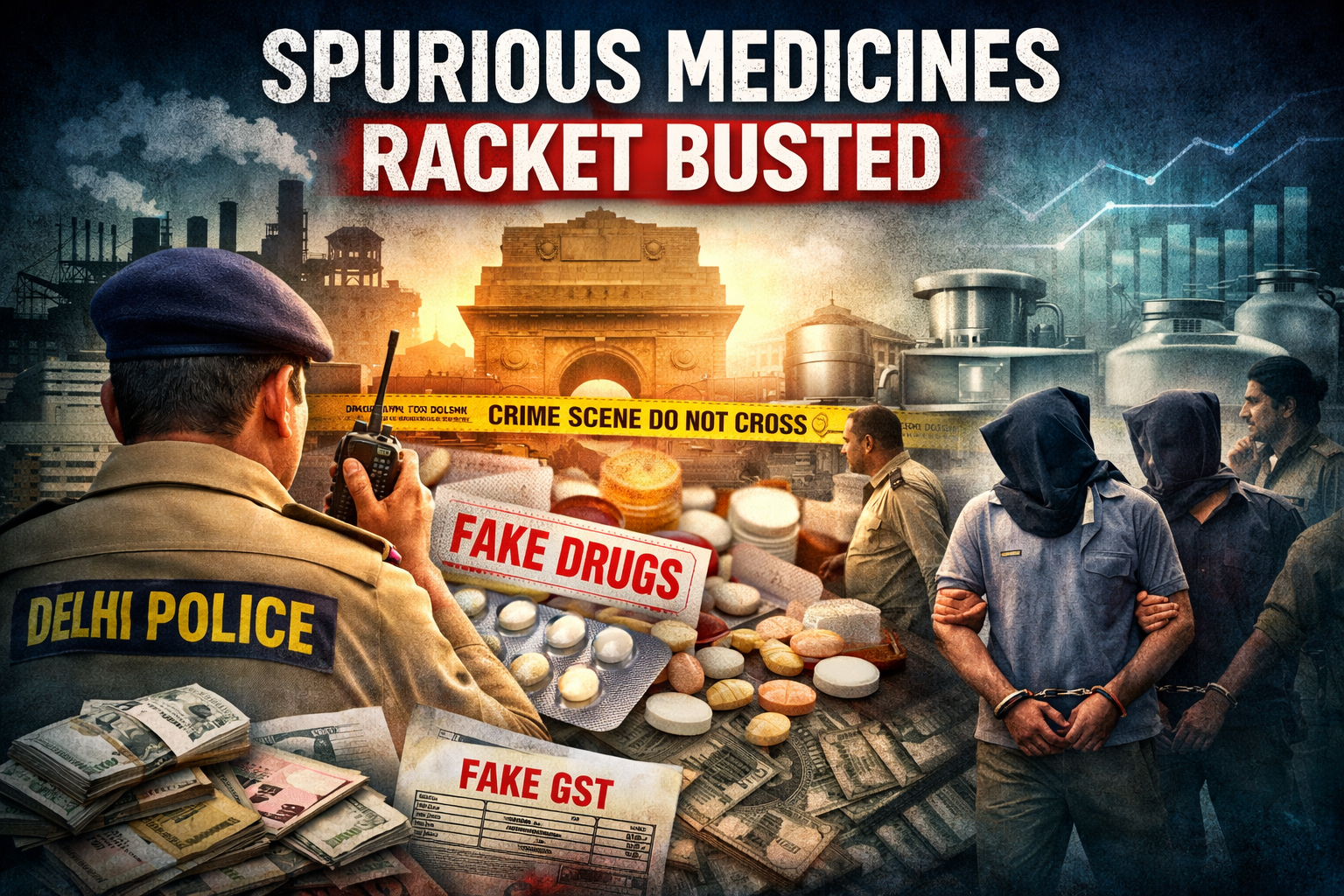
The recent crackdown by Delhi Police on an interstate spurious medicines racket has once again highlighted a critical issue within the pharmaceutical ecosystem—the growing threat of counterfeit drugs. The operation led to the arrest of multiple individuals and the seizure of fake medicines worth crores, exposing a deeply rooted illegal network operating across several states.
This incident not only raises concerns about public health safety but also underscores the urgent need for stricter regulations, improved monitoring, and increased awareness within the pharmaceutical industry in India.
Understanding the Scale of the Counterfeit Drug Problem
Counterfeit medicines are not a new challenge, but their scale and sophistication have increased significantly in recent years. In this case, authorities uncovered:
- Large-scale manufacturing of fake Schedule-H drugs
- Distribution across multiple states
- Use of fake GST firms to generate bogus invoices
- Financial transactions amounting to nearly ₹50 crore
These medicines were commonly prescribed for chronic conditions such as diabetes, hypertension, and liver disorders. The circulation of such drugs poses serious and potentially life-threatening risks to patients.
How the Illegal Network Operated
The investigation revealed a well-organized and multi-layered operation involving manufacturers, suppliers, and financial facilitators.
1. Manufacturing Units
An illegal pharmaceutical unit was identified, where counterfeit drugs were produced using raw materials like:
- Metformin HCL
- Calcium carbonate
- Lactose and starch
Advanced machinery such as tablet compression machines and capsule filling equipment indicated that the operation was running at an industrial scale.
2. Fake Branding and Packaging
The accused used:
- Duplicate packaging materials
- Fake labels of reputed pharmaceutical products
- Empty bottles branded as original medicines
This made it extremely difficult for consumers and even retailers to distinguish between genuine and counterfeit products.
3. Distribution Network
The fake medicines were supplied through:
- Wholesale dealers
- Interstate suppliers
- Unauthorized storage facilities
The absence of proper licensing further confirmed the illegal nature of the operations.
4. Fake GST Billing System
One of the most alarming aspects was the use of fictitious GST firms. These shell companies were created solely to:
- Generate fake invoices
- Launder money
- Provide legitimacy to illegal transactions
Encrypted communication channels were used to coordinate operations, making detection even more challenging.
Impact on Public Health
The circulation of counterfeit medicines can have devastating consequences. Since these drugs often lack proper active ingredients or contain harmful substances, they can:
- Fail to treat medical conditions
- Worsen existing health issues
- Cause severe side effects
- Lead to fatal outcomes in critical cases
Patients suffering from chronic diseases are particularly vulnerable, as they rely on consistent and effective medication.
Challenges Faced by the Pharmaceutical Industry
The presence of counterfeit drugs affects not only patients but also legitimate stakeholders in the pharmaceutical sector.
1. Loss of Trust
When fake medicines enter the market, it damages consumer confidence in genuine pharmaceutical products.
2. Financial Losses
Authentic drug manufacturers and distributors face significant revenue losses due to illegal competition.
3. Regulatory Pressure
Authorities may impose stricter regulations, increasing compliance costs for legitimate businesses.
4. Supply Chain Disruptions
Illegal networks often exploit loopholes in the supply chain, making it harder to maintain transparency and traceability.
Role of Authorities and Law Enforcement
The successful bust of this racket demonstrates the importance of proactive law enforcement and intelligence-based operations. Key actions taken included:
- Targeted raids based on specific inputs
- Tracking financial transactions through fake GST firms
- Seizure of counterfeit drugs and manufacturing equipment
- Identification of key individuals involved in the network
Such actions are crucial in dismantling organized illegal operations and preventing further distribution of harmful products.
Preventive Measures for the Future
To combat the growing menace of counterfeit medicines, a multi-pronged approach is required.
Strengthening Regulatory Framework
- Strict monitoring of drug manufacturing units
- Regular inspections and audits
- Implementation of advanced tracking systems
Enhancing Supply Chain Transparency
- Use of blockchain or digital tracking
- Verification of distributors and suppliers
- Proper documentation at every stage
Public Awareness
- Educating consumers about identifying genuine medicines
- Encouraging purchases from licensed pharmacies only
Technological Integration
- QR code-based authentication
- Tamper-proof packaging
- Real-time verification systems
Responsibility of Stakeholders
Every stakeholder in the pharmaceutical ecosystem has a role to play:
- Manufacturers must ensure quality control and secure packaging
- Distributors should verify product authenticity
- Pharmacists must source medicines from trusted suppliers
- Consumers should remain vigilant and informed
Collaborative efforts can significantly reduce the spread of counterfeit drugs.
Conclusion
The exposure of this interstate spurious medicines racket serves as a strong reminder of the vulnerabilities within the pharmaceutical supply chain. While the authorities have taken decisive action, the fight against counterfeit medicines is far from over.
Ensuring the safety and authenticity of medicines is a shared responsibility. With stronger regulations, advanced technology, and increased awareness, the pharmaceutical industry in India can move towards a safer and more transparent future.
This incident should act as a catalyst for reform, encouraging all stakeholders to prioritize quality, compliance, and patient safety above all else.