
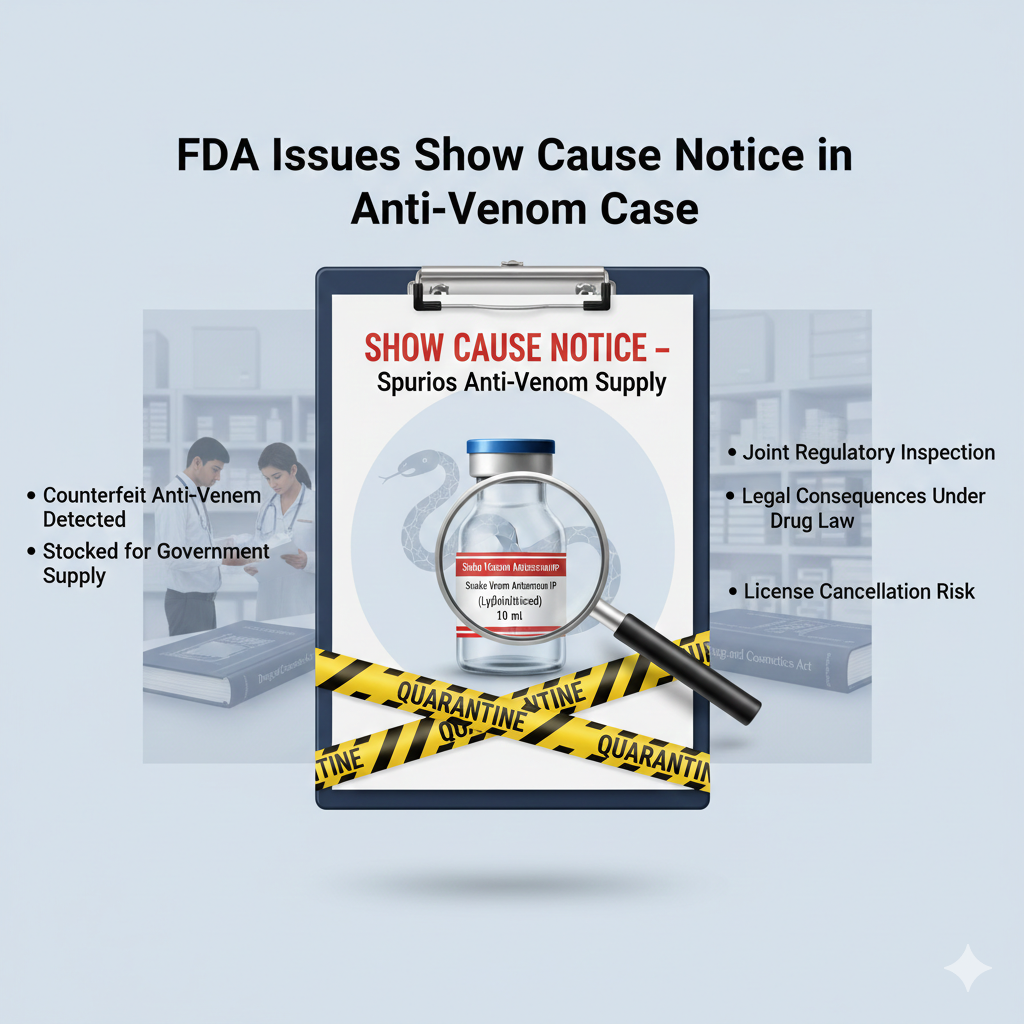
India’s pharmaceutical regulatory system has once again demonstrated strict enforcement after the Food and Drug Administration (FDA) issued a show cause notice in connection with the alleged supply of counterfeit snake anti-venom vials to a government health department.
The matter has raised serious concerns about drug authenticity, procurement compliance, and supply chain integrity — particularly because anti-venom is a life-saving biological product used in emergency snakebite treatment.
Background of the Case
The FDA received an official communication from Vins Bioproducts Limited, informing authorities about counterfeit or spurious Snake Venom Antiserum IP (Lyophilised) 10 ml falsely claiming to be manufactured by the company.
Following this alert, regulatory authorities discovered that the suspected product had been stocked and supplied to the Medical Store Depot under the Directorate of Health Services, Campal, Panaji.
As a result, a show cause notice was issued to the concerned supplier, asking why:
-
The drug licence should not be cancelled
-
Penal proceedings should not be initiated
-
Legal action should not be taken under applicable provisions
Legal Framework Under the Drugs and Cosmetics Act
The case invokes critical provisions under the Drugs and Cosmetics Act 1940, which regulates drug manufacture, sale, and distribution across India.
Key sections cited include:
-
Section 17B – Defines “spurious drugs”
-
Section 18(a) – Prohibits sale and distribution of spurious medicines
-
Section 27(a) – Prescribes punishment for such offences
A drug is classified as spurious if it falsely claims to be manufactured by a particular company or imitates another product in a misleading manner. Violations can lead to imprisonment, heavy fines, and licence cancellation.
Why This Case Is Serious
Snake venom antiserum is classified as an essential emergency drug. Any compromise in its authenticity or potency can result in:
-
Treatment failure
-
Increased mortality in snakebite victims
-
Legal liability for healthcare providers
-
Public health emergencies
Snakebite cases remain prevalent in rural India, making reliable anti-venom supply critical for primary and district-level hospitals.
Joint Inspection and Regulatory Action
After receiving the alert, inspecting officers from the FDA conducted a joint inspection along with officials from the Central Drugs Standard Control Organisation (CDSCO) sub-zone at the Medical Store Depot.
The inspection focused on:
-
Batch number verification
-
Procurement records
-
Supply chain documentation
-
Stock audit and sampling
Such coordinated inspections strengthen regulatory enforcement and reduce the risk of counterfeit medicines circulating in public healthcare systems.
Spurious Medicines: A Growing Regulatory Concern
India has significantly tightened drug surveillance in recent years. However, incidents involving counterfeit medicines highlight ongoing challenges in:
-
Vendor verification
-
Procurement transparency
-
Supply chain monitoring
-
Cold chain compliance for biologics
Anti-venom products, being lyophilised biological formulations, require stringent quality control and storage protocols. Even minor deviations can compromise efficacy.
Importance of Ethical Pharmaceutical Distribution
The case underscores the responsibility of pharmaceutical suppliers and distributors to ensure:
-
Source authentication before procurement
-
Verification of manufacturer credentials
-
Proper storage and handling
-
Compliance with regulatory documentation
Failure to exercise due diligence not only violates the law but also endangers lives.
For businesses aiming to operate sustainably — including those aspiring to become a monopoly medicine company in India — maintaining regulatory compliance and ethical distribution practices is non-negotiable.
Potential Consequences of Regulatory Violations
If allegations are substantiated, possible outcomes may include:
-
Suspension or cancellation of wholesale drug licence
-
Criminal prosecution under the Drugs and Cosmetics Act
-
Financial penalties
-
Blacklisting from government tenders
-
Long-term reputational damage
The pharmaceutical industry operates under strict liability norms, especially when public health institutions are involved.
Strengthening India’s Drug Safety Ecosystem
To prevent recurrence of similar cases, experts recommend:
-
Digital track-and-trace systems
-
QR code–based product authentication
-
Centralised procurement monitoring
-
Mandatory batch verification audits
-
Real-time reporting by manufacturers
India’s regulatory authorities have been increasingly proactive in surveillance, and swift issuance of show cause notices signals zero tolerance toward counterfeit drug circulation.
Public Health and Trust in Healthcare
Public confidence in healthcare systems depends heavily on medicine quality. When government institutions are supplied with counterfeit drugs, it can erode trust and undermine years of public health progress.
Ensuring that life-saving medicines such as snake venom antiserum are genuine, effective, and properly stored must remain a top regulatory priority.
Conclusion
The FDA’s show cause notice in the anti-venom case reflects strict enforcement under the Drugs and Cosmetics Act, 1940. As investigations continue, the case serves as a reminder that pharmaceutical supply chains must remain transparent, compliant, and ethically managed.
In an increasingly regulated environment, companies that prioritise quality assurance, lawful distribution, and patient safety will continue to build credibility and long-term growth. Responsible pharmaceutical operations — such as those upheld by DM Pharma Global — demonstrate how compliance and ethical standards are foundational to sustainable success in India’s healthcare ecosystem.