
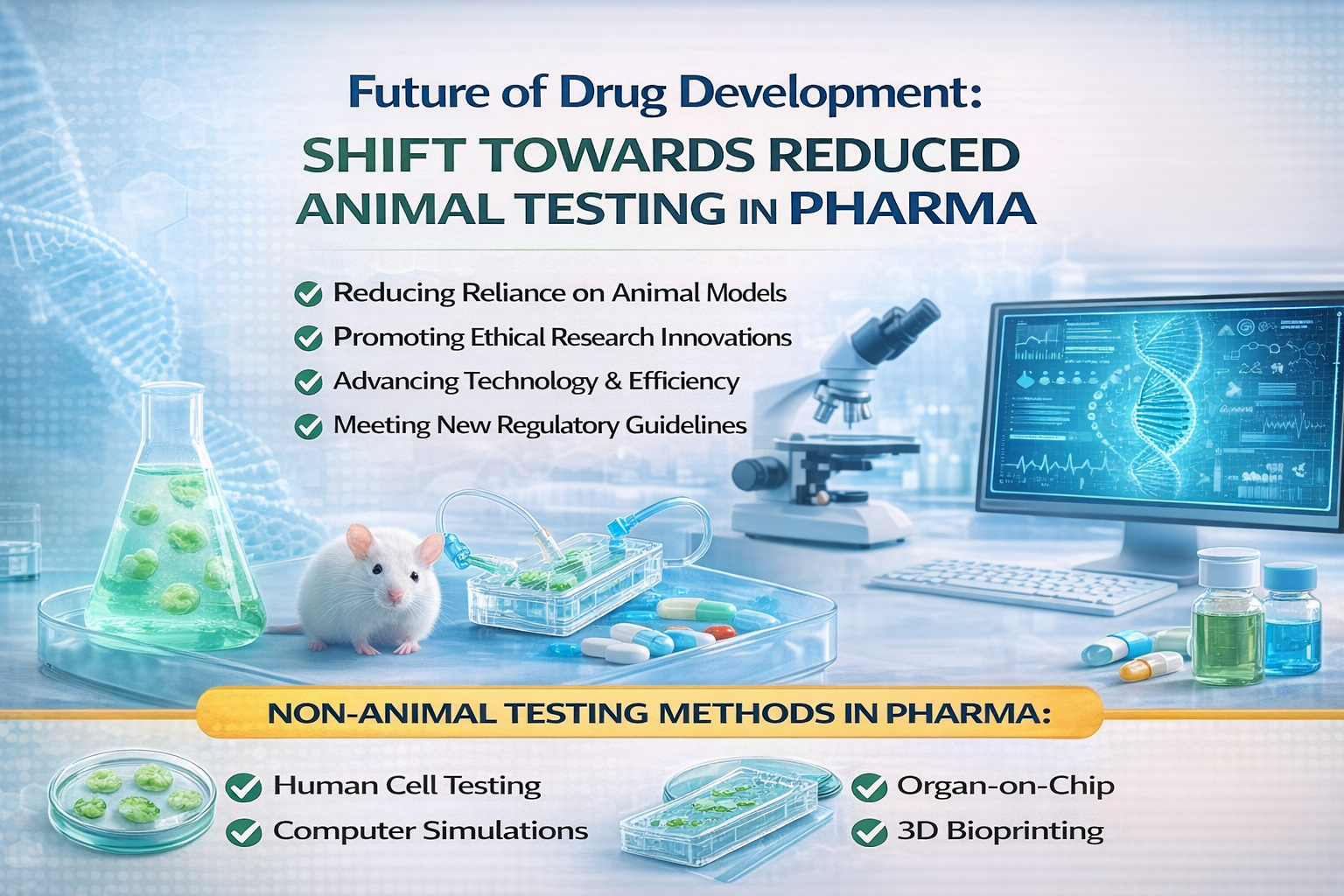
The global pharmaceutical industry is undergoing a structural transformation as regulators and companies increasingly explore alternatives to animal testing. A recent development from the United Kingdom highlights this transition, where the national drug regulator has proposed new guidance aimed at reducing reliance on animal studies in drug development. This move reflects a broader international trend toward more ethical, efficient, and scientifically advanced research methodologies.
Understanding the Regulatory Shift
The UK’s medicines regulator has introduced a draft framework that allows pharmaceutical companies to submit and review drug development data that may not rely entirely on animal testing. This framework is expected to be implemented by the end of 2026 and will provide drug developers with an opportunity to seek early feedback on their data before applying for full regulatory approval.
This initiative is not about completely eliminating animal testing overnight but about creating a balanced and science-driven approach. Regulators have clarified that while non-animal testing methods will be encouraged, traditional animal data will still be accepted where necessary, especially in cases involving new or complex drug molecules.
Why Reducing Animal Testing Matters
Reducing animal testing is not only an ethical consideration but also a scientific and operational advancement. Traditional animal models often fail to accurately predict human responses, leading to inefficiencies in drug development.
Key Reasons Driving the Shift:
- Ethical Concerns: Growing awareness about animal welfare is pushing regulators to minimize animal use.
- Scientific Limitations: Animal biology does not always replicate human physiology accurately.
- Cost and Time Efficiency: Alternative methods can significantly reduce development timelines and costs.
- Technological Advancements: Innovations such as AI models and organ-on-chip technologies are providing viable substitutes.
Emerging Alternatives to Animal Testing
The pharmaceutical industry is rapidly adopting advanced technologies that can simulate human biology more precisely than traditional animal models.
Popular Alternatives Include:
- In-vitro Testing: Laboratory-based testing using human cells and tissues
- Computer Simulations (In-silico): AI-driven models predicting drug behavior
- Organ-on-Chip Technology: Microdevices that mimic human organ functions
- 3D Bioprinting: Creating tissue models for drug testing
These alternatives are not only more humane but also offer higher predictive accuracy, which can improve drug success rates.
New Review Mechanism for Drug Developers
One of the most important aspects of the new framework is the introduction of a pre-application review system. This allows companies to submit preclinical safety data—especially from non-animal methods—for early regulatory feedback.
How It Works:
- Companies submit safety data before full approval application
- At least one human clinical trial must be included
- Regulators evaluate whether the data is sufficient
- Feedback helps companies refine their development strategy
This proactive approach reduces uncertainty and enhances the efficiency of the approval process.
Case-by-Case Evaluation Approach
Regulators have emphasized that decisions will not follow a rigid rulebook. Instead, each drug application will be evaluated individually based on scientific validity and patient safety.
Where Animal Testing May Still Be Required:
- Development of new drug classes
- Vaccines and biologics
- Situations where alternative methods are insufficient
Where It May Be Avoided:
- Generic medicines
- Biosimilars
- Drugs with well-established safety profiles
This flexible framework ensures that patient safety remains the top priority while still encouraging innovation.
Global Alignment and Industry Impact
The UK’s initiative aligns with similar regulatory movements worldwide. Recently, regulatory authorities in other major markets have also encouraged pharmaceutical companies to explore alternatives to animal testing.
This global alignment indicates a paradigm shift in drug development, where innovation, ethics, and efficiency intersect.
Impact on the Pharma Industry:
- Faster Drug Development Cycles
- Reduced R&D Costs
- Improved Success Rates in Clinical Trials
- Enhanced Public Trust and Brand Image
Pharmaceutical companies that adopt these changes early will gain a competitive advantage in an evolving regulatory landscape.
Challenges in Transitioning Away from Animal Testing
Despite the benefits, the shift is not without challenges. Transitioning to non-animal methods requires significant investment in technology, training, and validation processes.
Major Challenges:
- Lack of universal regulatory acceptance
- High initial investment in alternative technologies
- Need for standardization and validation
- Limited applicability for certain complex drugs
However, as technology advances and regulatory frameworks mature, these challenges are expected to diminish.
Conclusion
The move toward reducing animal testing represents a critical evolution in pharmaceutical research and development. By encouraging the use of innovative, human-relevant testing methods, regulators are paving the way for a more ethical and efficient future.
While animal testing will not disappear entirely in the near term, its role is clearly diminishing. The industry is entering a new era where science, technology, and ethics converge, ultimately benefiting patients, researchers, and society as a whole.