
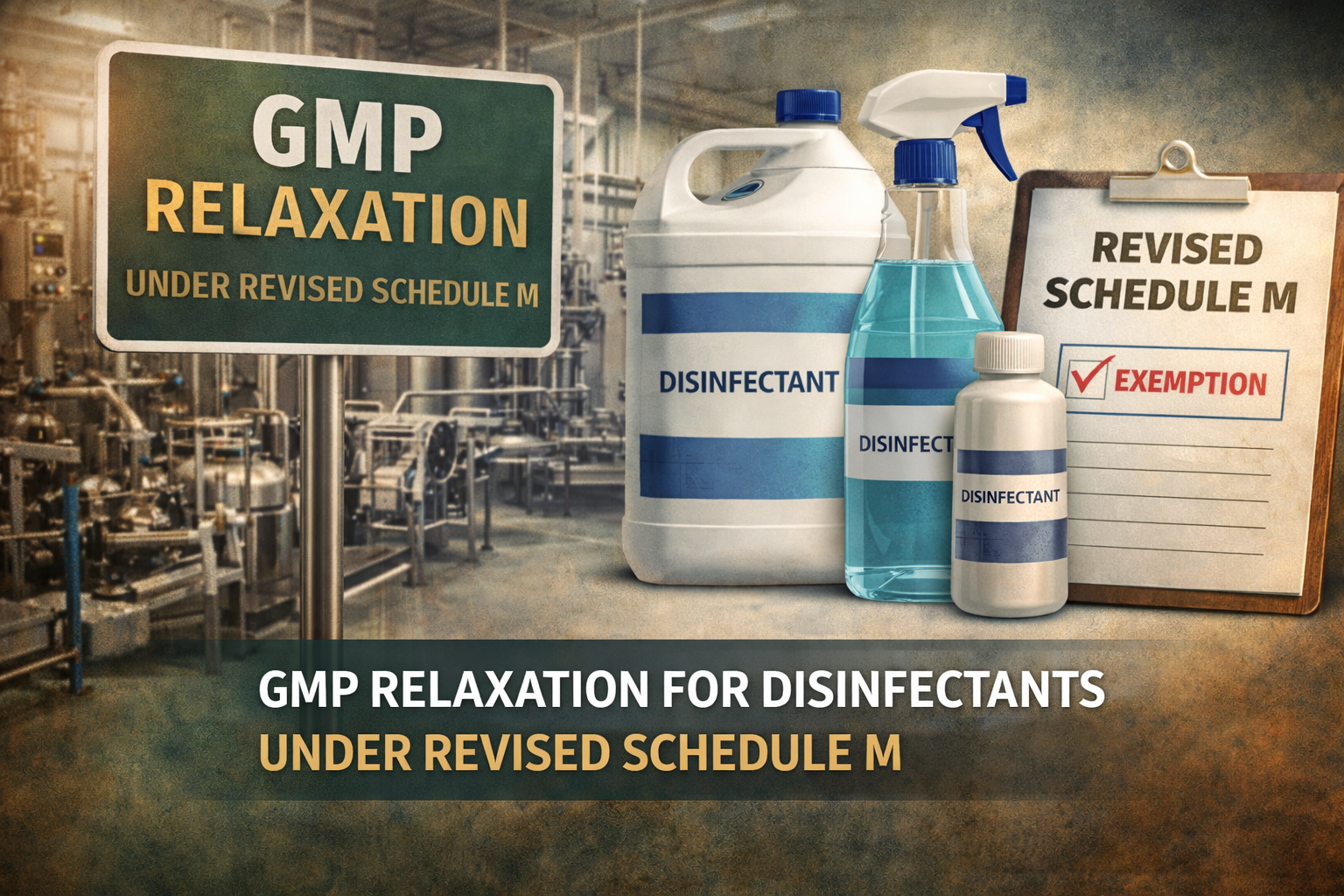
India’s pharmaceutical regulatory framework is undergoing a significant transformation with the implementation of revised Schedule M norms. However, recent developments indicate that the government may continue certain Good Manufacturing Practices (GMP) relaxations for specific product categories such as disinfectants. This move has sparked discussions across the industry, particularly among manufacturers, compliance experts, and policymakers.
Understanding Revised Schedule M and GMP Norms
Revised Schedule M lays down updated Good Manufacturing Practices (GMP) for pharmaceutical production in India. These guidelines are designed to ensure that drugs are consistently produced and controlled according to quality standards. The revised norms require pharmaceutical companies to upgrade infrastructure, improve quality control systems, and adopt stricter documentation processes.
The primary objective of these changes is to align India’s pharmaceutical manufacturing standards with global benchmarks, thereby enhancing product quality and patient safety.
Why GMP Relaxation is Being Considered
Despite the push for stricter compliance, regulatory authorities are considering continuing GMP relaxations for certain low-risk product categories. These include disinfectant fluids, medical gases, and empty gelatin capsules.
The reasoning behind this decision is largely practical. Many manufacturers have argued that some of the requirements under revised Schedule M are not directly relevant to these products. For instance, disinfectants do not always require the same level of stringent controls as complex pharmaceutical formulations.
Additionally, implementing full compliance could significantly increase operational costs for manufacturers without delivering proportional benefits in product quality or safety.
Industry Concerns and Representations
Manufacturers of disinfectants and similar products have approached regulatory bodies with concerns about the revised norms. They have highlighted that:
-
Certain GMP requirements are excessive for their product category
-
Compliance upgrades would require heavy capital investment
-
Increased costs could impact pricing and market competitiveness
-
Smaller manufacturers may struggle to sustain operations
These concerns have led to a broader debate about the need for a differentiated regulatory approach based on product risk profiles.
Role of Regulatory Authorities
India’s top drug advisory body has reviewed the matter and recommended continuing the existing relaxations. The suggestion reflects a balanced approach—maintaining quality standards while ensuring that regulatory requirements remain practical and relevant.
Regulators aim to avoid a one-size-fits-all model and instead adopt a more flexible framework. This ensures that critical medicines are subject to strict controls, while relatively simpler products are governed by proportionate regulations.
Impact on the Pharmaceutical Sector
The continuation of GMP relaxations is expected to have several implications for the industry:
1. Cost Efficiency for Manufacturers
Relaxed compliance requirements will reduce the financial burden on manufacturers, especially small and medium enterprises. This can help maintain competitive pricing in the market.
2. Business Continuity
Many companies that might have struggled to meet revised standards will be able to continue operations without major disruptions.
3. Market Stability
By avoiding sudden cost increases, the move can help stabilize the supply chain and prevent shortages of essential products like disinfectants.
4. Encouragement for MSMEs
Micro, small, and medium enterprises play a significant role in India’s pharmaceutical ecosystem. Relaxations can support their growth and sustainability.
Balancing Quality and Practicality
One of the key challenges in pharmaceutical regulation is maintaining a balance between strict quality standards and practical feasibility. While GMP compliance is essential for ensuring safety, applying the same level of rigor to all product categories may not always be necessary.
Disinfectants, for example, are generally considered lower-risk compared to complex drug formulations. Therefore, a risk-based regulatory approach is more appropriate, allowing authorities to focus resources on areas that have the highest impact on public health.
Global Perspective on GMP Flexibility
Globally, regulatory frameworks often incorporate flexibility for certain product categories. Many countries adopt risk-based GMP guidelines, where compliance requirements vary depending on the nature of the product.
India’s move to potentially continue GMP relaxations aligns with this global trend. It reflects a shift towards smarter regulation rather than stricter regulation for its own sake.
Future Outlook for Schedule M Implementation
While relaxations may continue for select categories, the overall direction of India’s pharmaceutical regulations remains focused on strengthening quality standards. Companies manufacturing high-risk or complex products will still need to comply fully with revised Schedule M requirements.
In the long term, regulators may further refine guidelines to clearly define which products qualify for exemptions and under what conditions. This clarity will be crucial for ensuring consistent implementation across the industry.
Conclusion
The potential continuation of GMP relaxations for disinfectants and similar products under revised Schedule M represents a pragmatic approach to regulation. It acknowledges the diverse nature of pharmaceutical products and the need for flexibility in compliance requirements.
By adopting a risk-based framework, regulatory authorities can ensure product quality without placing unnecessary burdens on manufacturers. This balanced strategy not only supports industry growth but also safeguards public health, making it a crucial step in the evolution of India’s pharmaceutical regulatory landscape.