
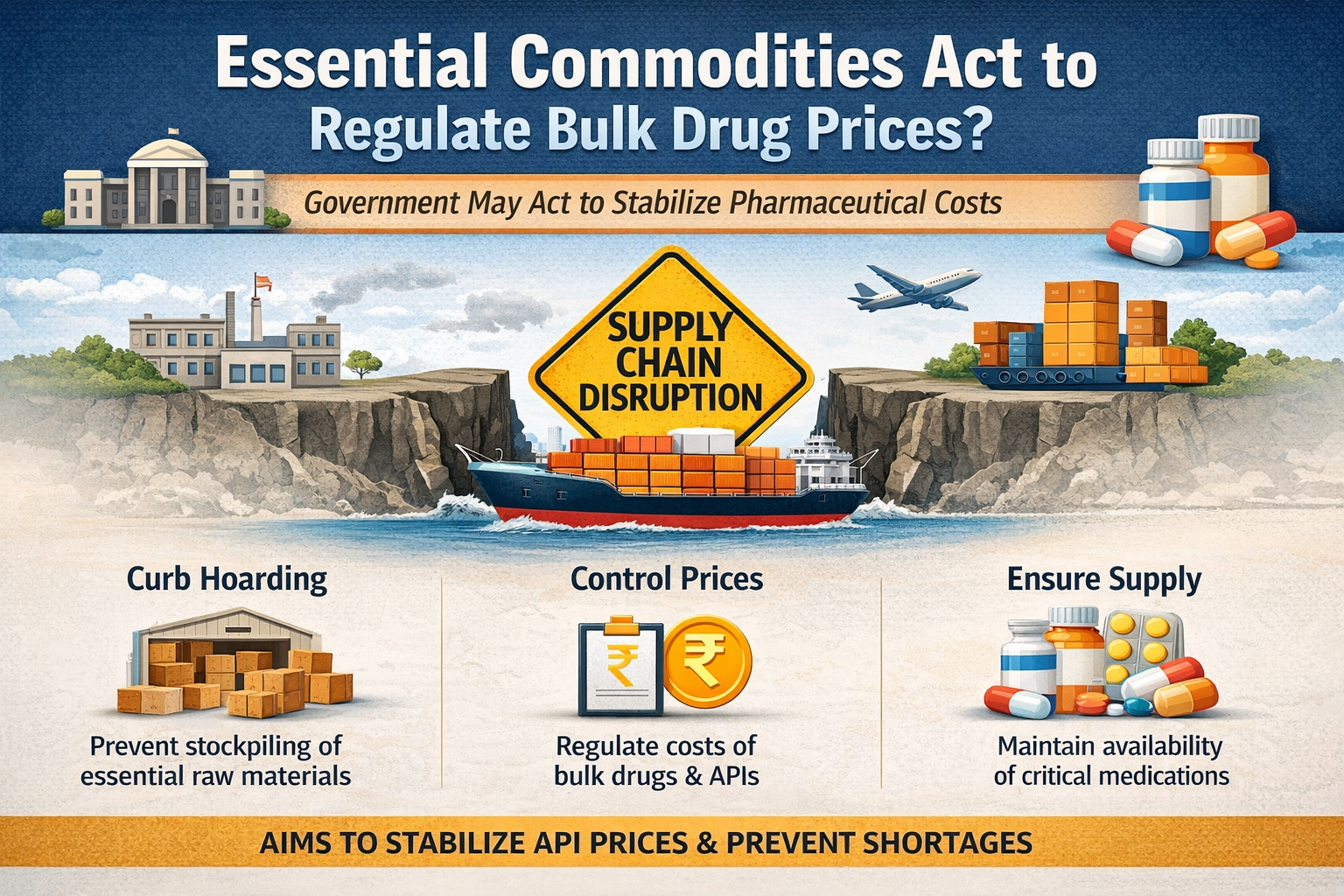
The Indian pharmaceutical sector is currently navigating a period of significant uncertainty as the government considers invoking the Essential Commodities Act (ECA) to regulate the prices of bulk drugs, also known as Active Pharmaceutical Ingredients (APIs). This potential move aims to curb hoarding, black marketing, and price manipulation, especially amid ongoing global supply chain disruptions.
Why the Government is Considering Price Regulation
The need for intervention arises from rapid price escalation in key pharmaceutical raw materials. Global geopolitical tensions, particularly in West Asia, have disrupted the supply of essential chemicals and intermediates used in drug manufacturing.
As a result:
- API prices have surged by 30–35% in recent weeks
- Certain materials have seen extreme spikes of 200–300%
- Logistics challenges such as container shortages and rising freight costs are worsening the situation
The government, through the Department of Pharmaceuticals, is actively engaging with industry stakeholders to assess the severity of the crisis and evaluate regulatory options.
What is the Essential Commodities Act?
The Essential Commodities Act is a legal framework that allows the government to:
- Regulate production and supply of critical goods
- Control prices to prevent exploitation
- Crack down on hoarding and black marketing
- Ensure equitable distribution of essential resources
If bulk drugs are brought under this Act, authorities will gain the power to monitor inventory levels, impose stock limits, and stabilize prices across the pharmaceutical supply chain.
Key Factors Driving API Price Surge
1. Global Supply Chain Disruptions
International conflicts have severely impacted the availability of raw materials. Many APIs and intermediates are imported, making the Indian pharma sector vulnerable to global shocks.
2. Shortage of Industrial Gases and Chemicals
Critical inputs like propylene glycol, glycerine, and other solvents have become scarce. These are essential for manufacturing syrups, injections, and liquid formulations.
3. Logistics and Freight Issues
Shipping delays, container shortages, and rising fuel costs are increasing the overall cost of procurement and distribution.
4. Rising Packaging Costs
Even packaging materials are becoming expensive:
- Polyvinyl chloride (PVC) prices up by ~40%
- Aluminium foil costs have also surged significantly
Major Price Increases in Pharmaceutical Inputs
Some of the most notable cost increases include:
- Glycerine: Up by approximately 64%
- Paracetamol API: Increased by around 25%
- Ciprofloxacin: Price rise of nearly 30%
These sharp increases are placing immense pressure on manufacturers, especially small and mid-sized companies.
Impact on Pharmaceutical Manufacturers
The rising input costs are affecting the entire pharmaceutical value chain:
Increased Production Costs
Manufacturers are facing shrinking margins due to expensive raw materials and logistics.
Supply Chain Stress
Disruptions in raw material availability are causing delays in production cycles and order fulfillment.
Pressure on Exports
India is a major exporter of generic medicines. Any disruption can impact global supply chains that depend on Indian pharma production.
Risk of Drug Shortages
If manufacturers reduce output due to high costs, it may lead to shortages of essential medicines in the domestic market.
Industry Demands and Expectations
Pharma industry stakeholders are urging the government to take proactive steps, including:
- Bringing APIs under the Essential Commodities Act
- Providing freight subsidies to offset logistics costs
- Ensuring priority allocation of raw materials and industrial gases
- Offering temporary relief measures similar to those during the pandemic
These measures could help stabilize the sector and ensure uninterrupted production.
Role of Inter-Ministerial Coordination
The situation has prompted collaboration between multiple government departments, including:
- Department of Pharmaceuticals
- Ministry of Petroleum and Natural Gas
- Ministry of Chemicals and Fertilizers
Such coordinated efforts aim to address both supply-side constraints and pricing challenges, ensuring a holistic response to the crisis.
Potential Benefits of Invoking the Act
If implemented effectively, bringing bulk drugs under the Essential Commodities Act could:
- Prevent artificial price inflation
- Ensure fair availability of raw materials
- Protect manufacturers from extreme volatility
- Safeguard patient access to affordable medicines
Challenges and Considerations
While regulation can provide short-term relief, it also comes with challenges:
- Excessive control may discourage suppliers
- Administrative enforcement can be complex
- Global factors influencing prices may still persist
Therefore, a balanced approach combining regulation with industry support is essential.
Conclusion
The potential invocation of the Essential Commodities Act for bulk drugs reflects the government’s intent to stabilize the pharmaceutical sector during a period of global uncertainty. With API prices rising sharply and supply chains under stress, timely intervention could play a crucial role in maintaining affordability and accessibility of medicines.
As the situation evolves, the focus will remain on ensuring uninterrupted drug production, fair pricing, and a resilient supply chain—all of which are critical not just for India but for global healthcare systems that rely heavily on its pharmaceutical industry.