
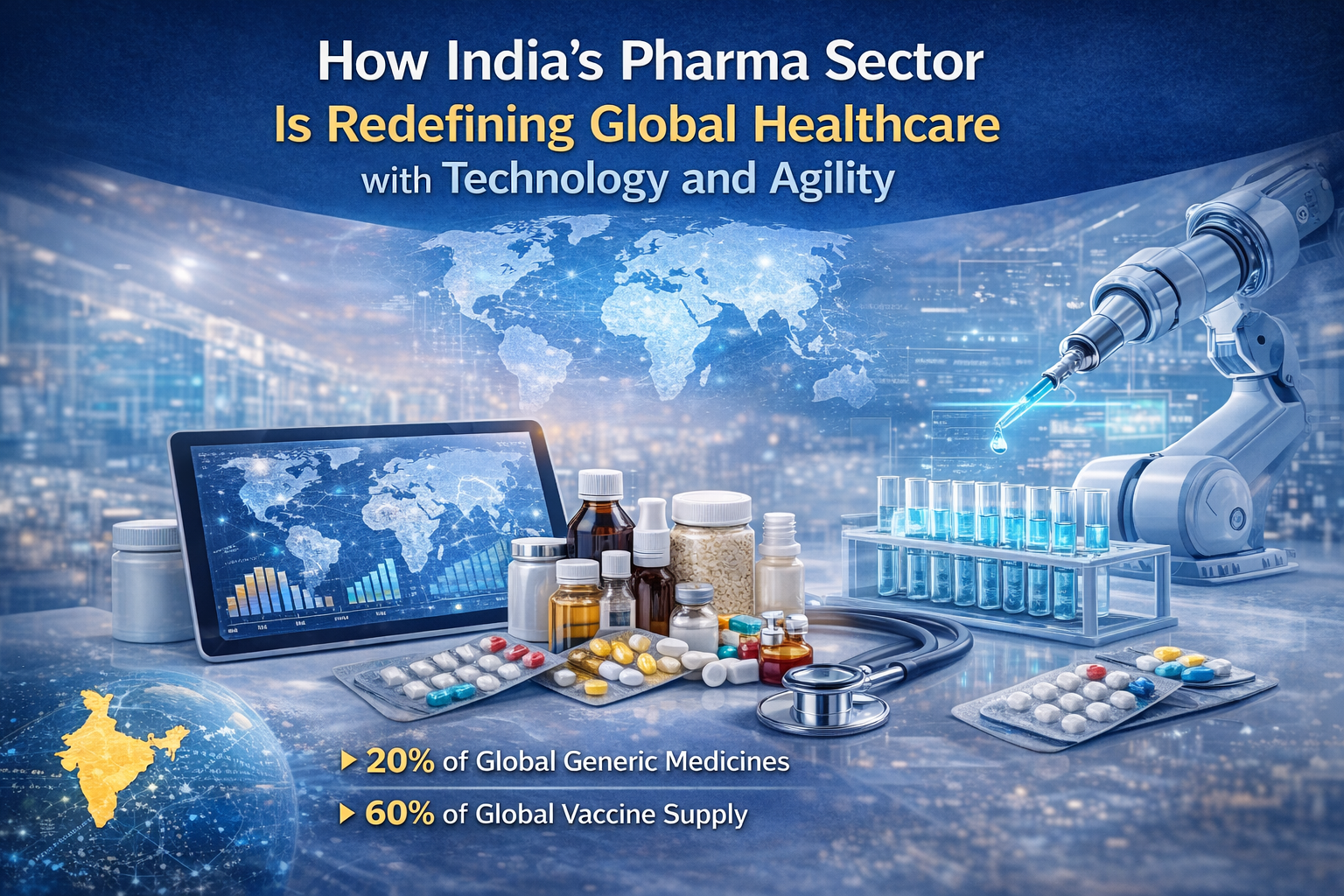
India’s pharmaceutical industry has evolved into one of the most influential pillars of global healthcare. From supplying affordable generic medicines to manufacturing a majority of the world’s vaccines, India has built a reputation rooted in scale, quality, compliance, and technological advancement. Today, the sector is not just about volume production—it is about innovation, digital transformation, and agile manufacturing systems that meet global standards.
India’s Expanding Global Footprint
India currently supplies nearly 20% of the world’s generic medicines and approximately 60% of global vaccine demand. Indian pharmaceutical products are exported to more than 200 countries, including highly regulated markets such as the United States and Europe. This international trust has been earned through stringent regulatory compliance, WHO-GMP certified facilities, and adherence to USFDA and EMA guidelines.
The country’s ability to deliver high-quality medicines at competitive pricing has positioned it as the “Pharmacy of the World.” However, the true transformation of the sector lies in how technology and data-driven processes are reshaping manufacturing and quality control.
From Periodic Testing to Real-Time Quality Monitoring
A decade ago, pharmaceutical manufacturing relied heavily on batch-based testing and manual validation processes. Today, modern facilities use:
-
Advanced analytics
-
AI-driven predictive maintenance
-
Automated inspection systems
-
Real-time quality monitoring
Product testing has shifted from periodic checks to continuous validation. Sophisticated laboratory infrastructure now integrates chromatography systems, spectrometry, and digital tracking to ensure consistent product integrity. This evolution significantly reduces the risk of deviations while improving turnaround times.
Real-time monitoring systems enable manufacturers to detect inconsistencies during production rather than after batch completion. This minimizes waste, enhances efficiency, and ensures regulatory compliance across global markets.
Digital Transformation in Pharma Manufacturing
Digitalization is redefining operational excellence in India’s pharmaceutical ecosystem. Smart factories now incorporate:
-
Internet of Things (IoT) sensors
-
Cloud-based data management systems
-
Electronic batch records
-
AI-assisted quality assurance
These innovations streamline documentation, reduce human error, and accelerate regulatory approvals. Furthermore, blockchain technology is being explored to strengthen supply chain transparency and prevent counterfeit medicines.
Digital transformation has also enabled better demand forecasting, inventory optimization, and faster product launches—critical factors in a competitive global market.
The Rise of Strategic Business Models
India’s pharma growth is not limited to manufacturing capabilities. Innovative business models have contributed significantly to sector expansion. One such model is the monopoly medicine company in india approach. This model grants exclusive marketing rights to distributors in defined territories, encouraging entrepreneurship and deeper market penetration.
Another significant contributor is the pharma contract manufacturing company model. Contract manufacturing enables smaller firms and startups to launch products without heavy capital investment in production infrastructure. It supports scalability, regulatory compliance, and faster time-to-market—making India a global outsourcing hub for pharmaceutical production.
Agility During Global Health Crises
India’s pharmaceutical sector demonstrated remarkable agility during recent global health emergencies. Rapid vaccine development, large-scale production, and timely export distribution highlighted the industry’s operational resilience.
Flexible manufacturing lines allowed companies to repurpose facilities for urgent drug production. Strong API (Active Pharmaceutical Ingredient) capabilities ensured uninterrupted supply chains. These adaptive mechanisms showcased India’s ability to respond swiftly to global healthcare demands.
Focus on Research and Innovation
While generics remain a core strength, India is increasingly investing in:
-
Biologics and biosimilars
-
Specialty drugs
-
Oncology treatments
-
Complex injectables
-
Personalized medicine
R&D expenditure is steadily increasing, with research centers focusing on formulation science, drug delivery systems, and novel therapies. Collaborative partnerships between academia, startups, and pharmaceutical manufacturers are accelerating innovation cycles.
Emerging technologies such as artificial intelligence in drug discovery and machine learning in clinical data analysis are further strengthening India’s competitive edge.
Regulatory Strength and Compliance
Global expansion requires robust regulatory frameworks. India has strengthened pharmacovigilance systems, enhanced quality audits, and improved traceability mechanisms.
Manufacturing plants are increasingly equipped to meet international compliance benchmarks. Continuous training programs ensure that workforce capabilities align with evolving regulatory standards. This focus on compliance sustains trust in Indian pharmaceuticals across global markets.
Supply Chain Modernization
Supply chain efficiency has become a strategic priority. Cold-chain logistics, digital inventory tracking, and automated warehousing systems reduce delays and product losses. Data-driven forecasting ensures uninterrupted medicine availability in both domestic and export markets.
Additionally, localization strategies for key raw materials are reducing dependency on imports, enhancing supply security, and improving cost control.
Sustainability and Green Manufacturing
Environmental responsibility is becoming integral to pharmaceutical operations. Many facilities are adopting:
-
Zero-liquid discharge systems
-
Renewable energy integration
-
Waste minimization practices
-
Green chemistry techniques
Sustainable manufacturing not only reduces environmental impact but also aligns with global ESG (Environmental, Social, Governance) standards increasingly demanded by international buyers.
The Road Ahead
India’s pharmaceutical industry stands at a transformative juncture. Technology-driven quality control, digital manufacturing systems, innovative business models, and regulatory excellence are collectively redefining global healthcare standards.
The next decade is expected to witness:
-
Greater AI integration in R&D
-
Expansion of biosimilar exports
-
Increased contract manufacturing partnerships
-
Enhanced automation in production lines
-
Stronger global regulatory harmonization
With its combination of scale, scientific expertise, cost efficiency, and agility, India is not merely supplying medicines—it is shaping the future of global healthcare delivery.
Conclusion
India’s pharmaceutical sector has evolved beyond traditional manufacturing into a technology-enabled, innovation-driven ecosystem. From real-time analytics in quality control to agile production models and strategic distribution systems, the industry exemplifies resilience and adaptability.
As global healthcare demands continue to grow, India’s commitment to quality, affordability, and innovation ensures that it remains a cornerstone of the international pharmaceutical landscape.