
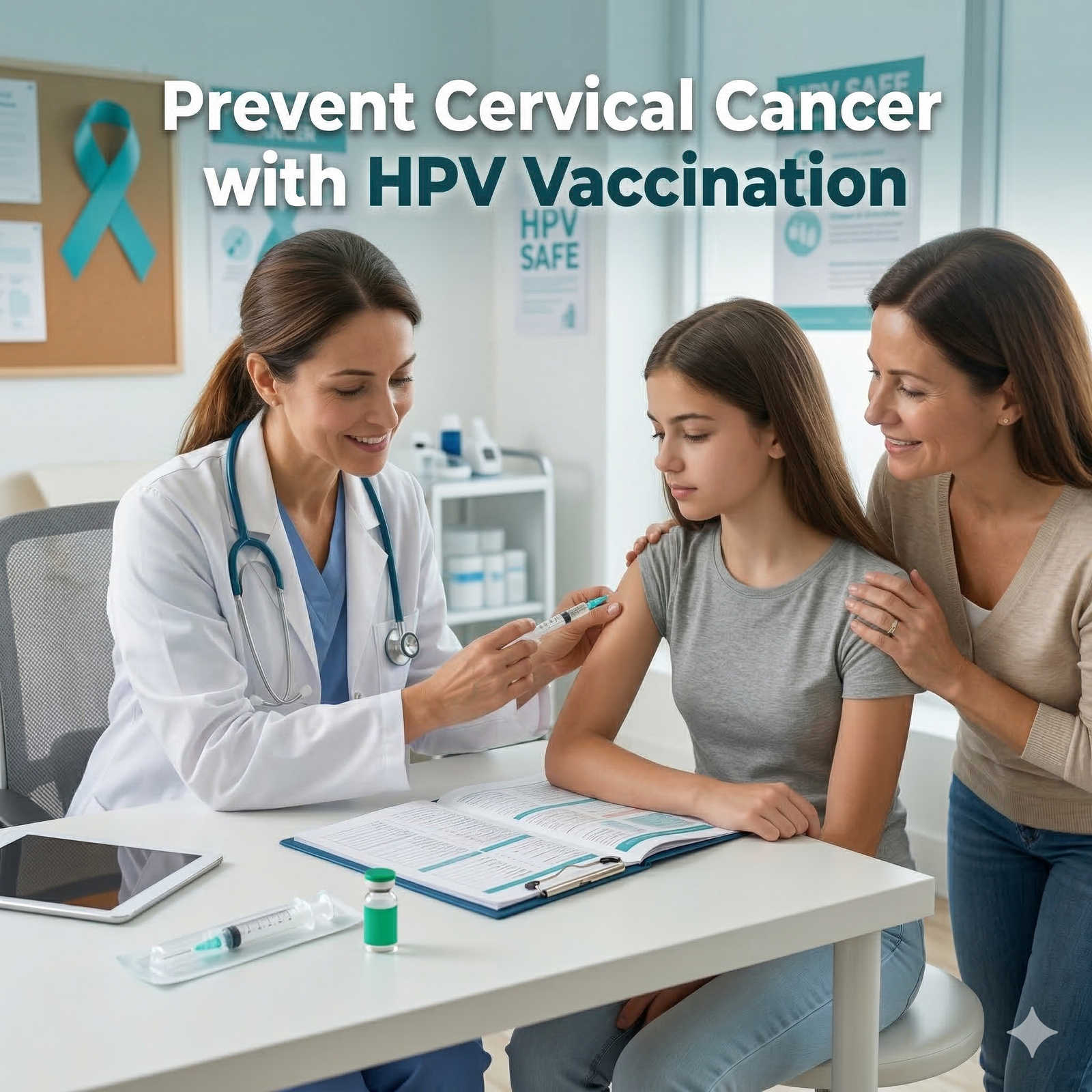
Cervical cancer remains one of the most serious health challenges for women worldwide, particularly in developing countries. In India, the burden of cervical cancer continues to affect thousands of women every year. Medical experts emphasize that prevention through vaccination is one of the most effective strategies to reduce the risk of Human Papillomavirus (HPV) infections, which are responsible for the majority of cervical cancer cases.
Recent public health initiatives aimed at expanding HPV vaccination programs are expected to significantly strengthen cancer prevention efforts. By targeting young adolescents before exposure to the virus, healthcare authorities aim to reduce the long-term incidence of cervical cancer and other HPV-related diseases.
Understanding Human Papillomavirus (HPV)
Human Papillomavirus is a group of more than 100 related viruses that can infect the skin and mucous membranes. While many HPV infections are harmless and resolve naturally, certain high-risk strains are known to cause cancer.
HPV is primarily transmitted through skin-to-skin contact, including sexual contact. Persistent infection with high-risk HPV strains can lead to cellular changes in the cervix that eventually develop into cancer if left untreated.
In addition to cervical cancer, HPV is also associated with several other types of cancers, including:
-
Anal cancer
-
Oropharyngeal cancer (throat and mouth)
-
Vaginal and vulvar cancers
-
Penile cancer
This wide spectrum of health risks highlights the importance of preventive measures such as vaccination and early screening.
Rising Cancer Burden Among Women
Cervical cancer remains one of the most common cancers among women in many low- and middle-income countries. In India, the disease continues to pose a significant public health challenge due to limited screening programs, lack of awareness, and delayed diagnosis.
Health experts estimate that a large number of women are diagnosed with cervical cancer each year, and many cases are detected at advanced stages. Early detection and prevention are therefore critical to reducing mortality associated with the disease.
The introduction of large-scale vaccination programs targeting adolescent girls represents a major step forward in addressing this challenge.
Importance of HPV Vaccination
Vaccination against HPV provides protection against the most dangerous virus strains responsible for cervical cancer. Medical studies have shown that the vaccine can significantly reduce the risk of HPV infection when administered before exposure to the virus.
Healthcare professionals recommend vaccination during early adolescence because the immune response is stronger and the likelihood of prior exposure to the virus is minimal.
Key benefits of HPV vaccination include:
-
Reduced risk of cervical cancer
-
Protection against other HPV-related cancers
-
Prevention of genital warts and related conditions
-
Long-term immunity against high-risk virus strains
Vaccination programs targeting adolescent girls have already shown promising results in several countries where cervical cancer rates have declined significantly over time.
Nationwide Vaccination Initiatives
Public health authorities are increasingly focusing on expanding vaccination coverage among adolescents. Targeting young girls around the age of 14 ensures that the vaccine is administered before the onset of sexual activity, which significantly increases its effectiveness.
Nationwide immunization programs aim to integrate HPV vaccination into broader public health strategies that address women’s health and cancer prevention.
Such initiatives involve collaboration between healthcare providers, schools, community health workers, and government agencies to improve vaccine accessibility and awareness.
In addition to vaccination, health authorities are also encouraging regular cervical cancer screening programs to detect early signs of disease.
Expanding Protection Against Multiple Cancers
Although cervical cancer prevention is the primary objective of HPV vaccination, medical research shows that the vaccine also helps reduce the risk of several other cancers associated with the virus.
Persistent HPV infections can lead to abnormal cell growth in different parts of the body. By preventing infection at an early stage, vaccination helps eliminate the root cause of these cancers.
This broader protective effect makes HPV vaccination one of the most powerful tools available for cancer prevention in modern medicine.
As awareness grows, healthcare professionals are emphasizing the importance of comprehensive strategies that combine vaccination, screening, and education.
Role of Awareness and Education
Despite the availability of effective vaccines, awareness about HPV and cervical cancer prevention remains limited in many regions. Cultural barriers, misinformation, and lack of healthcare access can prevent individuals from receiving timely vaccination.
Public health campaigns play a critical role in addressing these challenges by educating communities about the benefits of vaccination and early screening.
Key areas of awareness include:
-
Understanding HPV transmission and risks
-
Importance of vaccination at the recommended age
-
Benefits of regular health check-ups
-
Early detection through screening programs
Community outreach programs and school-based awareness campaigns can help increase vaccine acceptance and improve participation in preventive healthcare initiatives.
Strengthening Healthcare Infrastructure
To achieve long-term success in cervical cancer prevention, healthcare systems must continue strengthening their infrastructure and preventive care programs. This includes improving access to vaccination services, expanding diagnostic facilities, and training healthcare professionals.
Integrating HPV vaccination into routine immunization programs can significantly increase coverage and ensure that more adolescents receive protection against the virus.
Healthcare authorities are also focusing on developing more efficient screening methods and expanding cancer treatment facilities to support patients diagnosed with cervical cancer.
Future Outlook for Cancer Prevention
Advances in medical research and public health policy offer promising opportunities to reduce the global burden of HPV-related cancers. With widespread vaccination, improved screening technologies, and increased awareness, the long-term goal of eliminating cervical cancer as a major public health threat is becoming more achievable.
Several countries have already demonstrated that comprehensive vaccination programs can lead to dramatic reductions in HPV infections and cervical cancer cases within a generation.
As more healthcare systems adopt preventive strategies, the impact of HPV-related diseases is expected to decline significantly in the coming decades.
Conclusion
HPV vaccination represents a major breakthrough in cancer prevention, offering protection against multiple forms of cancer caused by the virus. By targeting adolescents before exposure to HPV, healthcare systems can significantly reduce the risk of cervical cancer and other related diseases.
Expanding vaccination coverage, strengthening awareness programs, and improving access to screening services will be essential for achieving long-term success in combating HPV-related cancers. With continued efforts from healthcare authorities and medical professionals, preventive healthcare strategies have the potential to save thousands of lives and improve women’s health outcomes worldwide.