
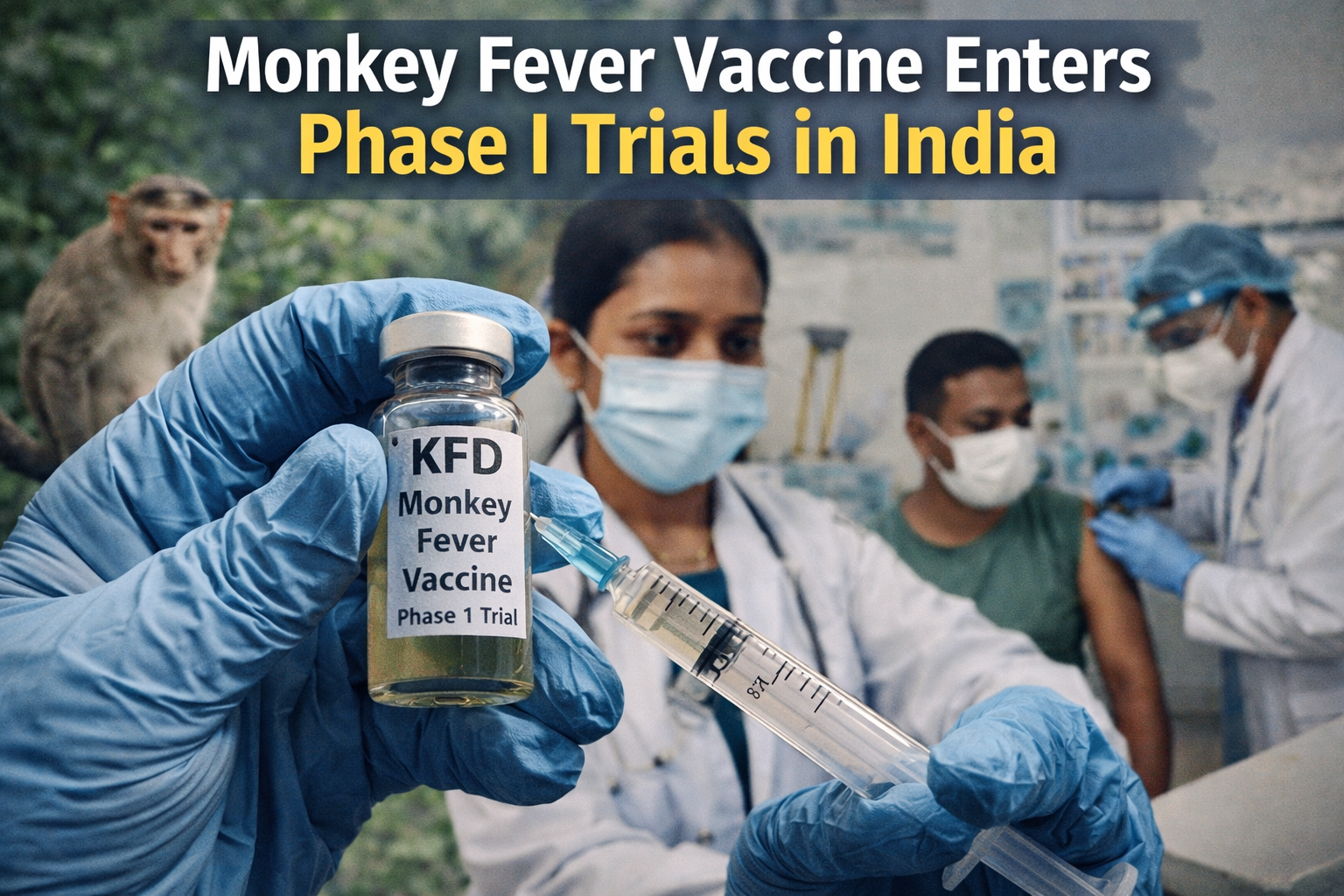
India has taken a significant step forward in strengthening its preparedness against Kyasanur Forest Disease (KFD), commonly known as monkey fever, with an indigenous vaccine candidate moving into Phase I clinical trials. The development marks an important milestone in addressing a long-standing regional public health challenge that primarily affects parts of southern and western India.
The vaccine initiative reflects a growing focus on locally developed, region-specific solutions for infectious diseases that may not receive global attention but pose serious risks to affected populations.
Understanding Kyasanur Forest Disease (Monkey Fever)
Kyasanur Forest Disease is a vector-borne viral illness transmitted to humans through the bite of infected ticks. The disease cycle typically involves monkeys as hosts, with humans becoming accidental victims when they enter forested or rural areas where infected ticks are present.
KFD is endemic to the Western Ghats region, with reported cases mainly from:
-
Karnataka
-
Tamil Nadu
-
Kerala
-
Goa
-
Maharashtra
Symptoms of monkey fever may include high fever, severe headache, muscle pain, gastrointestinal issues, and in some cases, hemorrhagic manifestations. Due to its localized nature, KFD has often been underrepresented in broader vaccine research agendas, despite recurring outbreaks.
Why This Vaccine Development Matters
The newly developed vaccine candidate is a two-dose, adjuvanted, inactivated vaccine, designed to improve immune response while maintaining a strong safety profile. Importantly, the project was initiated at the request of the Karnataka government, where KFD remains a persistent regional concern.
This approach highlights a crucial shift in India’s healthcare strategy:
-
State-driven demand guiding vaccine research
-
Focus on preventive healthcare for endemic diseases
-
Strengthening domestic vaccine development capacity
Such initiatives reduce dependency on imported solutions and ensure faster responses to localized disease outbreaks.
Progress So Far: From Lab to Human Trials
Before entering Phase I trials, the monkey fever vaccine successfully completed:
-
Preclinical toxicity studies, confirming initial safety
-
Manufacturing of GLP-grade material, ensuring compliance with quality and laboratory practice standards
These steps are essential prerequisites for human trials and demonstrate that the vaccine candidate has passed critical early development checkpoints.
What Phase I Trials Mean
A Phase I clinical trial is the first stage of testing a new vaccine in humans. It typically involves a small group of healthy volunteers and focuses on:
-
Assessing safety and tolerability
-
Identifying potential side effects
-
Determining the appropriate dosage
At this stage, the primary goal is not to prove effectiveness but to confirm that the vaccine can be safely administered to humans. If Phase I results are positive, the candidate can advance to larger trials that evaluate immune response and real-world protection.
According to the research authorities involved, successful completion of Phase I will pave the way for subsequent clinical trial phases, after which regulatory approval will be sought from India’s drug regulatory body.
Regulatory Pathway and Future Outlook
If the vaccine demonstrates safety and immunogenicity in early trials, it will progress through:
-
Phase II trials – expanded safety and immune response studies
-
Phase III trials – large-scale evaluation of efficacy
-
Regulatory review and approval
This structured pathway ensures that only vaccines meeting stringent safety and efficacy benchmarks reach the public.
The advancement of this vaccine also reinforces the importance of robust clinical research infrastructure and collaboration between government bodies, research institutions, and vaccine manufacturers.
Implications for India’s Vaccine Ecosystem
The monkey fever vaccine initiative carries broader significance beyond KFD prevention:
-
Strengthens India’s role in indigenous vaccine innovation
-
Encourages targeted solutions for neglected tropical and regional diseases
-
Demonstrates the value of public-sector–led research collaboration
Such developments also align with India’s expanding capabilities in pharmaceutical research, clinical trials, and large-scale manufacturing—areas increasingly supported by compliant production models and regulated development pipelines.
Conclusion
The entry of an indigenous monkey fever vaccine into Phase I trials represents a crucial advance in protecting communities vulnerable to Kyasanur Forest Disease. By addressing a region-specific health threat through scientific innovation and structured clinical evaluation, India continues to strengthen its public health resilience.
If successful, this vaccine could significantly reduce the disease burden in endemic regions and serve as a model for tackling other localized infectious diseases through homegrown, evidence-based solutions.