
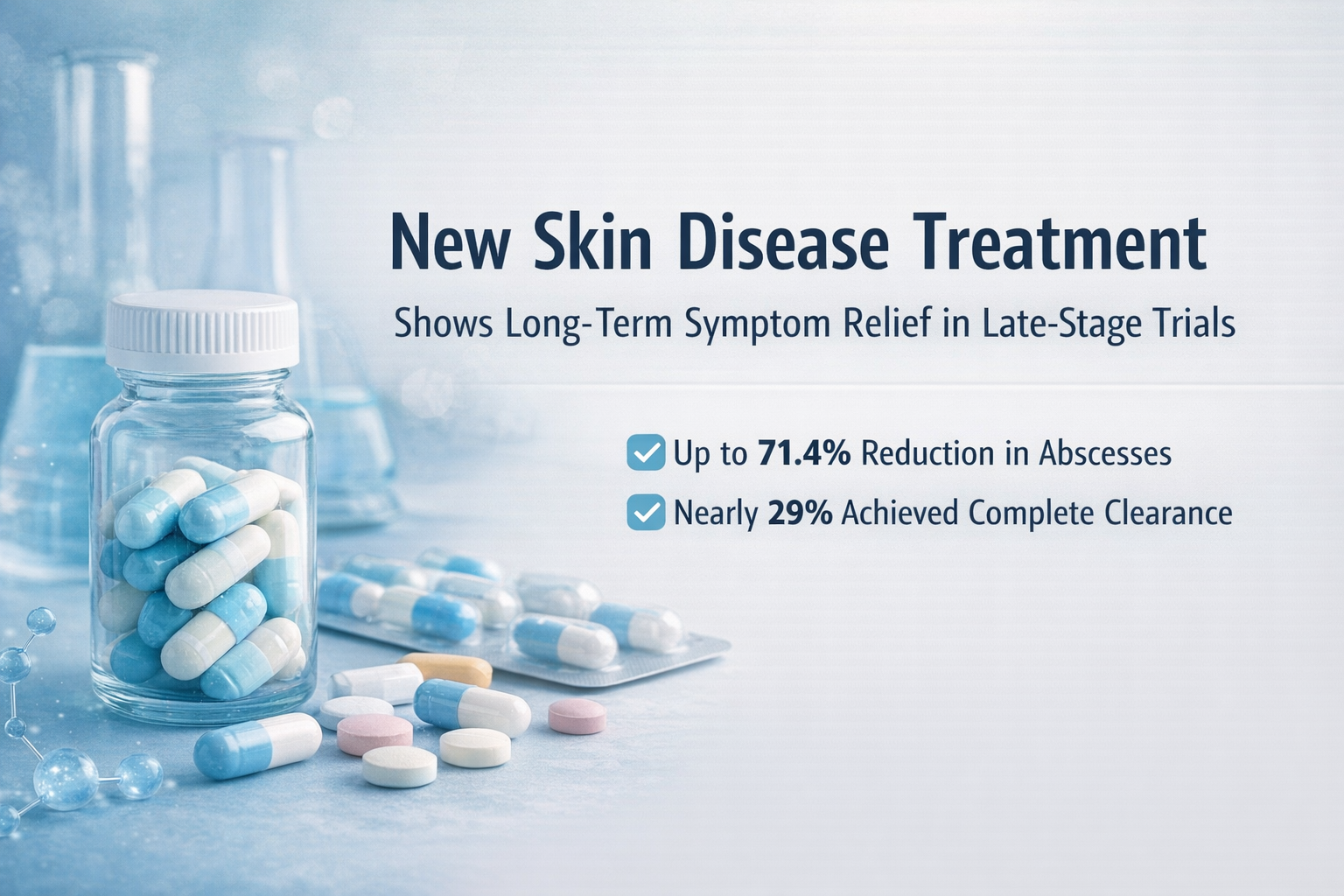
The global pharmaceutical landscape continues to evolve with promising innovations, especially in the treatment of chronic conditions. A recent development in dermatology has brought hope for patients suffering from a painful and often misunderstood skin disorder. A new oral drug has demonstrated significant long-term symptom relief in late-stage clinical trials, marking a potential breakthrough in treatment options.
This blog explores the clinical findings, mechanism of action, benefits, and future implications of this emerging therapy—while maintaining a clear, SEO-optimized structure for better readability.
Understanding the Skin Condition
The condition targeted in these trials is a chronic inflammatory skin disease characterized by:
- Painful lumps under the skin
- Recurrent abscesses
- Swelling and inflammation
- Scarring in sensitive areas such as underarms and groin
This disease not only causes physical discomfort but also significantly impacts the quality of life, leading to emotional distress and reduced confidence among patients.
Prevalence and Challenges
- Affects approximately 1% to 4% of the population
- More common in areas where skin rubs together
- Limited treatment options currently available
- Existing therapies are often injectable and expensive
Due to these limitations, there has been a strong demand for effective, convenient, and long-term treatment solutions.
Breakthrough in Late-Stage Clinical Trials
Recent late-stage clinical trials have shown highly encouraging results for a once-daily oral medication designed to treat moderate to severe cases of this condition.
Key Trial Outcomes:
- Up to 71.4% of patients achieved at least 50% reduction in abscesses and inflamed lesions after 54 weeks
- Around 57% of patients experienced significant symptom improvement
- Nearly 29% of patients achieved complete clearance of major skin lesions
These results indicate not just short-term relief, but sustained long-term effectiveness, which is a critical factor in managing chronic diseases.
How the Drug Works
The drug operates by targeting a specific protein involved in the body’s inflammatory response.
Mechanism of Action:
- Inhibits JAK1 (Janus Kinase 1)
- Reduces inflammatory signaling pathways
- Prevents formation of painful nodules and abscesses
By addressing the root cause of inflammation, the drug provides a more targeted and effective treatment approach compared to traditional therapies.
Advantages Over Existing Treatments
One of the most notable aspects of this therapy is its oral administration, which sets it apart from currently available options.
Key Benefits:
- Convenience: Once-daily pill improves patient compliance
- Non-invasive: Eliminates the need for injections
- Long-term relief: Sustained symptom control over 54 weeks
- Targeted action: Focuses on underlying inflammation
These advantages make it a potentially game-changing option for patients seeking easier and more effective management of their condition.
Safety and Side Effects
Like all medications, this treatment also comes with some side effects, although most reported cases were manageable.
Common Side Effects:
- Acne
- Upper respiratory tract infections
- Nasopharyngitis (common cold-like symptoms)
Overall, the safety profile appears consistent with other drugs in the same category, and no unexpected risks have been highlighted in the trials.
Regulatory Status and Approval Process
The drug is currently undergoing regulatory review by major health authorities. If approved, it could soon become part of standard treatment protocols for this chronic skin condition.
What Happens Next?
- Review by global regulatory bodies
- Evaluation of safety, efficacy, and long-term impact
- Potential approval for public use
- Market availability following clearance
The approval process is crucial to ensure that the drug meets all safety and quality standards before reaching patients.
Impact on the Pharmaceutical Industry
This development is significant not just for patients, but also for the pharmaceutical industry.
Industry Implications:
- Increased focus on targeted therapies
- Growth in oral biologic alternatives
- Expansion of dermatology drug pipelines
- Higher investment in chronic disease research
Such innovations highlight the industry’s shift toward patient-friendly and precision-based treatments.
Future Outlook
The success of this drug in late-stage trials opens new possibilities in dermatological care.
Expected Developments:
- Wider adoption of oral therapies for chronic conditions
- Improved patient adherence and outcomes
- Increased research into inflammation-based diseases
- Potential combination therapies for enhanced effectiveness
If approved, this treatment could redefine how chronic skin diseases are managed globally.
Conclusion
The emergence of a new oral drug showing long-term relief in late-stage trials represents a major step forward in treating chronic inflammatory skin conditions. With high response rates, convenient administration, and targeted action, this therapy has the potential to transform patient care.
As regulatory approvals progress, the pharmaceutical industry and healthcare providers will closely monitor its impact. For patients, this innovation offers renewed hope for better symptom control, improved quality of life, and a more manageable treatment journey.