
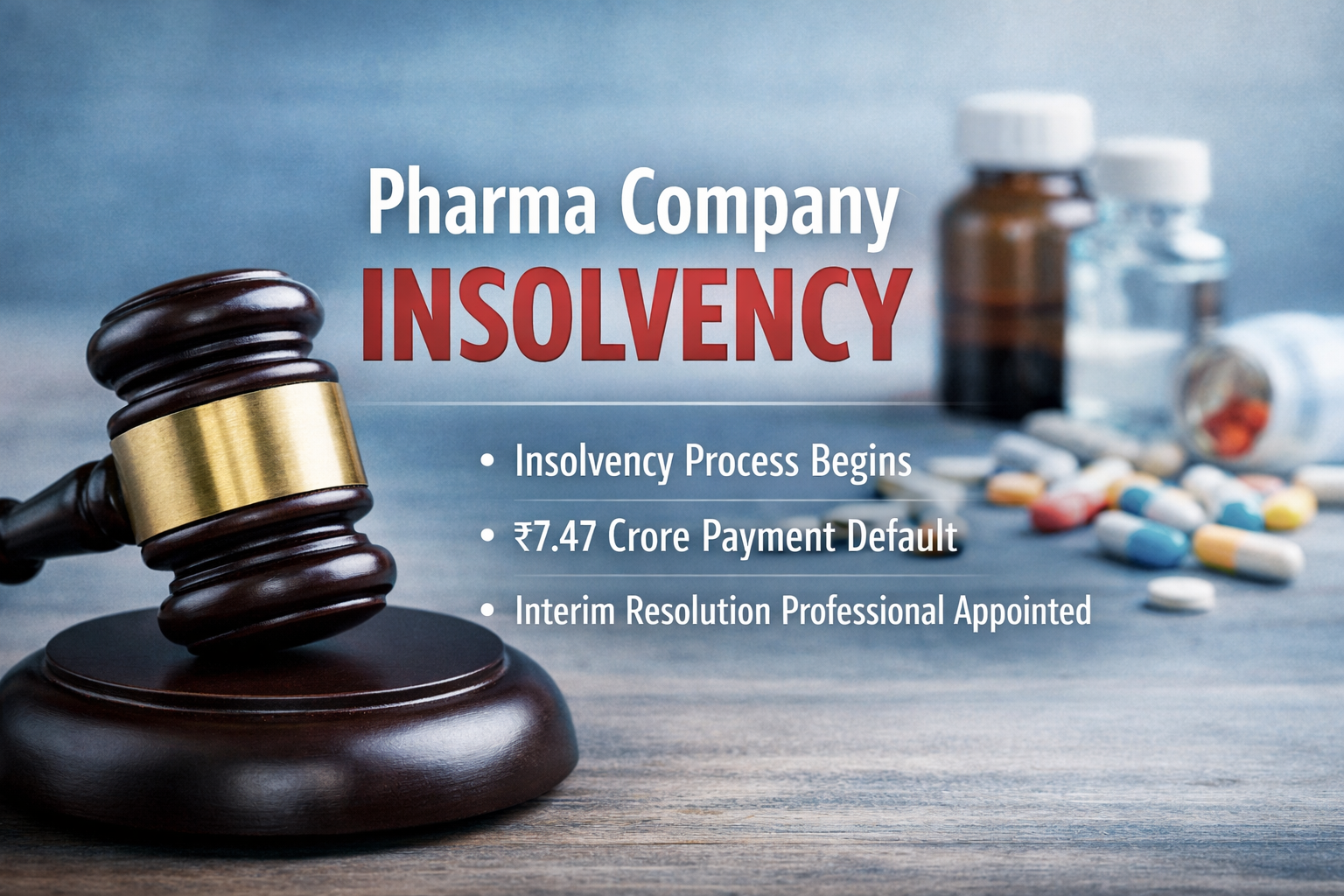
The Indian pharmaceutical industry is witnessing another significant development as a listed pharma company has been admitted into the Corporate Insolvency Resolution Process (CIRP) by the Mumbai bench of the National Company Law Tribunal (NCLT). This move comes after a default on outstanding dues to an operational creditor, highlighting ongoing financial stress in certain segments of the pharma ecosystem.
This article provides a detailed, SEO-optimized analysis of the situation, its causes, and its broader impact on the pharmaceutical industry in India.
Insolvency Admission: What Happened?
A pharmaceutical company involved in the trading and supply of Active Pharmaceutical Ingredients (APIs) and intermediates has been admitted into CIRP following a payment default. The creditor approached the tribunal after dues remained unpaid since late 2023.
The tribunal observed that there was a clear default in operational debt, which justified initiating insolvency proceedings under the Insolvency and Bankruptcy Code (IBC).
Key Case Highlights:
- Default in payment of approximately ₹7.47 crore
- Insolvency admitted by NCLT on March 17, 2026
- Appointment of an Interim Resolution Professional (IRP)
- Initiation of a structured resolution process
This marks the beginning of a legal and financial restructuring phase for the company.
What is the Corporate Insolvency Resolution Process (CIRP)?
The Corporate Insolvency Resolution Process is a legal framework under the Insolvency and Bankruptcy Code, 2016, designed to resolve corporate financial distress in a time-bound manner.
Objectives of CIRP:
- Resolve insolvency efficiently
- Maximize asset value
- Protect creditor interests
- Ensure business continuity where possible
How CIRP Works:
- The company’s management is handed over to the IRP
- Creditors are invited to submit their claims
- A Committee of Creditors (CoC) is formed
- Resolution plans are reviewed and approved
Role of the Interim Resolution Professional
The IRP plays a crucial role in managing the company during the insolvency process. Key responsibilities include:
- Taking control of operations and financial records
- Verifying claims submitted by creditors
- Maintaining the company as a going concern
- Coordinating with stakeholders for resolution
The IRP also facilitates the formation of the Committee of Creditors, which decides the future course of action.
Business Segment and Industry Exposure
The company operates in the API and intermediates supply chain, a critical segment of the pharmaceutical industry. This sector supports both domestic and international drug manufacturers by providing essential raw materials.
However, this segment is highly sensitive to:
- Raw material price fluctuations
- Supply chain disruptions
- Credit cycles and payment delays
- Regulatory compliance requirements
Any disruption in this space can impact the entire pharmaceutical production pipeline.
Key Reasons Behind Financial Stress
The insolvency case reflects broader challenges faced by pharma companies, particularly those dealing in raw materials and intermediates.
1. Payment Delays
Delayed payments from clients can severely impact working capital and liquidity.
2. Rising Input Costs
The cost of APIs, solvents, and intermediates has been volatile, putting pressure on profit margins.
3. Supply Chain Challenges
Global disruptions have made sourcing raw materials more expensive and unpredictable.
4. Operational Inefficiencies
Poor financial management and high dependency on credit cycles can increase risk exposure.
Impact on the Pharma Industry
The admission of a pharma company into CIRP has multiple implications:
Short-Term Effects:
- Disruption in supply of APIs and intermediates
- Increased caution among suppliers and buyers
- Delay in ongoing orders and contracts
Long-Term Effects:
- Industry consolidation through acquisitions
- Improved financial discipline
- Stronger compliance and governance practices
Growing Trend of Insolvency in Pharma
The Indian pharmaceutical sector has seen a gradual rise in insolvency cases in recent years. This trend reflects:
- Increased financial scrutiny
- Enforcement of payment discipline
- Use of legal frameworks for faster resolution
Such developments indicate that the industry is evolving towards greater transparency and accountability.
Opportunities Amid Insolvency
Despite the challenges, insolvency cases also create strategic opportunities:
For Investors:
Distressed assets can be acquired at competitive valuations with turnaround potential.
For Industry Players:
Stronger companies can expand market share by acquiring or merging with distressed firms.
For the Sector:
It promotes efficiency, better risk management, and sustainable growth.
Legal Clarity and Next Steps
The tribunal has clarified that the final amount of the claim will be determined during the CIRP process. This ensures proper verification and fairness.
What Happens Next?
- The IRP will take full control of the company
- Creditors will submit and verify claims
- The Committee of Creditors will be formed
- Resolution plans will be invited
- A final decision on revival or liquidation will be made
The process typically takes 180 to 270 days, depending on complexity.
Conclusion
The insolvency admission of a pharmaceutical company dealing in APIs and intermediates highlights the financial vulnerabilities within the pharma supply chain. While challenges such as payment defaults and rising costs continue to impact businesses, the structured framework of CIRP provides a clear path toward resolution.
This development underscores the importance of financial discipline, operational efficiency, and risk management in the pharmaceutical industry. As more companies navigate similar challenges, the sector is expected to emerge stronger, more transparent, and better equipped for long-term growth.