
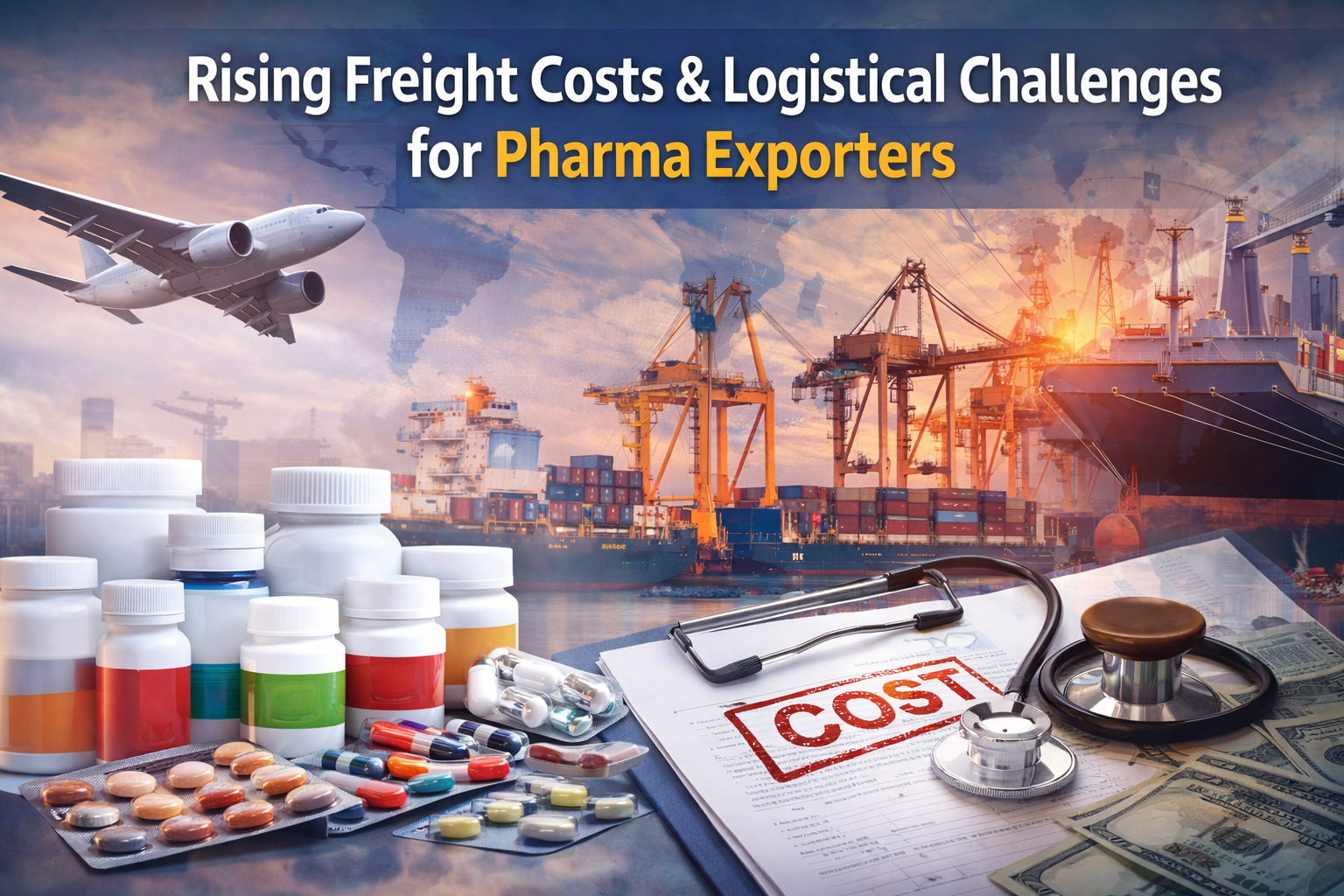
India has established itself as a global leader in pharmaceutical exports, supplying affordable and high-quality medicines to countries across the world. However, in 2026, the industry is facing a fresh wave of challenges due to rising freight costs and logistical disruptions. Increasing geopolitical tensions in West Asia—one of the key export destinations for Indian medicines—have significantly impacted shipping routes, delivery timelines, and overall export economics.
This evolving situation has prompted exporters to seek government support in the form of freight subsidies and improved logistics infrastructure. As the global supply chain becomes more unpredictable, Indian pharmaceutical exporters are adapting quickly to sustain growth and maintain their competitive edge.
Impact of Rising Freight Costs on Pharma Exports
Freight costs have always been a critical component of pharmaceutical exports. However, recent geopolitical developments have led to a sharp increase in transportation expenses. Shipping routes are becoming longer and more complex due to safety concerns, resulting in higher fuel consumption and operational costs.
For exporters, this means reduced profit margins and increased pricing pressure. Since Indian pharmaceutical products are widely known for their affordability, any rise in export costs can directly impact demand in price-sensitive markets.
Moreover, delays in shipments can disrupt supply chains in importing countries, affecting the availability of essential medicines. This puts additional pressure on exporters to ensure timely deliveries despite logistical hurdles.
Role of West Asia in India’s Pharma Exports
West Asia has long been a significant market for Indian pharmaceutical products, particularly generic medicines. Countries in this region rely heavily on imports to meet their healthcare demands, making India a preferred supplier due to its cost-effectiveness and manufacturing capabilities.
However, escalating tensions in the region have created uncertainties in trade routes. Ports and shipping lanes are facing disruptions, forcing exporters to reconsider their logistics strategies. The situation has highlighted the vulnerability of relying heavily on specific geographic routes for exports.
As a result, exporters are now exploring alternative markets and diversifying their export destinations to reduce dependency on any single region.
Demand for Freight Subsidies and Policy Support
In response to rising challenges, industry bodies have urged the government to introduce freight subsidies and provide logistical support. Such measures can help offset increased transportation costs and ensure that Indian exporters remain competitive in the global market.
Freight subsidies can play a crucial role in stabilizing export operations by reducing the financial burden on companies. Additionally, policy-level interventions such as faster customs clearance, improved port infrastructure, and streamlined documentation processes can enhance overall efficiency.
Government support is especially important for small and medium-sized exporters who may not have the financial resilience to absorb sudden cost increases.
Strategic Shift Towards Alternative Shipping Routes
To tackle disruptions, pharmaceutical exporters are actively identifying alternative shipping routes. While these routes may be longer, they offer greater safety and reliability in uncertain geopolitical conditions.
This strategic shift requires careful planning and coordination with logistics partners. Exporters must evaluate factors such as transit time, cost implications, and risk management before finalizing new routes.
In some cases, companies are also exploring multimodal transportation solutions, combining sea, air, and land routes to ensure timely deliveries. Although this approach can increase costs, it helps maintain supply continuity, which is critical in the pharmaceutical sector.
Importance of Buffer Stock Management
Another key strategy being adopted by exporters is increasing buffer stock levels. By maintaining higher inventory, companies can mitigate the impact of shipment delays and ensure uninterrupted supply to international markets.
Buffer stock acts as a safety net during times of uncertainty, allowing exporters to meet demand even when logistics are disrupted. However, this approach also requires efficient inventory management to avoid overstocking and increased holding costs.
Balancing supply and demand while maintaining optimal stock levels is becoming a crucial aspect of export planning in the current scenario.
Strengthening India’s Pharma Logistics Ecosystem
The current challenges highlight the need for a more resilient and efficient logistics ecosystem in India. Investments in port infrastructure, cold chain facilities, and digital logistics solutions can significantly improve the export process.
Advanced tracking systems and real-time data analytics can help exporters monitor shipments and respond quickly to disruptions. Additionally, collaborations between government agencies and private stakeholders can lead to more streamlined and cost-effective logistics operations.
Developing dedicated pharmaceutical export corridors and improving connectivity to major ports can further enhance India’s position in the global market.
Future Outlook for Pharma Exporters
Despite current challenges, the long-term outlook for India’s pharmaceutical exports remains positive. The global demand for affordable medicines continues to rise, and India is well-positioned to meet this demand.
However, exporters must adopt a proactive approach to navigate uncertainties. Diversifying markets, optimizing supply chains, and leveraging technology will be key to sustaining growth.
At the same time, government support in the form of policy reforms and financial assistance can provide the necessary boost to the industry. A collaborative effort between stakeholders will ensure that India continues to be a reliable supplier of pharmaceutical products worldwide.
Conclusion
The rise in freight costs and logistical challenges has created a complex environment for pharmaceutical exporters in 2026. While geopolitical tensions have disrupted traditional trade routes, they have also encouraged the industry to innovate and adapt.
With the right mix of government support, strategic planning, and infrastructure development, Indian pharma exporters can overcome these challenges and strengthen their global presence. By focusing on resilience and efficiency, the industry can continue to thrive even in uncertain times.