
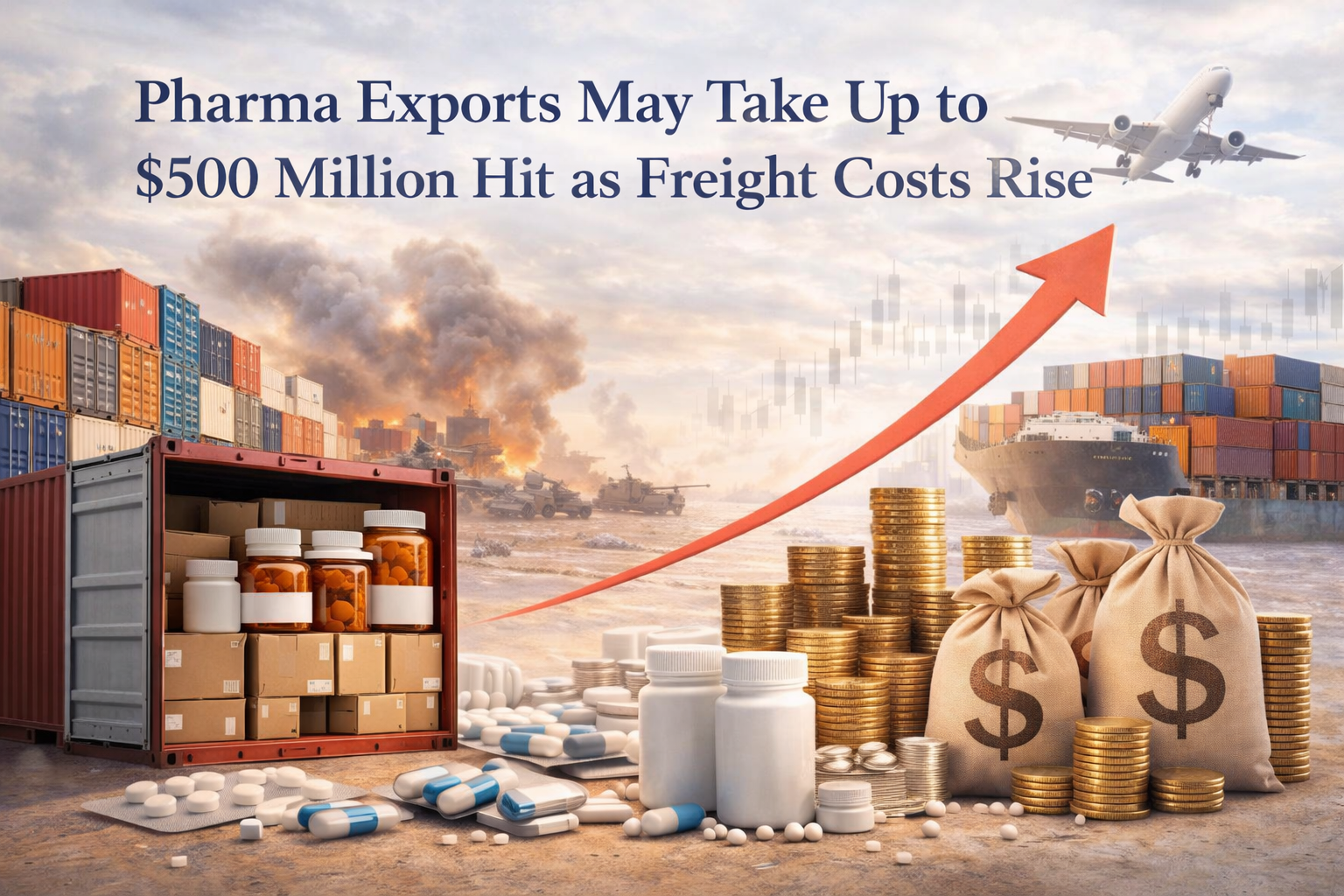
India’s pharmaceutical export industry is facing a significant challenge due to rising freight costs and global shipping disruptions. Geopolitical tensions in West Asia, particularly the Iran conflict, are creating serious logistical hurdles that could affect India’s drug exports by $300–500 million if disruptions continue.
The pharmaceutical sector is one of India’s strongest export industries, supplying affordable medicines to more than 200 countries worldwide. However, increasing transportation costs, shipping restrictions, and supply chain disruptions are putting pressure on exporters and manufacturers.
Rising Freight Costs Disrupt Pharma Trade
Freight costs have increased sharply in recent weeks as shipping companies avoid high-risk routes in the Gulf region. Industry reports suggest that the cost of transporting bulk drugs and pharmaceutical raw materials from China has nearly doubled.
For example:
-
Freight costs for containers carrying bulk drugs have increased from $1,200 to around $2,400 per container.
-
Shipping lines are charging additional surcharges of $3,500–$5,000 for cargo heading toward Gulf destinations.
-
Some shipping companies are even refusing to transport cargo to specific ports due to security concerns.
These sudden cost increases are creating serious financial pressure for pharmaceutical exporters.
Impact on India’s Pharmaceutical Export Market
India exports more than $30 billion worth of pharmaceutical products annually, making it one of the world’s largest suppliers of generic medicines. The West Asia and GCC regions contribute nearly 5–6% of India’s total drug exports.
Apart from being a direct market, West Asia also serves as a key transit hub for shipments heading to other global destinations, including the United States and Europe. Any disruption in this region can therefore affect multiple supply chains simultaneously.
If the current situation continues, industry experts believe that pharmaceutical exports could face a temporary slowdown, especially during critical financial periods such as the year-end export cycle.
Dual Impact on Raw Materials and Finished Drugs
One of the major concerns for pharmaceutical manufacturers is the two-sided impact of freight disruptions.
1. Raw Material Imports
India imports a significant amount of Active Pharmaceutical Ingredients (APIs) and intermediates from China. Rising shipping costs increase the production cost of medicines manufactured in India.
2. Finished Drug Exports
Once medicines are produced, they must be transported to international markets. If freight costs remain high or shipping routes remain restricted, exporting finished pharmaceutical products becomes more expensive and complicated.
This dual pressure may reduce profit margins for pharmaceutical exporters.
Shipping Routes and Air Cargo Challenges
Due to disruptions in sea routes, some pharmaceutical exporters previously relied on air cargo as an alternative. However, recent airspace closures and increased air freight costs have made this option less reliable.
Air transport is typically used for urgent or high-value pharmaceutical shipments. In situations where drug shortages occur in international markets, companies often send products quickly via air cargo to capture high-margin opportunities.
However, with air routes becoming more expensive and uncertain, exporters may find it difficult to respond quickly to sudden demand spikes in international markets.
Inventory Strategies to Manage Supply Risks
To handle supply chain uncertainty, many pharmaceutical companies have started increasing their inventory levels. Earlier, companies typically maintained 2.5 to 3 months of stock in global markets.
Today, many large pharmaceutical firms are maintaining 3.5 months or more of inventory, including goods currently in transit. This strategy helps companies ensure supply continuity even when shipping delays occur.
Higher inventory levels also help distributors maintain stable supply in case transportation disruptions last longer than expected.
Opportunities Despite Short-Term Challenges
Although rising freight costs create temporary disruptions, the situation may also create opportunities for certain pharmaceutical manufacturers. During global shortages, drug prices in international markets—especially in Europe—can increase dramatically.
In some cases, medicine prices may rise by 100% to 300% when supply becomes limited. Companies that can quickly deliver medicines during such shortages can benefit significantly from these market opportunities.
However, logistical disruptions may limit the ability of companies to take advantage of such situations.
Role of Efficient Manufacturing Partnerships
To stay competitive in uncertain global markets, pharmaceutical companies are increasingly focusing on efficient production models. Partnering with a reliable pharma contract manufacturing company allows businesses to increase manufacturing capacity without major infrastructure investments.
Contract manufacturing helps pharmaceutical companies:
-
Scale production quickly
-
Maintain strict quality standards
-
Reduce operational costs
-
Focus on marketing and export strategies
This model plays an important role in ensuring that global medicine demand can be met even during supply chain disruptions.
Strengthening Distribution Through Monopoly-Based Networks
Another key strategy used by pharmaceutical companies is expanding regional distribution networks. Many businesses collaborate with distributors working under the monopoly medicine company in india model.
This system allows distributors to operate within a dedicated territory without facing internal competition from the same brand. Such partnerships help build stable supply chains and improve product availability across various regions.
Monopoly-based distribution networks are particularly helpful in managing supply during periods of global uncertainty.
Government and Industry Monitoring the Situation
Industry associations and government bodies are closely monitoring the situation to ensure that pharmaceutical exports remain stable. Companies are actively coordinating with logistics providers, freight operators, and international distributors to minimize disruptions.
Pharmaceutical industry representatives have also highlighted the importance of maintaining strong global trade routes to ensure that essential medicines continue to reach patients worldwide.
Future Outlook for India’s Pharmaceutical Exports
Despite the current freight challenges, India’s pharmaceutical industry remains one of the most resilient sectors in the global healthcare market. The country continues to be a critical supplier of affordable generic medicines across both developed and developing nations.
While freight costs and logistics disruptions may temporarily affect export volumes, strong manufacturing capacity, diversified supply chains, and global demand for affordable medicines are expected to support long-term growth.
With strategic planning, improved logistics infrastructure, and stronger international partnerships, the Indian pharmaceutical industry is well positioned to navigate these challenges and continue expanding its global presence.