
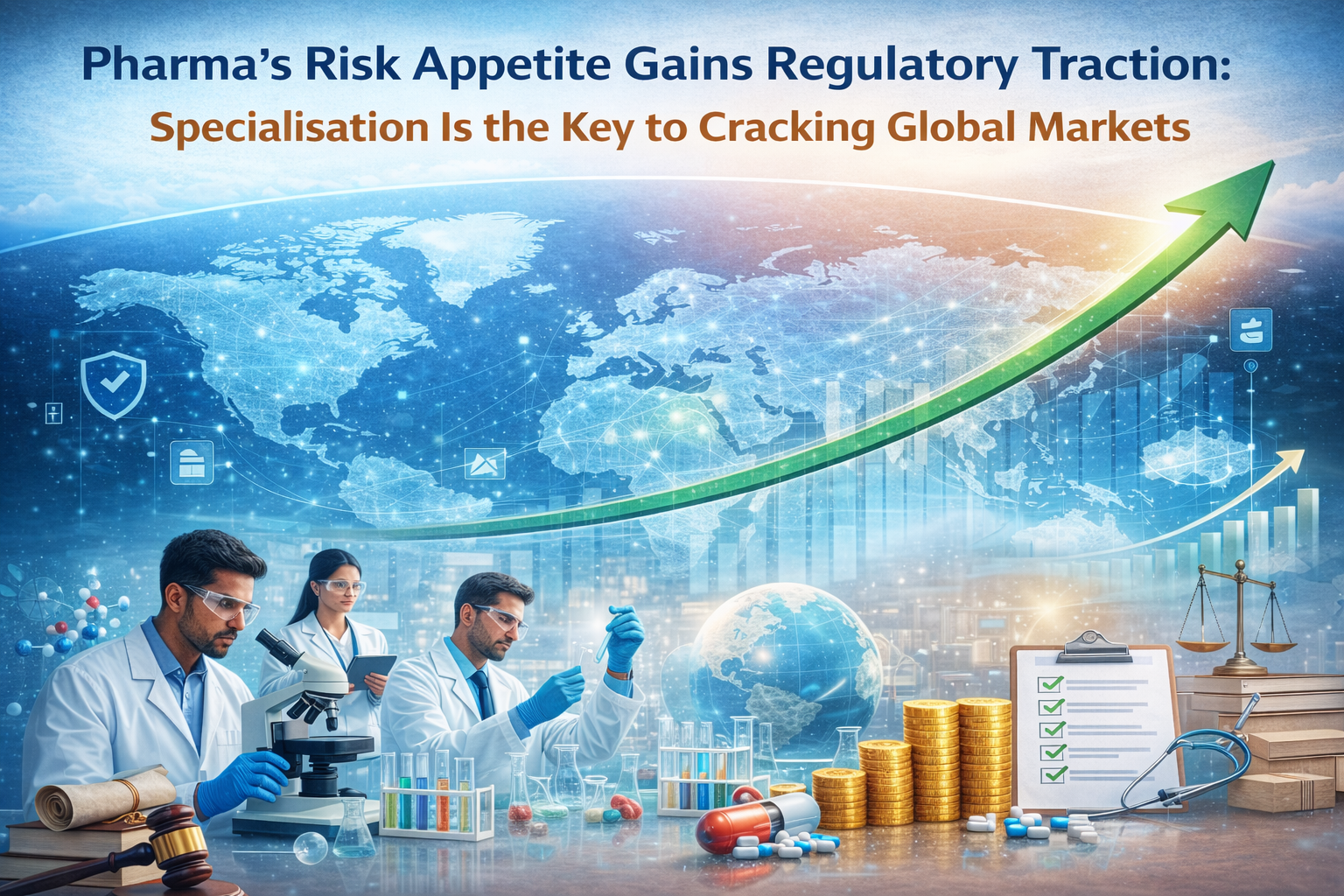
India’s pharmaceutical industry is entering a transformative phase. For decades, the sector thrived on a volume-driven generic model, focusing on reverse engineering and cost competitiveness. While this approach positioned India as the “pharmacy of the world,” evolving global regulations and complex therapeutic demands now require a more strategic pivot. Today, increased regulatory support and a growing appetite for calculated risk are redefining how Indian pharmaceutical companies compete globally.
This shift is not just about compliance—it is about specialisation, innovation, and value-chain integration.
From Volume-Driven Growth to Value-Driven Strategy
Historically, Indian pharma companies prioritized short-term return on investment by manufacturing high-volume generics. The business model was efficient but often limited in differentiation. However, global healthcare systems are demanding more—complex formulations, advanced drug delivery systems, biologics, and niche therapeutic expertise.
The regulatory ecosystem in India is gradually aligning with international standards such as USFDA, EMA, and WHO-GMP guidelines. This regulatory harmonization is encouraging companies to invest in:
-
Advanced R&D infrastructure
-
Specialised therapeutic segments
-
Compliance-driven manufacturing
-
Pharmacovigilance systems
-
Global quality benchmarking
As regulatory confidence improves, global buyers are increasingly open to partnerships with Indian manufacturers who demonstrate domain expertise rather than just scale.
Regulatory Support Is Changing the Game
Regulators now emphasize innovation, faster approvals for complex generics, and incentives for research-driven manufacturing. Policy-level reforms are supporting:
-
Production-linked incentives (PLI)
-
Bulk drug park development
-
API self-reliance initiatives
-
Faster dossier approvals
This structured support framework is encouraging companies to expand beyond traditional generics and enter high-margin segments such as oncology, cardiology, nephrology, and critical care.
Regulatory traction reduces uncertainty, which in turn enhances risk appetite. Companies are more willing to invest in niche molecules, biosimilars, and specialty formulations when compliance pathways are clearly defined.
Why Specialisation Is the Future
Global pharmaceutical markets are increasingly fragmented and therapeutic-area driven. Success is no longer about producing thousands of SKUs—it is about commanding authority in select categories.
1. Therapeutic Expertise
Specialising in targeted therapy segments allows companies to:
-
Develop deeper clinical knowledge
-
Build stronger regulatory dossiers
-
Achieve premium pricing
-
Create long-term brand equity
2. Complex Formulation Capabilities
High-barrier segments such as injectables, lyophilized products, modified-release formulations, and sterile manufacturing require technological depth. These capabilities are difficult to replicate, creating competitive insulation.
3. Stronger Distribution Models
In India, the franchise and monopoly model remains powerful. Many entrepreneurs prefer working with a monopoly medicine company in india because it offers territory protection, higher margins, and strategic autonomy. When combined with specialized product portfolios, monopoly distribution strengthens both scalability and market penetration.
Bridging the Skill Gap: The Missing Link
One of the biggest barriers to global expansion has been skill specialization. Moving up the pharmaceutical value chain requires:
-
Regulatory affairs professionals trained in global submissions
-
Clinical research specialists
-
Analytical scientists with advanced instrumentation expertise
-
Supply chain managers familiar with serialization and export compliance
Skill-building initiatives, academic-industry collaborations, and in-house training programs are now becoming central to competitive strategy.
Without a strong technical workforce, infrastructure investment alone cannot yield global competitiveness.
Innovation Beyond Molecules
Innovation in the current pharmaceutical landscape extends beyond new chemical entities. It includes:
-
Process innovation to improve yield and reduce impurity levels
-
Packaging innovation for export compliance
-
Cold-chain logistics integration
-
Digital pharmacovigilance systems
-
AI-driven demand forecasting
Companies adopting digital transformation are better positioned to meet stringent global audits. Transparency, traceability, and data integrity have become non-negotiable requirements in international markets.
The Global Opportunity Landscape
Emerging markets in Africa, Southeast Asia, Latin America, and Eastern Europe present high-growth potential for Indian pharmaceutical exporters. However, each market demands localized regulatory strategy and therapeutic customization.
Key drivers of global expansion include:
-
Patent expirations in developed economies
-
Demand for cost-effective biosimilars
-
Increasing chronic disease burden
-
Government healthcare reforms
Indian manufacturers that combine regulatory compliance, niche specialization, and franchise-based distribution models can effectively tap these opportunities.
Risk Management in a Regulated Environment
Increased risk appetite does not mean reckless expansion. Instead, it implies calculated strategic risk backed by regulatory clarity and compliance frameworks.
Risk management strategies now include:
-
Multi-country regulatory filings
-
Diversified therapeutic pipelines
-
API backward integration
-
Robust quality management systems
-
Continuous audit preparedness
Companies that embed compliance into their corporate DNA are more resilient to warning letters, import alerts, and global supply chain disruptions.
The Evolution of the Franchise Model
The pharmaceutical franchise ecosystem in India is also evolving. Earlier, it was purely margin-driven. Today, distributors and franchise partners seek:
-
Specialized product portfolios
-
Transparent pricing policies
-
Regulatory-compliant marketing materials
-
Long-term growth collaboration
Entrepreneurs partnering with a structured monopoly-based pharmaceutical model gain competitive advantages in saturated markets. However, success depends on therapeutic differentiation rather than simply offering large product lists.
Building Long-Term Global Competence
To truly crack the global code, pharmaceutical companies must integrate four pillars:
-
Regulatory Excellence – Aligning with international compliance benchmarks.
-
Therapeutic Specialisation – Focusing on niche and complex segments.
-
Skill Development – Investing in human capital and regulatory intelligence.
-
Sustainable Distribution Models – Leveraging structured monopoly frameworks for domestic scalability.
The future belongs to companies that treat regulation not as a barrier but as a strategic advantage.
Conclusion
India’s pharmaceutical industry is transitioning from a volume-centric generic model to a specialization-driven, compliance-focused growth engine. Regulatory reforms and structured policy support are strengthening confidence across the value chain. As companies increase their risk appetite—backed by robust governance and skill development—the sector is poised to command higher global influence.
The roadmap is clear: specialise, comply, innovate, and scale strategically. Those who align operational excellence with regulatory foresight will not only expand internationally but also build sustainable competitive moats in an increasingly complex pharmaceutical landscape.