
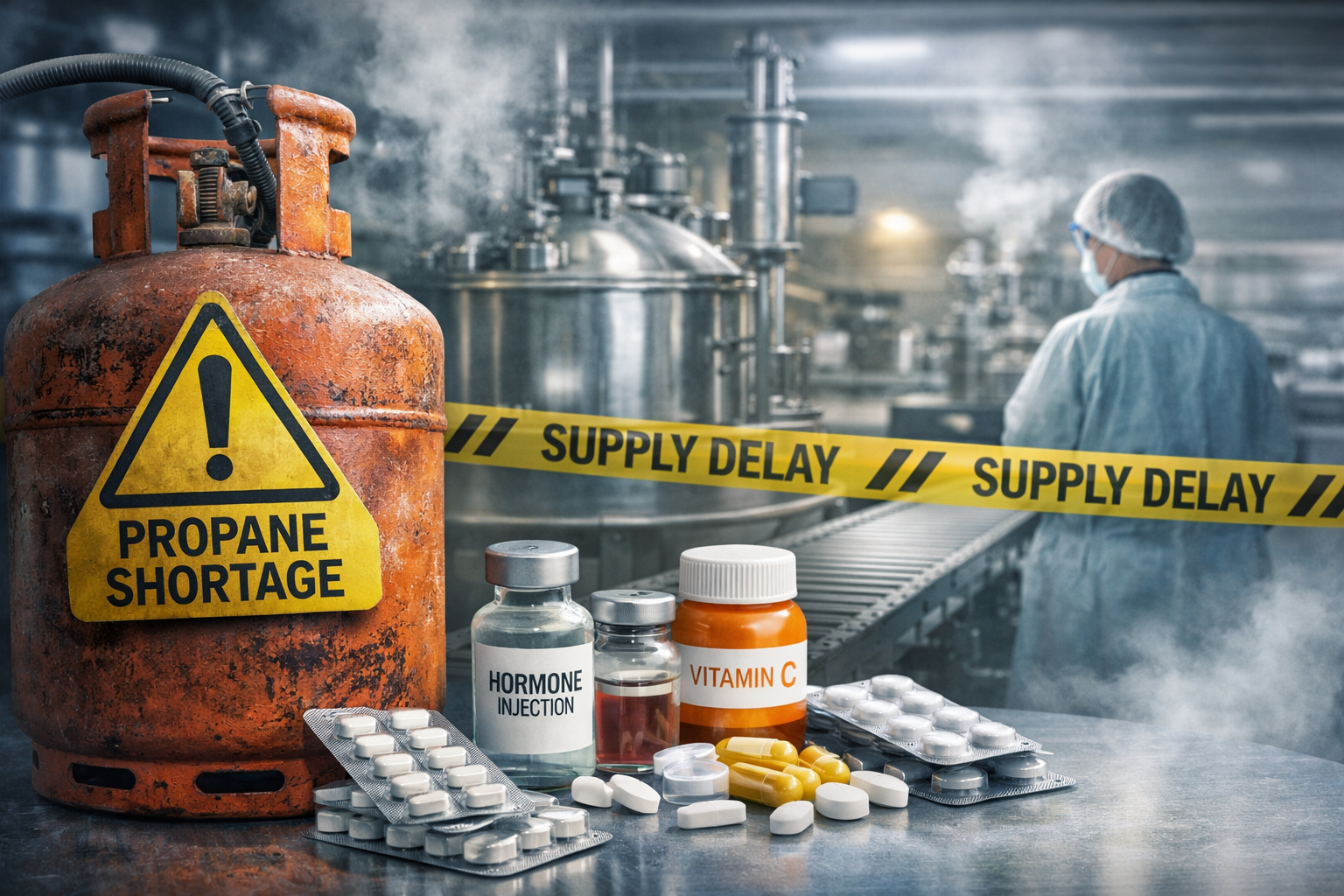
India’s pharmaceutical industry, often regarded as the “pharmacy of the world,” is currently facing a significant operational challenge. A sudden shortage of propane gas—a critical fuel used in drug manufacturing—has disrupted production across major pharma hubs. This development has raised concerns about potential shortages of essential medicines, including vitamins, hormones, and commonly used drugs.
In this blog, we explore the causes, impact, and future implications of the propane shortage on India’s pharmaceutical sector.
Why Propane is Crucial in Pharma Manufacturing
Propane plays a vital role in pharmaceutical production, particularly in Active Pharmaceutical Ingredient (API) manufacturing. It is widely used for:
-
Boiler operations and steam generation
-
Heating reactors for chemical synthesis
-
Sterilization and granulation processes
-
Maintaining controlled manufacturing environments
These processes are energy-intensive, and any disruption in fuel supply directly impacts production efficiency and output.
What Triggered the Propane Shortage?
The current propane shortage is largely attributed to disruptions in global energy supply chains. Ongoing geopolitical tensions and constrained LNG (Liquefied Natural Gas) import routes have resulted in:
-
Reduced availability of propane in India
-
Sharp increase in fuel prices
-
Supply prioritization for domestic household consumption
As a result, industrial sectors—including pharmaceuticals—are struggling to secure adequate fuel for continuous operations.
Major Pharma Hubs Affected
Several key pharmaceutical manufacturing regions in India have been impacted by the propane crunch, including:
-
Gujarat (one of the largest API manufacturing clusters)
-
Maharashtra
-
Telangana
-
Andhra Pradesh
Many production units in these regions have either reduced capacity or temporarily halted operations due to insufficient fuel supply.
Essential Medicines at Risk
The disruption in production is expected to affect a wide range of essential medicines and healthcare products.
Key Categories Impacted:
-
Pain relievers and fever medications
-
Antibiotics and anti-infective drugs
-
Diabetes management medicines
-
Vitamins and nutritional supplements
-
Hormonal therapies and injectables
These medicines form the backbone of both domestic healthcare and global pharmaceutical supply chains. Any shortage could have serious public health implications.
Production Slowdown and Supply Chain Disruptions
Industry experts estimate that nearly 200 pharmaceutical manufacturers may be forced to halt operations if the situation persists. This could lead to:
-
Delayed production timelines
-
Reduced inventory levels
-
Supply shortages in the coming weeks
-
Increased dependency on existing stock
The ripple effect of this slowdown may extend beyond India, impacting global markets that rely on Indian APIs and finished formulations.
Rising Manufacturing Costs
In addition to production disruptions, the propane shortage has significantly increased operational costs for pharma companies.
Cost Pressures Include:
-
Higher fuel procurement expenses
-
Increased logistics and transportation costs
-
Reduced economies of scale due to lower output
For an industry already operating on thin margins, these challenges may lead to higher drug prices in the market.
Impact on Global Pharmaceutical Supply
India is a major exporter of pharmaceutical products, supplying medicines to over 200 countries. A sustained production slowdown could:
-
Disrupt international drug supply chains
-
Delay exports of essential medicines
-
Affect global healthcare systems relying on affordable drugs
This situation highlights the vulnerability of global healthcare systems to energy supply disruptions.
Government Measures and Industry Response
To manage the crisis, the government has taken steps to prioritize propane and LPG supply for household consumption. However, the pharmaceutical industry is seeking additional support.
Key Demands from Industry:
-
Classification of pharma manufacturing under essential services
-
Priority allocation of propane for critical drug production
-
Temporary policy relaxations similar to pandemic-era measures
Industry stakeholders believe that timely intervention is necessary to prevent a full-scale supply crisis.
Long-Term Implications for the Pharma Sector
The propane shortage serves as a wake-up call for the pharmaceutical industry to reduce dependency on a single energy source.
Future Strategies May Include:
-
Diversification of fuel sources (natural gas, renewable energy)
-
Investment in energy-efficient manufacturing technologies
-
Strengthening domestic energy supply chains
-
Building strategic fuel reserves for critical industries
These steps can enhance resilience and ensure uninterrupted production in the future.
Conclusion
The ongoing propane shortage has exposed a critical vulnerability in India’s pharmaceutical manufacturing ecosystem. With essential medicines like vitamins, hormones, and antibiotics at risk, the situation demands immediate attention from both industry and policymakers.
While short-term measures can help stabilize production, long-term strategies will be crucial in safeguarding the sector against similar disruptions. Ensuring a stable energy supply is not just an industrial necessity—it is a public health priority.