
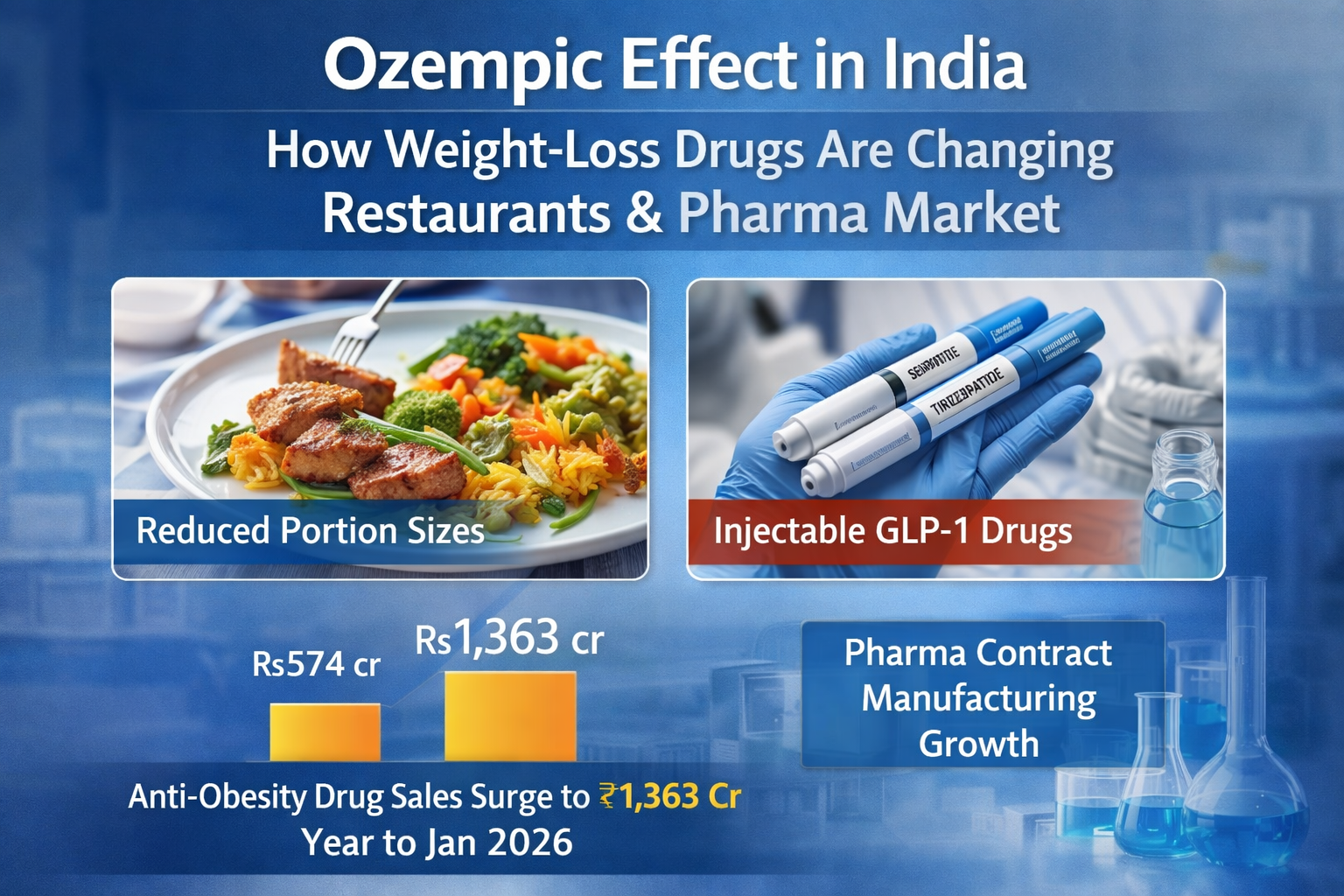
India’s urban food landscape is undergoing a structural shift. A rapid rise in prescriptions for anti-obesity and diabetes medications has begun influencing not only healthcare trends but also restaurant menus, portion sizes, and consumer expectations. The so-called “Ozempic effect” is no longer limited to Western markets—it is reshaping dining behavior across metro cities in India.
Anti-Obesity Drug Market Sees Record Growth
According to prescription trend data, sales of anti-obesity medications touched approximately ₹1,363 crore in the year ending January 2026, compared with ₹574 crore the previous year. This sharp increase coincides with the entry of injectable semaglutide and tirzepatide into the Indian market.
These drugs, prescribed primarily for type 2 diabetes management, have gained attention due to their weight-loss effects. They work by regulating appetite, slowing gastric emptying, and promoting satiety. As more patients adopt medically supervised weight-loss treatments, food consumption patterns are adjusting accordingly.
The implication is clear: pharmaceutical innovation is directly influencing India’s food and beverage industry.
“Size O” Menus and Smaller Portions: A New Normal
Urban restaurants are responding proactively. Many fine-dining chains and café brands are introducing reduced portion options, high-protein alternatives, and lighter dishes. The idea is not merely calorie reduction but macro-nutrient rebalancing.
Key Menu Shifts Include:
-
Smaller serving sizes
-
Protein-focused dishes
-
Reduced carbohydrate loads
-
Clearer nutritional labeling
-
Low-oil and low-sugar preparations
This trend mirrors what happened in the beverage industry, where diet and zero-sugar variants began replacing high-calorie carbonated drinks.
Consumers on GLP-1 receptor agonists often report reduced appetite. As a result, traditional large portions are increasingly perceived as excessive rather than indulgent. Restaurants that adapt quickly are likely to retain this evolving customer segment.
A Generational Shift in Food Preferences
Industry leaders suggest this is not a temporary phenomenon. Younger urban consumers are already gravitating toward mindful eating, fitness-driven lifestyles, and preventive healthcare.
Medical experts emphasize that patients using such medications must maintain balanced diets rich in protein while avoiding excessively fried or spicy foods. This has encouraged food brands to revisit menu engineering and ingredient sourcing.
The shift also reflects increased health awareness rather than merely rising obesity rates. More individuals are proactively addressing metabolic concerns, signaling a deeper behavioral transformation.
Urban-Centric Trend, But Expansion Likely
At present, the impact is concentrated in metro and tier-1 cities. However, given India’s rapid digital adoption and social media influence, trends often move quickly to tier-2 and semi-urban markets.
An additional catalyst is pricing. With semaglutide nearing patent expiration, experts anticipate a significant price reduction—potentially over 60%—as multiple manufacturers enter the segment. Lower prices could accelerate adoption, expanding the consumer base for such medications.
This presents parallel opportunities for both food businesses and pharmaceutical stakeholders.
Impact on the Pharmaceutical Supply Chain
The surge in demand for anti-obesity drugs is also strengthening India’s manufacturing ecosystem. Increased production capacity, improved cold-chain logistics for injectables, and advanced formulation expertise are becoming critical.
India’s pharmaceutical sector, particularly companies operating under a monopoly medicine company in india model, may find significant opportunities in niche therapeutic segments such as metabolic disorders and weight management.
Similarly, collaboration with experienced pharmaceutical contract manufacturers in india is becoming essential to meet growing domestic and export demand. Contract manufacturing enables scalability, regulatory compliance, and faster time-to-market—especially in specialized injectable segments.
As multiple new entrants prepare to launch generic versions post-patent expiry, manufacturing partnerships will play a pivotal role in ensuring quality, affordability, and accessibility.
Restaurant Economics: Balancing Margins with Health Trends
From a business perspective, smaller portions do not necessarily mean lower revenues. Restaurants are strategically redesigning pricing structures, premiumizing ingredients, and optimizing food costs.
High-protein ingredients such as lean meats, plant-based proteins, and specialized grains are being integrated. Nutritional transparency is becoming a marketing differentiator. Clear labeling of protein, carbohydrates, and calorie content builds consumer trust—particularly among health-conscious diners.
Food businesses that fail to adapt risk losing relevance among urban consumers prioritizing metabolic health.
Long-Term Outlook: A Structural, Not Temporary, Shift
Several factors indicate this is a structural transformation:
-
Increased willingness to seek medical intervention for obesity
-
Rapid diffusion of health trends via digital platforms
-
Expected drop in drug prices post-patent
-
Growing preventive healthcare awareness
-
Strong pharmaceutical manufacturing capacity in India
The intersection of healthcare and hospitality is becoming more visible. What began as a medical innovation is now influencing menu design, packaging formats, and consumer psychology.
Conclusion
The “Ozempic effect” in India highlights how pharmaceutical advancements can ripple across industries. Anti-obesity drug sales are rising sharply, urban restaurants are recalibrating menus, and pharmaceutical manufacturing is scaling to meet demand.
As injectable weight-management therapies become more accessible, the ecosystem—from healthcare providers to restaurant operators and contract manufacturers—must align with evolving consumer behavior.
India stands at the intersection of rising health consciousness and pharmaceutical innovation. Businesses that adapt early—whether in food services or drug manufacturing—are likely to capture sustained growth in this rapidly evolving market landscape.