
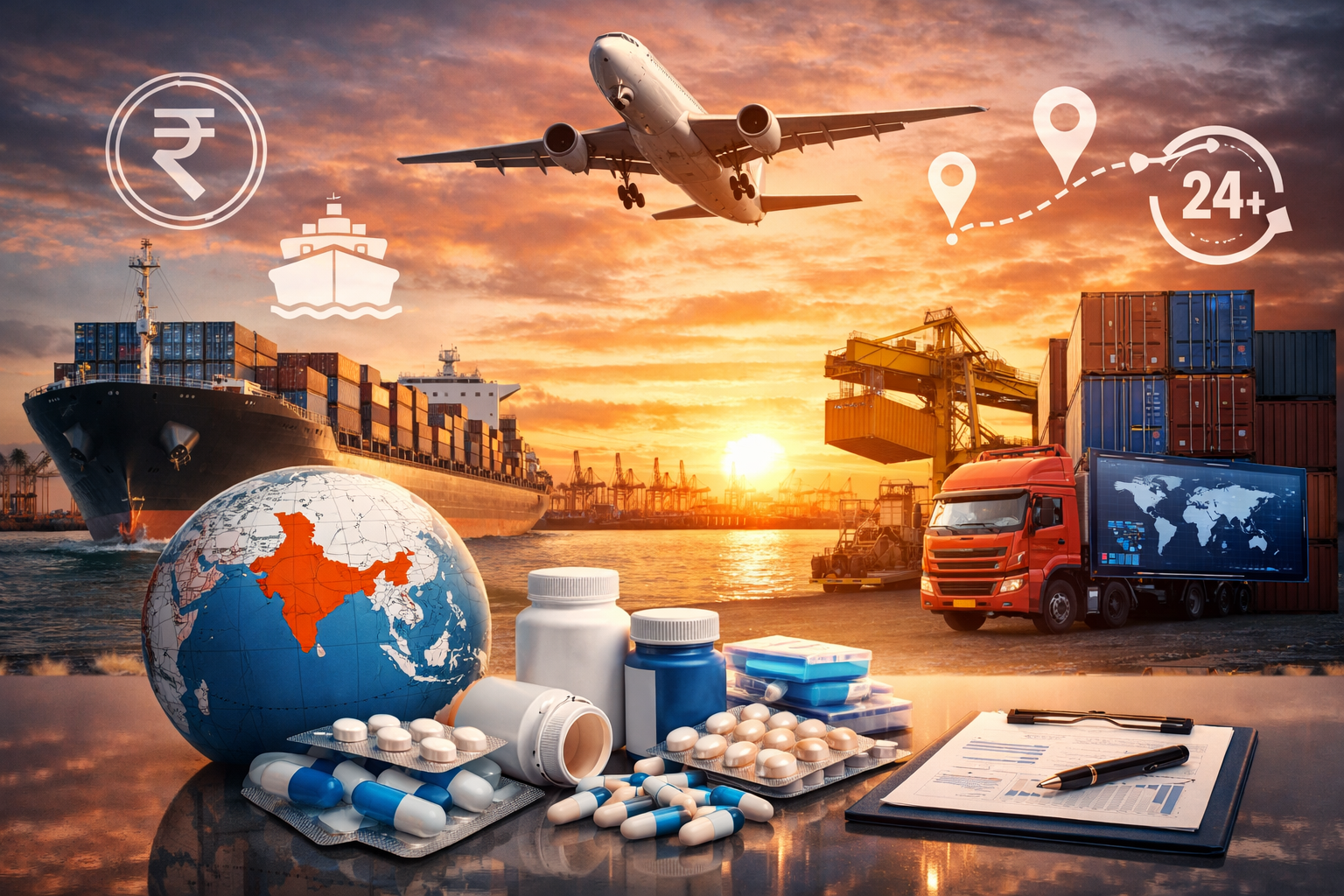
India has established itself as one of the largest suppliers of affordable medicines across the globe. From generic drugs to complex formulations, the Indian pharmaceutical sector exports products to more than 200 countries. However, recent geopolitical tensions and rising logistics expenses are creating new challenges for exporters. Increasing freight costs, shipping delays, and supply chain disruptions are forcing pharmaceutical exporters to rethink their strategies and seek support from the government.
The pharmaceutical export ecosystem is deeply connected with global logistics networks. When geopolitical tensions rise in major trade routes, shipping costs increase significantly. This situation has become more prominent due to the ongoing instability in West Asia, a key market for Indian pharmaceutical products.
Growing Concerns Over Rising Freight Costs
Freight expenses have increased considerably in recent months due to disruptions in international shipping routes and higher fuel costs. Exporters who rely heavily on sea transport are particularly affected because the majority of pharmaceutical products are shipped through maritime routes.
West Asia is one of the largest markets for Indian generic medicines. Countries in this region import large volumes of antibiotics, anti-infectives, cardiovascular drugs, and other essential medicines from India. When shipping costs rise or routes become uncertain, exporters face increased operational expenses that ultimately reduce their profit margins.
Industry bodies have raised concerns that if freight costs continue to increase, smaller exporters may struggle to maintain their competitiveness in global markets.
Demand for Freight Subsidies and Government Support
To address these challenges, industry representatives have urged the government to consider providing freight subsidies and stronger logistical support. These measures can help exporters manage sudden cost increases and maintain steady supply chains.
Some of the key support measures being discussed include:
-
Freight subsidies for pharmaceutical exporters
-
Improved port infrastructure and faster customs clearance
-
Financial support for exporters dealing with emergency logistics costs
-
Development of alternative shipping routes and trade corridors
Government intervention can play a crucial role in stabilizing export operations and ensuring that essential medicines continue to reach global markets without disruption.
Exploring Alternative Shipping Routes
Many pharmaceutical exporters are now exploring alternative shipping routes to avoid high-risk zones and reduce delays. Some companies are also increasing their buffer stock levels in international warehouses to ensure product availability even during supply disruptions.
These strategies help companies reduce dependency on a single route and maintain a stable supply chain. However, maintaining additional inventory and using alternative routes often increases operational costs, which is why logistical support from policymakers becomes even more important.
Impact on Global Supply of Generic Medicines
India supplies nearly 20% of the world’s generic medicines. Any disruption in the export supply chain can have a global impact, especially in developing countries that rely heavily on affordable Indian drugs.
If export costs increase significantly, it may lead to higher medicine prices in international markets. This situation could affect healthcare affordability in many regions where Indian pharmaceutical companies serve as primary suppliers.
Therefore, maintaining a stable export infrastructure is not only important for the Indian economy but also for global healthcare systems.
Strengthening Domestic Manufacturing and Supply Chains
One effective way to handle export challenges is by strengthening domestic manufacturing capabilities. India already has a strong pharmaceutical production base, but improving supply chain resilience can further enhance its global competitiveness.
Many companies are expanding partnerships with reliable manufacturing partners and improving production efficiency. Businesses that collaborate with a reliable pharma contract manufacturing company can scale their production while keeping operational costs under control.
Contract manufacturing also helps pharmaceutical companies focus on research, marketing, and distribution while experienced manufacturers handle large-scale production.
Opportunities for Monopoly-Based Pharma Business Models
While global logistics challenges create temporary disruptions, they also open opportunities for new business models within the pharmaceutical sector. Many entrepreneurs and distributors are now exploring franchise-based pharmaceutical businesses that offer exclusive distribution rights in specific regions.
Working with a reliable monopoly medicine company in india allows distributors to operate in a dedicated territory without facing intense competition from the same brand. This model helps build strong local distribution networks and ensures consistent product availability.
Monopoly-based distribution systems also support pharmaceutical companies in expanding their market reach while maintaining quality control and supply stability.
Digital Transformation in Pharmaceutical Logistics
Another major trend helping the industry overcome logistical challenges is digital transformation. Many exporters are now using technology-driven logistics management systems to track shipments, forecast supply chain disruptions, and optimize delivery routes.
Advanced analytics tools allow companies to predict freight price fluctuations and plan shipments more efficiently. Blockchain-based tracking systems are also being explored to enhance transparency and prevent supply chain delays.
Digital logistics solutions can significantly reduce inefficiencies and help exporters respond quickly to sudden disruptions in global shipping networks.
The Road Ahead for Indian Pharma Exports
Despite the current logistical challenges, the future of Indian pharmaceutical exports remains strong. The global demand for affordable medicines continues to grow, and India remains one of the most trusted suppliers of high-quality generic drugs.
However, maintaining this leadership position requires coordinated efforts between industry stakeholders and policymakers. Strategic investments in logistics infrastructure, shipping support, and manufacturing capabilities can help the sector navigate global uncertainties.
By strengthening supply chains, exploring innovative business models, and leveraging digital logistics tools, the Indian pharmaceutical industry can continue expanding its global footprint while ensuring uninterrupted access to life-saving medicines worldwide.