
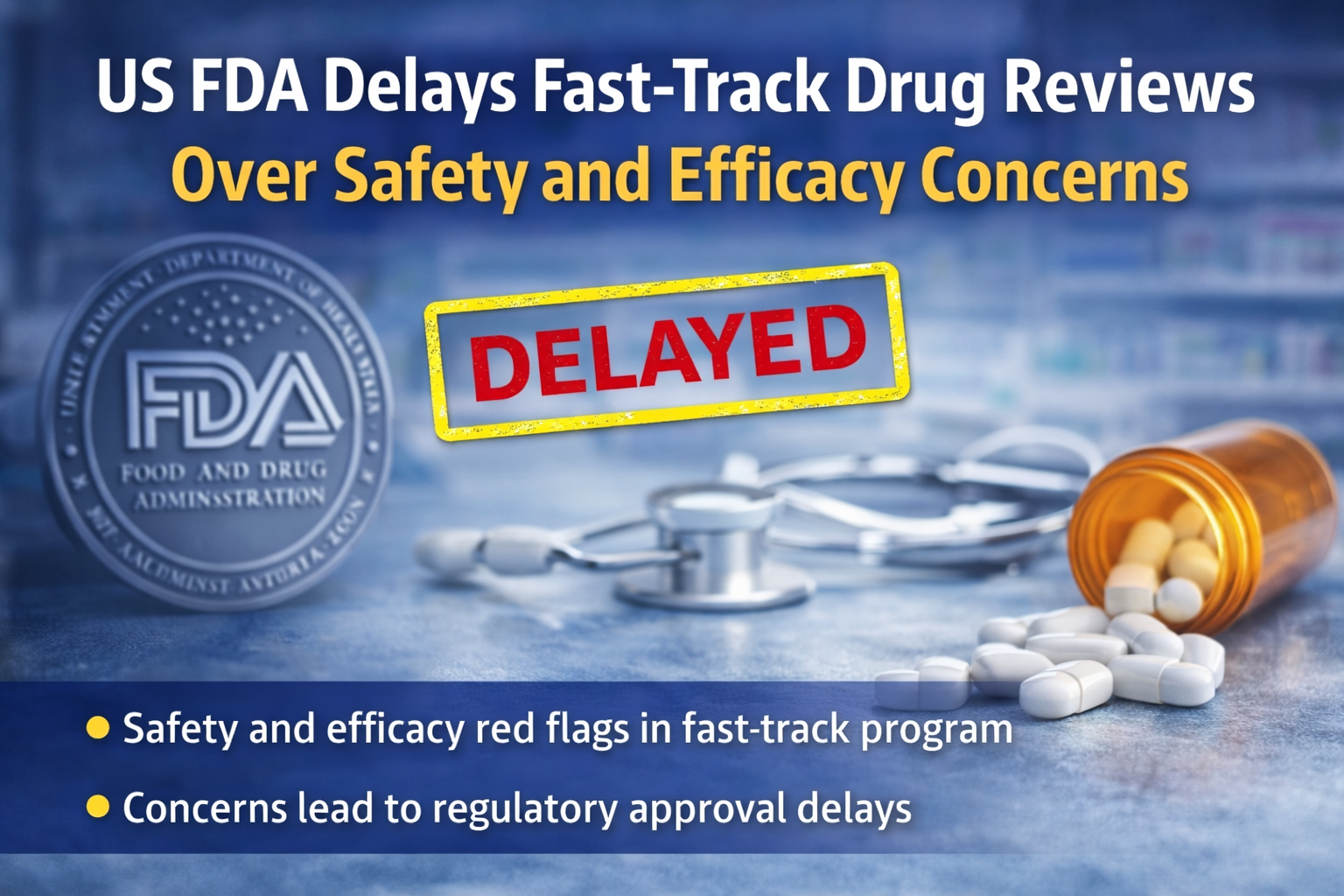
Regulatory speed and patient safety often exist in delicate balance, especially when new drug approval programs promise accelerated timelines. A recent development in the United States highlights how regulators are reassessing that balance. The U.S. Food and Drug Administration (FDA) has delayed reviews of multiple medicines selected under a newly introduced fast-track voucher initiative after raising concerns related to safety, clinical efficacy, and adverse events.
The move underscores that even under expedited pathways, regulatory rigor remains non-negotiable.
What Is the National Priority Voucher Program?
The FDA Commissioner’s National Priority Voucher Program was unveiled with the intent of significantly shortening approval timelines for a limited set of medicines. Under this initiative, certain drugs considered vital to public health, national security, domestic manufacturing strength, or affordability were promised regulatory decisions within one to two months—cutting several months off traditional priority review timelines.
The program was positioned as a strategic tool to encourage innovation, domestic drug manufacturing, and faster access to critical therapies. However, early implementation suggests that speed alone cannot override scientific and clinical scrutiny.
Why the Reviews Were Delayed
Internal regulatory assessments revealed multiple red flags during the review process. FDA scientists raised concerns over incomplete or questionable trial data, unclear efficacy endpoints, and reports of serious adverse events—including patient deaths associated with ongoing or expanded use of some therapies.
In certain cases, reviewers questioned whether trial endpoints used to demonstrate benefit were statistically robust or clinically meaningful. In others, regulators sought deeper analysis into post-marketing safety data, particularly involving neurological events, blood-related complications, and mortality signals.
As a result, decision timelines were extended by weeks or months beyond the originally promised dates.
A Reassuring Signal for Regulatory Integrity
While delays in fast-track programs can frustrate manufacturers and investors, regulatory experts view this development as reassuring. Accelerated approvals have historically raised concerns about whether patient safety could be compromised in the race to market.
The FDA’s willingness to pause, reassess, and demand more evidence suggests that the agency remains committed to its core mandate: ensuring medicines are both safe and effective before approval. This approach reinforces confidence among healthcare providers, patients, and global regulators who look to the FDA as a benchmark authority.
Broader Implications for the Global Pharma Industry
The delayed reviews also carry broader implications for pharmaceutical companies worldwide. Fast-track programs are often seen as strategic shortcuts to market access, but these developments show that early-stage or borderline data may not withstand accelerated scrutiny.
Manufacturers may need to:
-
Strengthen trial design and endpoint selection
-
Invest more heavily in long-term safety monitoring
-
Avoid over-reliance on surrogate markers without robust validation
This is particularly relevant for companies planning global launches, as regulatory decisions in the U.S. often influence approval pathways in other regions.
Lessons for Emerging Markets and Generic Manufacturers
For countries like India, such developments reinforce the importance of evidence-based regulation. India’s own regulatory and patent frameworks emphasize therapeutic value, safety, and affordability—principles increasingly mirrored in global regulatory decisions.
As branded drug approvals face delays or setbacks, opportunities expand for manufacturers operating as a monopoly medicine company in india. These firms can introduce high-quality alternatives once regulatory pathways open, ensuring wider patient access without compromising standards.
Similarly, organizations working as a pharma contract manufacturing company stand to benefit. With growing global emphasis on supply-chain resilience, quality manufacturing, and compliance, contract manufacturers play a crucial role in supporting both innovator and generic drug pipelines.
Concerns Around Politicization of Drug Approvals
Another dimension of the debate centers on governance. Some experts have expressed concern that selecting drugs for expedited review through administrative discretion—rather than purely scientific prioritization—could risk politicizing regulatory decisions.
Delays driven by scientific objections help counter that perception. They demonstrate that final approval authority still rests on independent review by subject-matter experts, not solely on policy-level directives.
Striking the Right Balance Going Forward
Fast-track and voucher-based programs are not inherently flawed. When applied carefully, they can save lives by accelerating access to genuinely transformative therapies. However, this episode highlights the importance of guardrails.
For future success, regulators and industry stakeholders must ensure that:
-
Expedited reviews do not bypass critical safety assessments
-
Trial data is mature and clinically meaningful
-
Public trust in regulatory systems is preserved
Conclusion
The FDA’s decision to delay multiple drug reviews under its new fast-track voucher program sends a clear message: speed cannot come at the expense of safety or scientific rigor. While the initiative aims to modernize and accelerate drug approvals, early setbacks emphasize the complexity of balancing innovation, patient protection, and regulatory credibility.
For the global pharmaceutical ecosystem, the lesson is clear—robust data, transparent safety profiles, and meaningful clinical benefit remain the foundation of regulatory success, regardless of how fast the pathway is designed to be.