
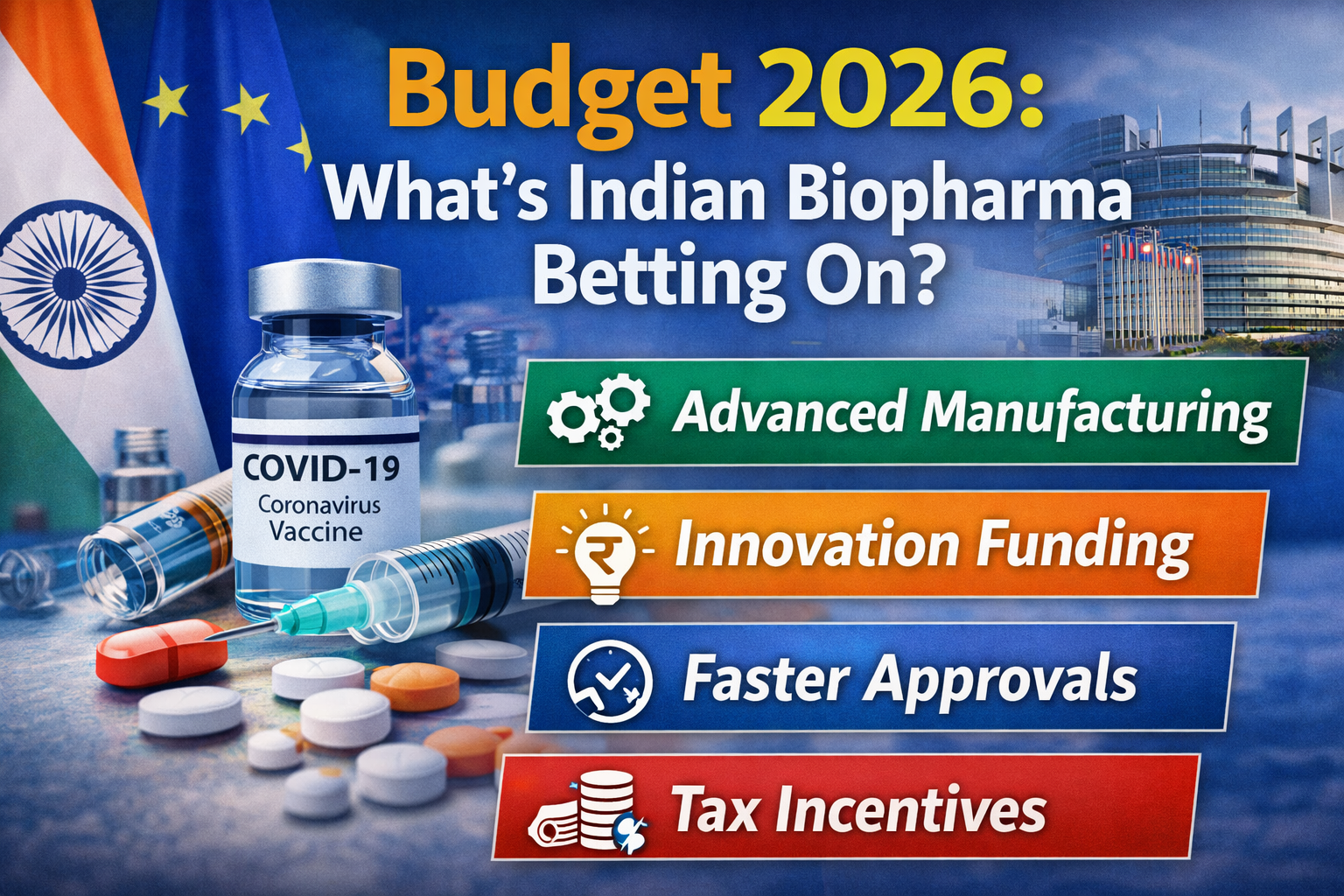
As India sets its sights on emerging as a global biopharmaceutical leader, the upcoming Union Budget 2026–27 is being viewed as a pivotal policy milestone. With global trade dynamics, strategic economic partnerships, and shifting market demands shaping national priorities, the biopharma sector is advocating for targeted fiscal and regulatory support that can enable advanced manufacturing, strengthen innovation, and enhance competitiveness on the world stage.
From streamlined incentives to regulatory reform and fresh capital access, industry stakeholders are calling for Budget provisions that will help the sector capture opportunities in next-generation pharmaceuticals, biosimilars, complex biologics, and other high-growth modalities.
Why Budget 2026 Matters for Indian Biopharma
India’s pharmaceutical sector has traditionally excelled in high-quality generics and APIs that support global healthcare needs. However, the global landscape is rapidly shifting toward advanced therapeutics such as peptides, cell and gene therapies, and biologics—areas that require deeper investment in R&D, manufacturing capacity, and regulatory readiness.
Industry experts believe that Budget 2026 offers an opportunity to:
-
Enhance global competitiveness of Indian biopharma
-
Facilitate innovation investment
-
Rationalize tax and operational structures
-
Accelerate regulatory approvals
-
Strengthen export-oriented manufacturing capabilities
These initiatives are considered essential for sustaining growth and expanding India’s role in global biopharma ecosystems.
Expanding Incentives Beyond Traditional Pharmaceuticals
The Production-Linked Incentive (PLI) scheme has helped drive domestic manufacturing and exports, particularly for conventional pharmaceuticals. While this has reinforced India’s position in global supply chains, the scheme’s current focus is seen as too narrow to support newer technologies.
Industry leaders are advocating for an extension of incentives to include:
-
Biosimilars and advanced biologics
-
Peptide-based therapies and complex drugs
-
Cutting-edge manufacturing technologies
-
Sustainable and continuous manufacturing processes
By expanding incentives, the government can catalyze investment in technology and infrastructure that enable India to compete effectively in higher-value biopharma segments.
Tax Rationalization for Emerging Biotech Ventures
Tax incentives remain a vital lever for enabling capital formation and growth in sectors with long gestation periods—such as advanced therapeutics and biotech startups.
Under the current regime, some new manufacturing entities can qualify for concessional corporate tax rates, contingent on meeting specific timelines and conditions. However, industry analysts argue that:
-
Extended eligibility windows are needed for biotech enterprises
-
Concessional tax benefits should align with actual capacity building milestones
-
Smaller players and early-stage innovators must also be included
Such adjustments would help amplify India’s innovation-led growth narrative and ensure that promising biotech ventures receive meaningful fiscal support.
Innovation Incentives: Funding, R&D, and Mission-Mode Programs
Innovation lies at the heart of global biopharma leadership. Budget 2026 is expected to include measures that encourage research investments, including potential reinstatement of weighted tax deductions for pharmaceutical R&D.
Stakeholders are also advocating for the creation of a Life Sciences Innovation Mission, designed to:
-
Support translational research and new molecular entity discoveries
-
Enable global regulatory readiness
-
Facilitate licensing and commercial deployment of advanced therapies
-
Strengthen frameworks for data, IP, and global standards compliance
Mission-oriented support could accelerate breakthroughs and position India as a destination for high-impact biomedical research.
Additionally, some experts recommend establishing special innovation zones for biotech and deep-tech healthcare startups. These zones would offer competitive tax, regulatory, and financial frameworks tailored for:
-
Biotechnology research organizations
-
Contract research and manufacturing entities
-
Clinical development and regulatory services
-
Cross-border capital and talent ecosystems
Regulatory Simplification: A Clear Path to Speed and Efficiency
Complex regulatory environments and multiple approval layers often slow down clinical development and market entry. Current requirements may force biopharma entities to seek approvals from several authorities, increasing time, cost, and administrative burden.
Industry voices are advocating for:
-
A single-window regulatory clearance system
-
Shortened approval timelines for clinical trials and exports
-
Streamlined compliance pathways for new drugs
-
Faster import clearances for research tools and technology
These changes are critical to making India an attractive jurisdiction for both domestic innovation and international investment.
Financial and GST Reforms to Support Growth
Despite recent efforts to rationalize the Goods and Services Tax (GST) regime, many biopharma companies continue to face challenges related to GST input credit accumulation and cash flow constraints.
To sustain investment in manufacturing and innovation, consultants recommend:
-
Extending budgetary support aligned with the updated GST framework
-
Preserving incentives for GST paid in cash through fiscal deadlines
-
Strengthening schemes that enable cash refunds and liquidity support
-
Restoring concessional tax treatment on foreign borrowing to ease capital access
These measures would help biotech companies—especially startups and scale-ups—to secure funding and manage growth over longer development cycles.
Strategic Linkages: Beyond Domestic Policy
India’s policy objectives also intertwine with global trends such as diversification of supply chains, trade agreements, and export expansion. A successful fiscal framework could position India to benefit from broader opportunities, including those tied to international cooperation, market access deals, and collaborations with global health ecosystems.
In this context, sectors such as advanced manufacturing and high-value therapeutics are likely to attract heightened interest from investors and partners seeking scalable platforms. Strengthening support for such capabilities also aligns with industry interest in monopoly medicine companies in india as a framework for domestic enterprises to secure rights and market share. Learn more about industry opportunities here: monopoly medicine companies in india.
Conclusion: A Transformational Budget for Biopharma
Budget 2026 offers a rare opportunity to accelerate India’s transformation from a generics-led manufacturing powerhouse into a global innovation and advanced biopharmaceutical hub. With carefully crafted fiscal incentives, regulatory reform, and capital facilitation, India can unlock new growth trajectories for its biopharma sector.
What remains key is a budget that not only addresses current structural challenges but anticipates future opportunities—especially in areas of strategic technology, manufacturing excellence, and global market integration.
FAQs
Q1: What are biopharma expectations from Budget 2026?
Biopharma stakeholders are seeking expanded manufacturing incentives, tax rationalization, streamlined regulations, accelerated approvals, and improved access to capital to support innovation and global competitiveness.
Q2: How could Budget 2026 help Indian biotech manufacturing?
By broadening existing incentive schemes, enhancing tax benefits, and enabling faster regulatory clearances, the budget can help scale advanced manufacturing for biologics, biosimilars, and complex drugs.
Q3: Why is regulatory simplification important for biopharma?
Simplified regulation, including single-window clearances and faster approvals, reduces administrative burden, lowers costs, and accelerates time-to-market for new therapies and exports.
Q4: What financial support does the industry want from Budget 2026?
The sector is calling for concessional taxes, extended R&D incentives, enhanced GST refund mechanisms, and access to affordable capital, including foreign borrowing options.
Q5: How does innovation funding impact India’s global standing?
Targeted funding and mission-oriented programs incentivize breakthrough research, strengthen IP generation, and improve readiness for global regulatory compliance, positioning India as a leader in the biomedical sphere.