In today’s world, the cost of patented medicines continues to rise, placing a heavy burden on patients, caregivers, and healthcare systems. Whether you are managing a chronic condition or exploring options for a one-time treatment, the price tag on patented drugs can be prohibitive. Thankfully, there are reliable resources and effective strategies for locating affordable alternatives to expensive patented medicines — without compromising safety or therapeutic effectiveness.
This blog guides you through where to find information on budget-friendly medication alternatives, how to evaluate them, and what factors to consider when making decisions about your health.
Why Patented Medicines Are So Expensive
Pharmaceutical companies invest billions in research and development to bring new drugs to market. In return, they receive a patent that grants them exclusive rights to manufacture and sell the drug for a limited period. While patents fuel innovation, they also allow manufacturers to set higher prices, since no generic competitors are legally permitted for a set number of years.
For many patients, especially those without comprehensive insurance coverage, this leads to high out-of-pocket expenses.
How to Find Affordable Alternatives
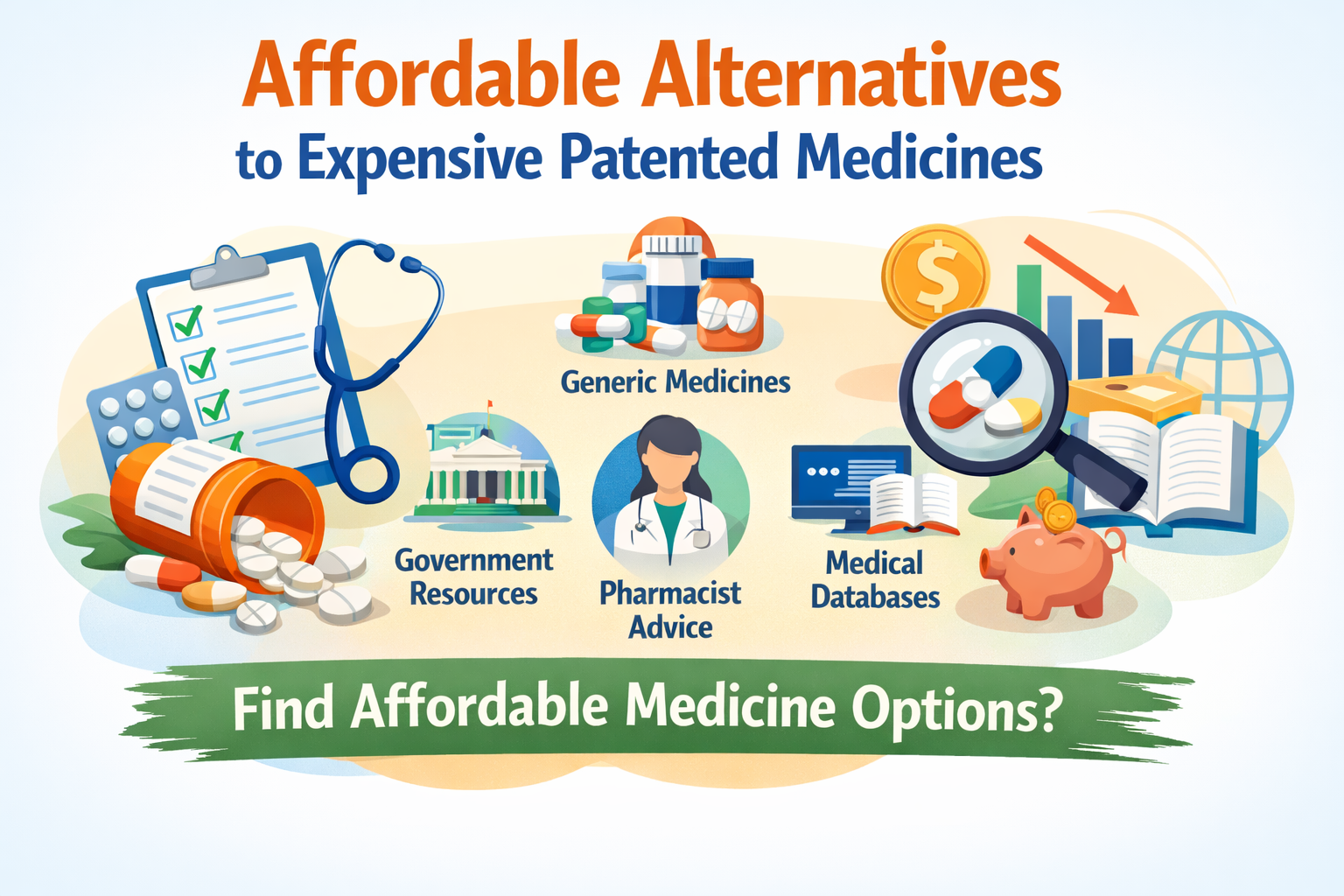
1. Search Government Healthcare Websites
Government health portals are among the most reliable and unbiased sources of information on medication alternatives.
-
National health ministries often list approved generic medicines which are therapeutically equivalent to their patented counterparts.
-
Entities like the U.S. Food and Drug Administration (FDA) and similar international regulators maintain databases of bioequivalent generics.
-
Some countries provide price comparison tools that show the cost differences between branded drugs and generics.
These sites also include information on regulations, safety standards, and approved manufacturers, which can help guide patient decisions.
2. Use Trusted Medical Databases
Medical research databases are excellent sources to learn about therapeutic alternatives, mechanisms of action, and clinical efficacy.
Some top platforms include:
-
PubMed
-
Cochrane Library
-
ClinicalTrials.gov
Using these databases, patients and caregivers can research medications that treat the same condition and compare clinical outcomes. While these resources are more technical, they offer evidence-based insight into treatment options.
3. Consult Pharmacists and Healthcare Providers
Your local pharmacist is an under-utilized resource for discovering affordable medication alternatives. They are trained to understand:
-
Generic brand equivalence
-
Therapeutic substitution options
-
Cost differences
-
Insurance formulary coverage
Doctors and specialists can also recommend alternative treatment plans or suggest medications that achieve similar outcomes but at a lower cost.
Working with healthcare professionals ensures that any substitution is medically appropriate and safe.
4. Explore Online Pharmaceutical Portals
There are reputable online pharmaceutical directories and price comparison websites that list lower-cost medication alternatives. These platforms often include:
-
Generic equivalents to patented drugs
-
International drug sourcing options
-
Price listings from multiple vendors
However, before using online sources, verify that the seller is legitimate and that the medicines meet your country’s regulatory standards.
5. Look for Patient Assistance Programs
Many pharmaceutical companies and non-profit organizations offer patient assistance programs (PAPs) that provide medications at reduced or no cost for eligible individuals. These programs are typically based on income, insurance status, or specific health conditions.
Examples include:
-
Manufacturer-sponsored discount programs
-
Non-profit health foundations
-
Charitable healthcare funds
Researching and applying for these programs can dramatically reduce the cost of essential medications.
How to Evaluate Affordable Alternatives
Finding an alternative is only half the battle — you must ensure it is safe and effective. Consider the following:
Safety and Efficacy
-
Confirm that generic medicines are approved by your national drug regulator.
-
Look for therapeutic equivalence ratings and supporting clinical data.
-
Consult a healthcare professional before making any changes.
Quality Assurance
Not all generics are equal. Look for products manufactured in facilities that comply with Good Manufacturing Practices (GMP) and other international quality standards.
Insurance and Coverage
Check with your insurance provider about formulary coverage. Some plans prefer certain generics and may cover them at a lower cost than branded drugs.
Side Effects and Interactions
Affordable alternatives may have different inactive ingredients. Review potential side effects and drug-to-drug interactions, especially if you are on multiple medications.
Additional Tips for Reducing Medication Costs
Beyond finding alternative drugs, there are other cost-saving strategies you can adopt:
-
Buy in bulk when appropriate (with a doctor’s approval).
-
Use mail-order pharmacies that often offer discounts.
-
Compare local vs online pharmacy prices.
-
Ask about generic substitution every time a prescription is filled.
-
Check for seasonal or manufacturer discounts.
Conclusion
Accessing information about affordable alternatives to expensive patented medicines requires a combination of reliable research, professional guidance, and proactive cost-management strategies. From government healthcare portals and medical research databases to pharmacists and patient assistance programs, there are numerous avenues to explore safe, effective, and budget-friendly options.
If navigating this landscape feels overwhelming, consider starting with trusted industry summaries like lists of the top pharma franchise company in India or insights into the monopoly medicine company in India — both can help you understand the broader pharmaceutical ecosystem and where generics fit into the market.
When it comes to reliable, cost-effective medicines and comprehensive support, DM Pharma Global stands as a resource committed to expanding access without compromising quality.
FAQs
What are affordable alternatives to expensive patented medicines?
Affordable alternatives are usually generic medicines or therapeutically equivalent drugs that provide the same medical benefits as patented medicines but at a significantly lower cost.
Where can I find reliable information on generic medicine alternatives?
You can find trustworthy information on government healthcare portals, certified medical databases, licensed pharmacists, and regulated pharmaceutical websites.
Are generic medicines as safe and effective as patented medicines?
Yes. Approved generic medicines must meet the same safety, quality, and efficacy standards as patented drugs, as enforced by drug regulatory authorities.
Can a doctor or pharmacist suggest cheaper medicine options?
Absolutely. Doctors and pharmacists can recommend generic or therapeutic alternatives based on your medical condition and treatment needs.
Why is there a large price difference between patented and generic medicines?
Patented medicines are priced higher due to research, development, and exclusive rights. Generic medicines are cheaper because they do not carry R&D costs once patents expire.
How can affordable medicines help reduce healthcare expenses?
By switching to approved alternatives, patients can significantly lower long-term treatment costs without compromising treatment outcomes.