
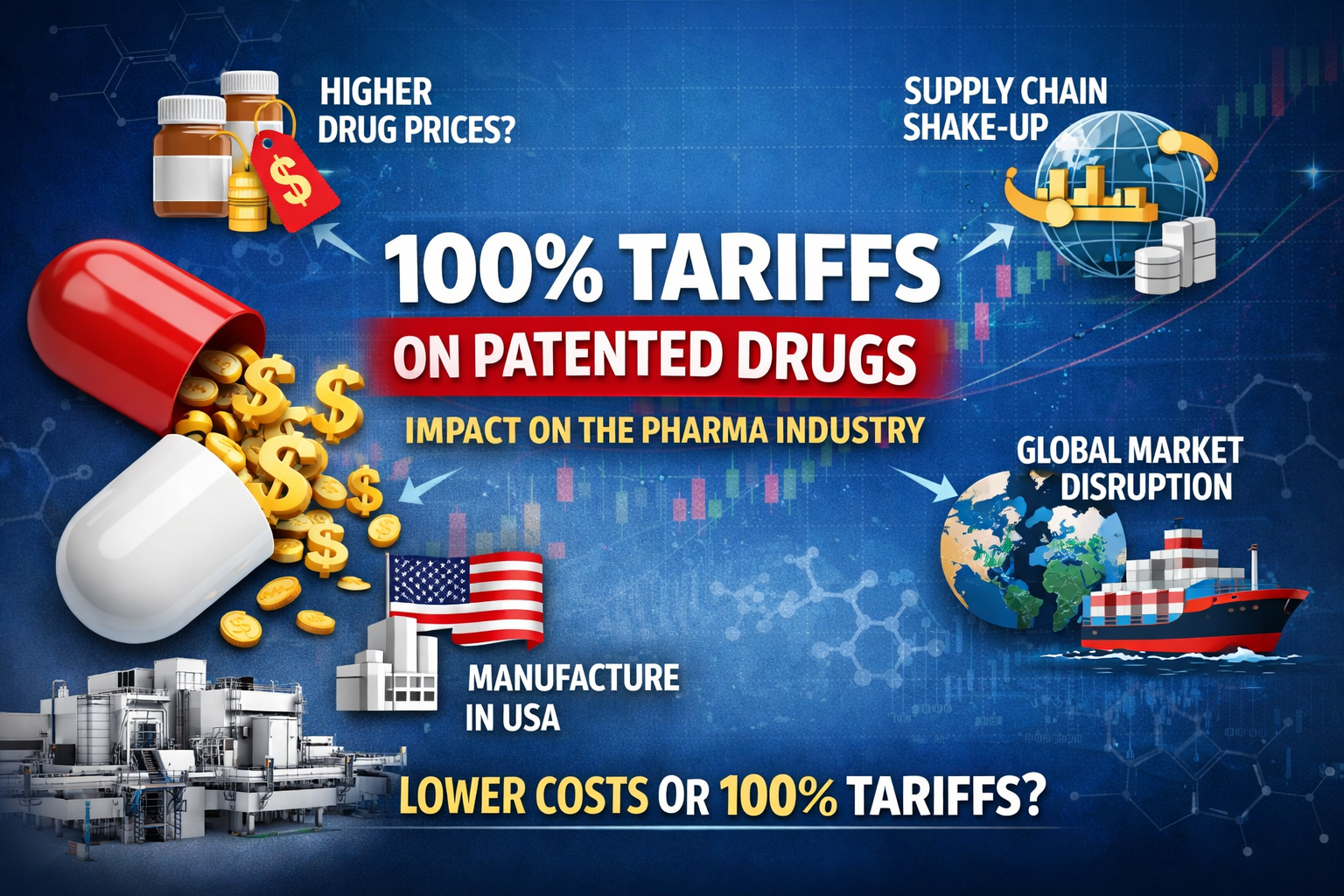
The global pharmaceutical industry is undergoing a significant shift as new trade policies reshape how medicines are priced, manufactured, and distributed. A recent announcement by the United States government to impose 100% tariffs on patented pharmaceuticals has created strong reactions across the healthcare and pharma sectors worldwide.
This move is not just a trade policy change—it is a strategic effort aimed at reducing drug prices and encouraging domestic manufacturing. Let’s break down what this means and how it could impact the global pharmaceutical landscape.
Understanding the New Pharma Tariff Policy
The newly introduced policy focuses on imported patented medicines and their active pharmaceutical ingredients (APIs). Under this framework:
- A 100% tariff will be applied to certain imported patented drugs
- Companies that agree to manufacture medicines domestically may face a reduced tariff of around 20%
- Firms that fully shift production locally and agree to specific pricing terms could be fully exempt from tariffs
The policy is expected to be implemented in phases:
- Large pharmaceutical firms: within 120 days
- Smaller companies: within 180 days
This structured timeline gives companies an opportunity to reassess their manufacturing strategies and pricing agreements.
Why This Policy Matters
The primary objective behind this decision is twofold:
1. Lower Drug Prices
High medicine costs have been a major concern globally. By imposing tariffs, policymakers aim to:
- Pressure pharmaceutical companies to offer competitive pricing
- Encourage adoption of “most-favored nation” pricing models, where drug prices align with the lowest available global rates
2. Boost Domestic Manufacturing
Another key goal is to reduce reliance on foreign manufacturing hubs. The policy is designed to:
- Promote local production of medicines
- Strengthen supply chain security
- Create more employment opportunities in the healthcare manufacturing sector
Impact on Global Pharma Supply Chains
This tariff policy is likely to affect major pharmaceutical manufacturing regions such as:
- India
- China
- Singapore
- European countries
These regions play a critical role in supplying APIs and finished formulations to global markets.
Expected Changes:
- Shift in manufacturing locations toward domestic facilities
- Increased investment in local production plants
- Re-evaluation of global supply chain strategies
Companies operating internationally may now consider relocating or expanding facilities to align with new trade benefits.
Effect on Pharmaceutical Companies
The announcement has already started influencing industry behavior.
Likely Outcomes:
- More companies may enter pricing agreements to avoid tariffs
- Increased announcements of new manufacturing investments
- Strategic partnerships to comply with evolving regulations
Previously, several firms had already agreed to pricing deals under similar pressure, and this new policy may accelerate that trend further.
What About Generic Medicines?
Interestingly, the tariffs currently apply only to:
- Branded (patented) drugs
- Their associated active ingredients
Lower-cost alternatives such as:
- Generic medicines
- Biosimilars
are not immediately affected. However, authorities have indicated that these categories will be reviewed after one year, leaving room for future regulatory changes.
Extended Trade Measures: Metals Tariff Adjustment
In addition to pharmaceutical tariffs, there have been changes in tariffs related to:
- Steel
- Aluminum
- Copper
These materials are essential for pharmaceutical infrastructure, including manufacturing equipment and packaging.
Key Updates:
- A 50% tariff continues on these metals
- Tariffs are now calculated based on the purchase price rather than declared production costs
- Products containing these metals may face a 25% tariff depending on composition
This adjustment aims to prevent underreporting of costs and ensure fair trade practices.
Potential Benefits of the Policy
Despite initial disruptions, the policy could offer several long-term advantages:
✔ Improved Price Transparency
Consumers may benefit from more standardized and fair pricing
✔ Stronger Domestic Industry
Encourages the development of a self-reliant pharmaceutical sector
✔ Supply Chain Stability
Reduces dependence on external suppliers and geopolitical risks
Challenges and Concerns
However, the policy also introduces certain risks:
Increased Short-Term Costs
Tariffs could initially lead to higher drug prices before stabilization
Supply Disruptions
Transitioning manufacturing locations may cause temporary shortages
Global Trade Tensions
Countries affected by tariffs may respond with countermeasures
Future Outlook for the Pharma Industry
The pharmaceutical sector is entering a phase of transformation where:
- Localization of manufacturing becomes a priority
- Pricing regulations gain more importance
- Trade policies directly influence healthcare access
Companies that adapt quickly by investing in domestic production and aligning with pricing expectations will likely gain a competitive advantage.
Conclusion
The introduction of 100% tariffs on patented pharmaceuticals marks a significant turning point in global healthcare economics. While the move is aimed at making medicines more affordable and strengthening domestic production, it also brings challenges that the industry must navigate carefully.
In the coming months, the world will witness how pharmaceutical companies respond—whether through price adjustments, manufacturing shifts, or strategic collaborations. One thing is certain: this policy will have a lasting impact on how medicines are produced, priced, and delivered across the globe.