
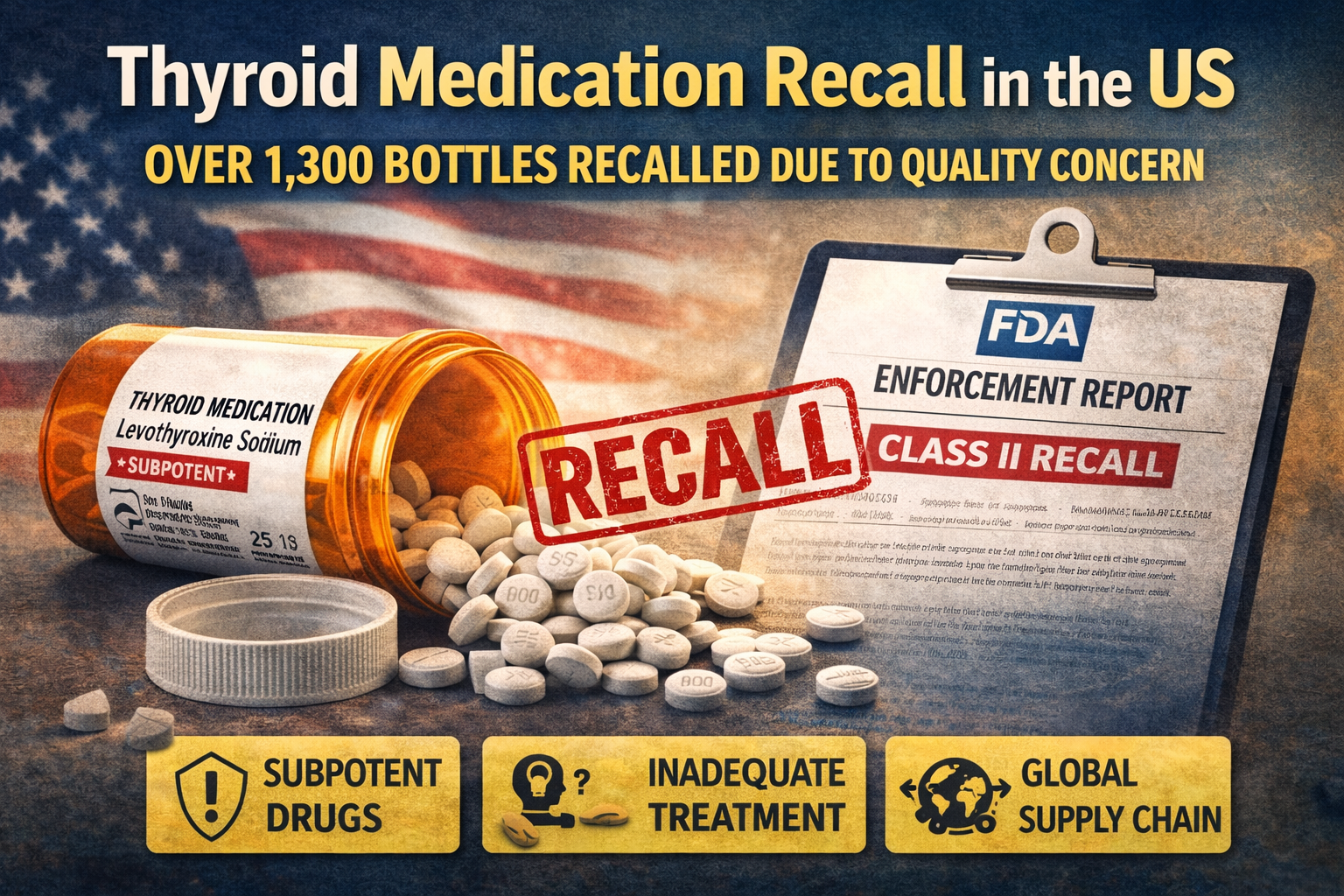
The pharmaceutical industry operates under strict regulatory frameworks to ensure patient safety and product efficacy. Recently, a thyroid hormone medication recall in the United States has drawn attention to the importance of quality control in drug manufacturing. Over 1,300 bottles of Levothyroxine Sodium tablets were voluntarily recalled after being identified as subpotent, raising concerns about consistency in pharmaceutical production.
This development highlights critical issues related to drug quality, regulatory compliance, and global supply chains, especially for medicines manufactured in India and exported worldwide.
What Triggered the Recall?
The recall was initiated after certain batches of a widely used thyroid hormone replacement therapy were found to be subpotent, meaning the medication contained less active ingredient than required.
Key Details:
- Over 1,300 bottles affected
- Manufactured at a facility in Gujarat, India
- Distributed across the United States market
- Classified as a Class II recall
A Class II recall indicates that the product may cause temporary or medically reversible adverse health effects, but the likelihood of serious harm is relatively low.
Understanding Subpotent Drugs
Subpotency is a serious quality issue in pharmaceuticals. It occurs when a drug does not deliver the intended dosage strength, potentially reducing its effectiveness.
Risks Associated with Subpotent Medications:
- Inadequate disease control
- Delayed therapeutic outcomes
- Increased risk of complications in chronic conditions
- Need for additional medical intervention
For thyroid patients, even small variations in dosage can significantly impact health outcomes.
Importance of Levothyroxine in Thyroid Treatment
Levothyroxine Sodium is a prescription medication used to treat hypothyroidism, a condition where the thyroid gland does not produce enough hormones.
Role of the Drug:
- Restores normal hormone levels
- Helps regulate metabolism, energy levels, and body functions
- Prevents symptoms such as fatigue, weight gain, and depression
Because thyroid hormone levels must be precisely balanced, consistency in medication potency is essential.
Regulatory Oversight and FDA Classification
The recall was documented under the US Food and Drug Administration (FDA) enforcement report, reflecting the agency’s strict monitoring of drug quality.
What a Class II Recall Means:
- Products may cause temporary health issues
- Effects are generally reversible
- Low probability of severe consequences
Despite being less severe than Class I recalls, such actions are taken seriously to maintain public trust and safety standards.
Impact on the Pharmaceutical Industry
This recall underscores the importance of quality assurance systems in pharmaceutical manufacturing, particularly for companies exporting to highly regulated markets like the US.
Key Industry Implications:
1. Increased Regulatory Scrutiny
Manufacturers may face more frequent inspections and audits.
2. Emphasis on Quality Control
Stronger focus on batch testing, validation, and stability studies.
3. Reputation Management
Even voluntary recalls can impact brand credibility and market perception.
4. Supply Chain Monitoring
Companies must ensure end-to-end traceability of products.
India’s Role in Global Pharma Supply
India is known as the “pharmacy of the world”, supplying a large share of generic medicines globally. Incidents like this highlight both the scale and responsibility of Indian pharmaceutical manufacturing.
Key Considerations:
- India exports medicines to over 200 countries
- Compliance with global standards is non-negotiable
- Even minor lapses can have international repercussions
However, voluntary recalls also demonstrate transparency and accountability, which are essential for maintaining global trust.
Patient Safety: What Should Patients Do?
For patients using thyroid medication, consistency is crucial. If a recall occurs, the following steps are recommended:
Actionable Steps:
- Consult a healthcare provider immediately
- Do not stop medication abruptly without guidance
- Check batch numbers if affected products are identified
- Switch to an alternative if advised
Healthcare providers typically manage such situations to ensure continuity of care.
Preventive Measures in Pharma Manufacturing
To avoid such incidents, pharmaceutical companies invest in advanced quality systems and compliance protocols.
Best Practices Include:
- Good Manufacturing Practices (GMP) compliance
- Regular stability and potency testing
- Automated quality monitoring systems
- Continuous staff training and audits
Adoption of Pharma 4.0 technologies is also improving real-time quality tracking and predictive risk management.
Broader Industry Trends
Drug recalls, while not uncommon, are becoming more transparent and data-driven. Regulatory bodies are leveraging technology to improve oversight.
Emerging Trends:
- Increased use of AI in quality control
- Real-time manufacturing analytics
- Stronger global regulatory harmonization
- Greater focus on patient-centric safety measures
Conclusion
The recent recall of a thyroid medication in the US serves as a reminder of the critical importance of drug quality and regulatory compliance. While the health risk in this case is considered moderate, the implications for the pharmaceutical industry are significant.
For manufacturers, it reinforces the need for robust quality systems and global compliance standards. For patients, it highlights the importance of awareness and timely medical consultation.
Ultimately, maintaining trust, safety, and consistency remains the cornerstone of the pharmaceutical sector, especially in a globally interconnected healthcare ecosystem.