
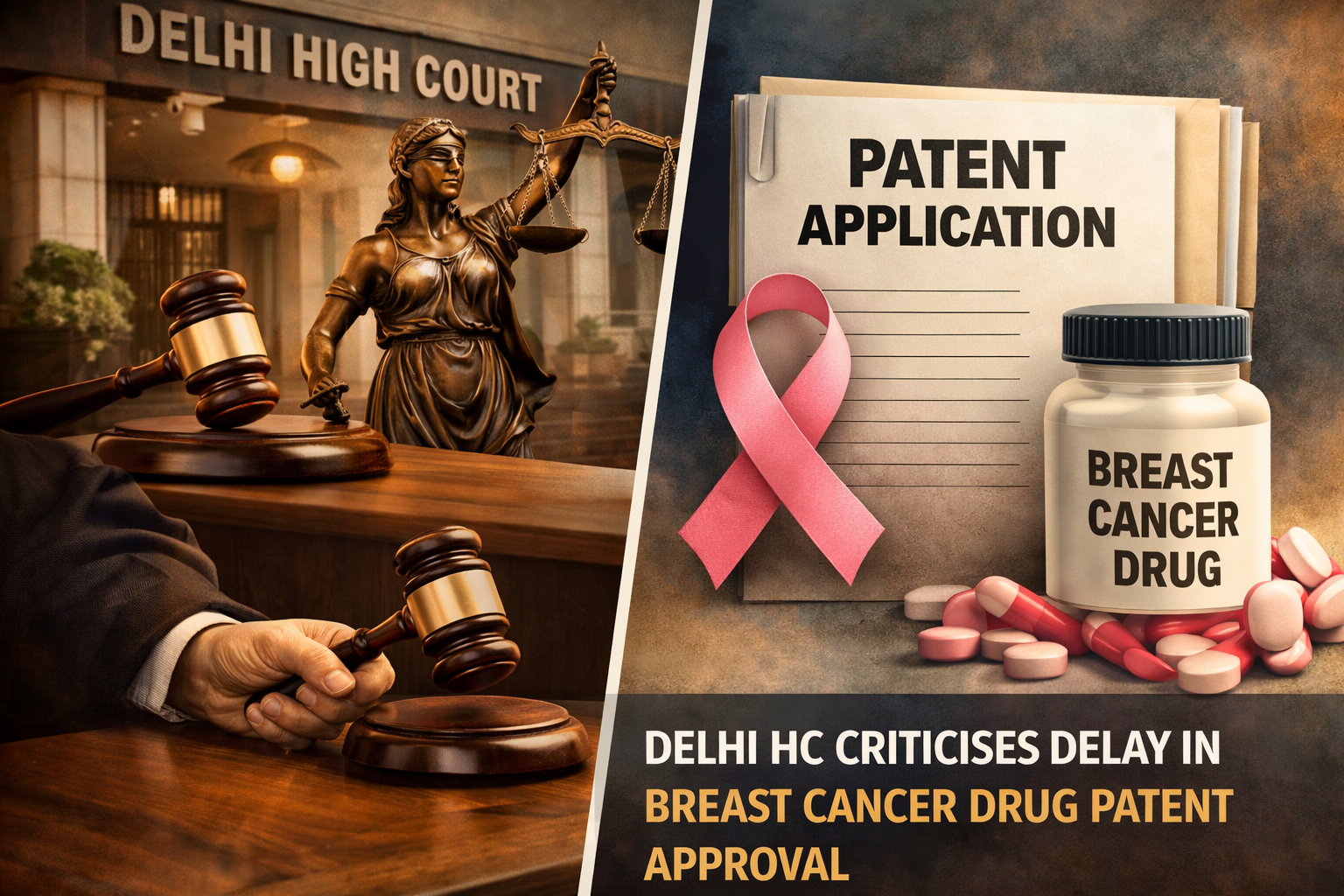
India’s intellectual property and pharmaceutical ecosystem has come under judicial scrutiny after the Delhi High Court expressed serious concerns over a prolonged delay in deciding a patent application related to a breast cancer drug. The case highlights systemic inefficiencies in the patent approval process and raises important questions about innovation, patient access, and regulatory accountability.
Background of the Case
The issue revolves around a patent application filed in 2011 for a breast cancer treatment drug. Despite the passage of more than a decade, the application has remained undecided, prompting legal intervention. The Delhi High Court strongly criticized the patent authority for this delay, describing it as an unfortunate reflection of administrative inefficiency.
The court has directed the concerned authority to take immediate action and resolve the matter within a strict timeline. Additionally, it has emphasized the need to address both the patent application and any opposition filed by stakeholders within a defined period.
Importance of Timely Patent Approvals
Patent approvals play a crucial role in the pharmaceutical industry. They provide innovators with exclusive rights to manufacture and market a drug, enabling them to recover research and development investments. At the same time, patents also influence drug pricing, availability, and competition in the market.
A delay of over a decade in deciding a patent application disrupts this balance. It creates uncertainty for pharmaceutical companies, discourages innovation, and can delay the introduction of potentially life-saving treatments to patients.
Timely decisions are especially critical in the case of diseases like breast cancer, where advancements in treatment can significantly improve survival rates and quality of life.
Court’s Observations on Systemic Issues
The High Court did not limit its observations to a single case but pointed out broader systemic concerns within the patent administration framework. The judge highlighted that such delays indicate deeper structural issues that must be addressed urgently.
The court has directed the patent authority to develop a Standard Operating Procedure (SOP) for handling patent applications. This SOP is expected to ensure that applications are processed within defined timelines, reducing the scope for prolonged delays in the future.
The emphasis on timelines reflects the need for greater efficiency, transparency, and accountability in the patent system.
Impact on the Pharmaceutical Industry
The pharmaceutical sector relies heavily on a predictable and efficient patent system. Delays in approvals can have multiple negative consequences:
-
Investment Uncertainty: Companies may hesitate to invest in research and development if patent protection is uncertain.
-
Delayed Market Entry: New drugs may not reach patients in a timely manner.
-
Legal Disputes: Prolonged delays often lead to increased litigation, adding to the burden on courts and regulatory bodies.
-
Competitive Disadvantages: Companies may lose their competitive edge in global markets due to regulatory inefficiencies.
An efficient patent regime is essential for maintaining India’s position as a global pharmaceutical hub.
Balancing Innovation and Public Interest
While patents are important for encouraging innovation, they must be balanced with public health considerations. The patent system should not create unnecessary barriers to access essential medicines.
In cases involving life-saving drugs, delays in decision-making can have serious implications. Patients may be deprived of access to advanced treatments, while companies face uncertainty regarding their rights and obligations.
The court’s directive aims to strike a balance by ensuring that decisions are made promptly while allowing for due consideration of all objections and legal requirements.
Need for Process Reforms
The case underscores the urgent need for reforms in India’s patent processing system. Some key areas that require attention include:
-
Digitization of Processes: Implementing advanced digital systems to streamline application tracking and decision-making.
-
Resource Allocation: Increasing manpower and technical expertise within the patent office.
-
Defined Timelines: Establishing strict deadlines for each stage of the patent approval process.
-
Transparency Measures: Ensuring that applicants and stakeholders are informed about the status of their applications.
Such reforms can significantly improve efficiency and reduce backlog.
Role of Judiciary in Regulatory Oversight
The judiciary plays a vital role in ensuring that regulatory bodies function effectively and within the framework of the law. By intervening in cases of delay or non-compliance, courts help uphold accountability and protect public interest.
In this instance, the High Court’s directive serves as a wake-up call for the patent authority to address long-standing inefficiencies and adopt a more structured approach to decision-making.
The Way Forward
The directive to resolve the pending patent application within four months sets a clear precedent for timely action. More importantly, the requirement to establish a Standard Operating Procedure could lead to long-term improvements in the system.
Moving forward, collaboration between policymakers, regulatory authorities, and industry stakeholders will be essential to build a more efficient and responsive patent ecosystem.
Conclusion
The Delhi High Court’s strong remarks on the delay in deciding a breast cancer drug patent application highlight critical gaps in India’s patent administration system. Timely disposal of applications is not just a procedural requirement but a necessity for fostering innovation, ensuring patient access, and maintaining global competitiveness.
This case serves as an important reminder that regulatory efficiency is key to the growth of the pharmaceutical sector. By implementing reforms and adhering to strict timelines, India can strengthen its intellectual property framework and support both innovation and public health.