
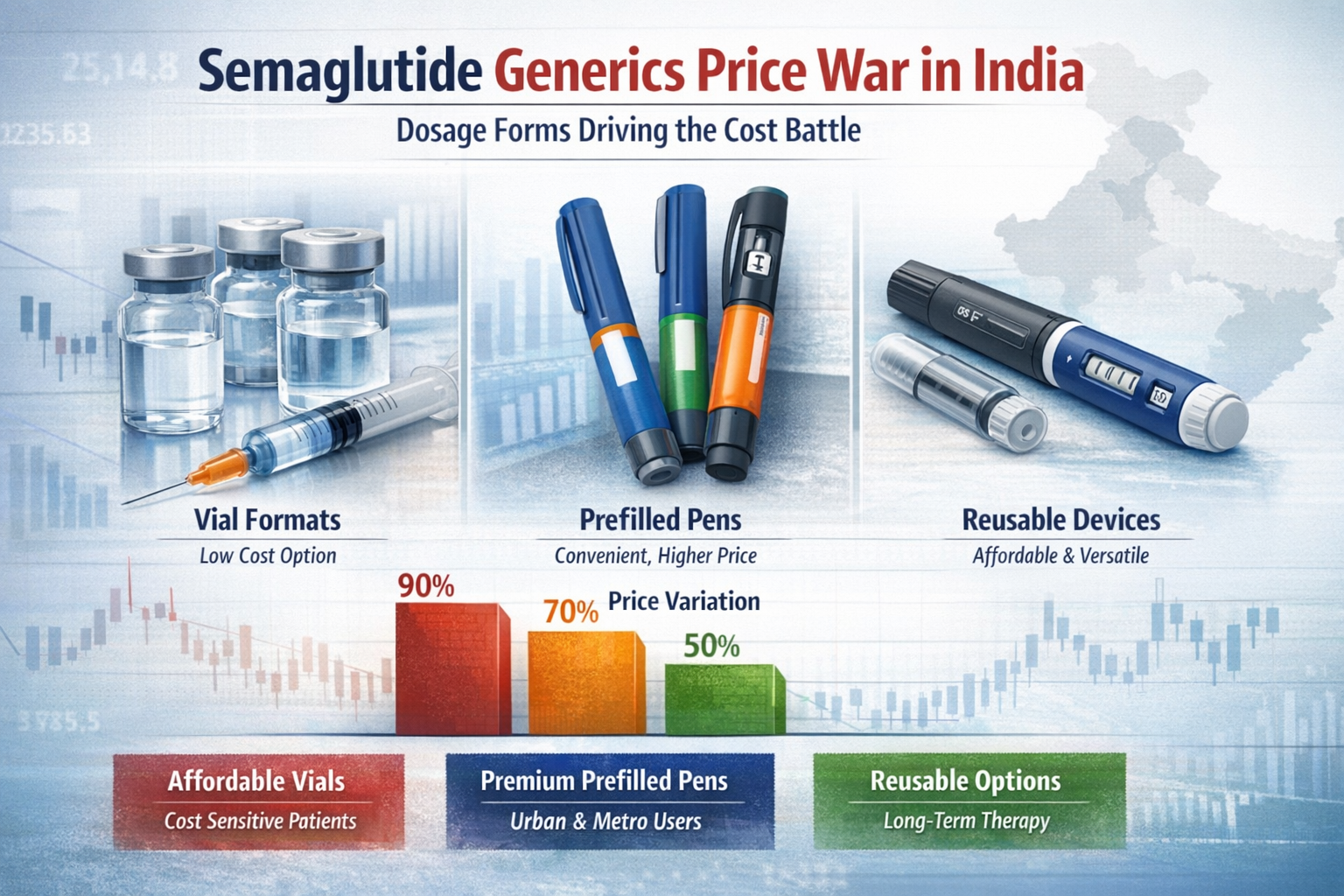
The Indian pharmaceutical market is currently undergoing a major transformation with the entry of generic semaglutide following patent expiry. Widely used for managing type 2 diabetes and obesity, this therapy has quickly become a focal point of intense competition among drug manufacturers. However, what makes this market particularly unique is that the price war is not driven solely by competition—but by the diversity of dosage forms available in the market.
From vials to prefilled pens, the variation in delivery mechanisms is playing a decisive role in determining pricing strategies, patient adoption, and overall market segmentation.
Understanding the Semaglutide Market Shift
Semaglutide has evolved into a high-demand therapy due to the rising prevalence of lifestyle diseases in India. With increasing awareness around weight management and diabetes care, the demand for effective, long-term treatment solutions has grown significantly.
Following the patent cliff, multiple pharmaceutical players have entered the market with generic versions, triggering a sharp decline in prices. However, unlike conventional generics, semaglutide presents a more complex competitive landscape due to its delivery formats.
Price Variations Across Dosage Forms
One of the most striking features of the current market is the wide price variation—ranging between 50% to 90%—across different dosage forms. This disparity is largely influenced by how the drug is administered.
1. Vial-Based Formulations
Vial formats are generally the most cost-effective option available. These require the use of syringes for administration and are typically preferred by cost-sensitive patients. Lower production and packaging costs allow manufacturers to offer these at significantly reduced prices.
However, vial-based delivery may require medical supervision or patient training, which can impact convenience and adoption among first-time users.
2. Prefilled Pen Devices
Prefilled pens represent the premium segment of semaglutide delivery. These devices are designed for ease of use, accurate dosing, and enhanced patient comfort. As a result, they are priced higher compared to vials.
Patients who prioritize convenience and minimal handling errors often opt for pen devices, despite the higher cost. This makes pens particularly popular in urban and metro markets.
3. Multi-Dose and Reusable Systems
Some manufacturers are also introducing reusable pen systems and multi-dose formats. These aim to strike a balance between affordability and usability by reducing long-term costs while maintaining ease of administration.
Such innovations are expected to play a key role in bridging the gap between premium and budget segments.
Dosage Strength and Its Impact on Pricing
Apart from the delivery mechanism, dosage strength is another critical factor influencing price variation. Semaglutide is typically prescribed in different strengths depending on patient requirements and treatment progression.
Higher dosages naturally lead to increased costs, but the pricing strategy often varies based on the combination of strength and delivery format. For instance, a higher-dose vial may still be cheaper than a lower-dose pen, highlighting the complexity of pricing dynamics.
Market Segmentation and Target Audience
The variation in dosage forms has effectively segmented the market into distinct consumer groups:
- Price-sensitive patients: Prefer vial-based options due to affordability
- Urban and premium users: Lean towards prefilled pens for convenience
- Long-term therapy patients: Explore reusable systems for cost efficiency
This segmentation allows pharmaceutical companies to tailor their offerings based on patient needs, improving both accessibility and market penetration.
Competitive Strategies Beyond Pricing
While pricing remains a key driver, companies are increasingly focusing on differentiation through product design and patient experience. The dosage form itself has become a strategic tool to gain competitive advantage.
Key strategies include:
- Enhancing device ergonomics for easier handling
- Reducing injection discomfort through improved needle design
- Offering flexible dosing options
- Providing instructional support for first-time users
These factors contribute significantly to patient adherence, which is crucial for chronic therapies like semaglutide.
Challenges in Adoption and Usage
Despite the availability of multiple options, certain challenges persist. Patients using vial formats may face difficulties with self-administration, leading to potential dosing errors. On the other hand, higher costs associated with pen devices may limit access for a large segment of the population.
Additionally, lack of awareness and training can impact the effective use of these dosage forms. This highlights the importance of patient education and healthcare provider support in ensuring optimal outcomes.
The Role of Healthcare Infrastructure
The success of different dosage forms also depends on the supporting healthcare infrastructure. Clinics, pharmacies, and healthcare professionals play a vital role in guiding patients toward the most suitable option.
Proper storage, handling, and demonstration of usage techniques are essential, particularly for injectable therapies. As the market expands into smaller cities and rural areas, strengthening healthcare infrastructure will be critical.
Future Outlook of the Semaglutide Market
The semaglutide market in India is expected to evolve rapidly as more players enter the space and innovation continues. Over time, the price gap between different dosage forms may narrow as manufacturing efficiencies improve.
Future trends may include:
- Development of more affordable pen devices
- Increased adoption of digital health tools for patient guidance
- Greater focus on personalized treatment plans
- Expansion into underserved markets
Ultimately, the interplay between dosage forms and pricing will continue to shape the competitive landscape.
Conclusion
The ongoing price war in the semaglutide market highlights a crucial insight—dosage forms are not just a clinical consideration but a strategic business factor. The choice between vials, prefilled pens, and reusable systems directly influences pricing, accessibility, and patient experience.
As the market matures, success will depend on how effectively companies balance affordability with convenience and innovation. In this evolving scenario, dosage form diversity is not just driving competition—it is redefining how pharmaceutical products are positioned and consumed in India.