
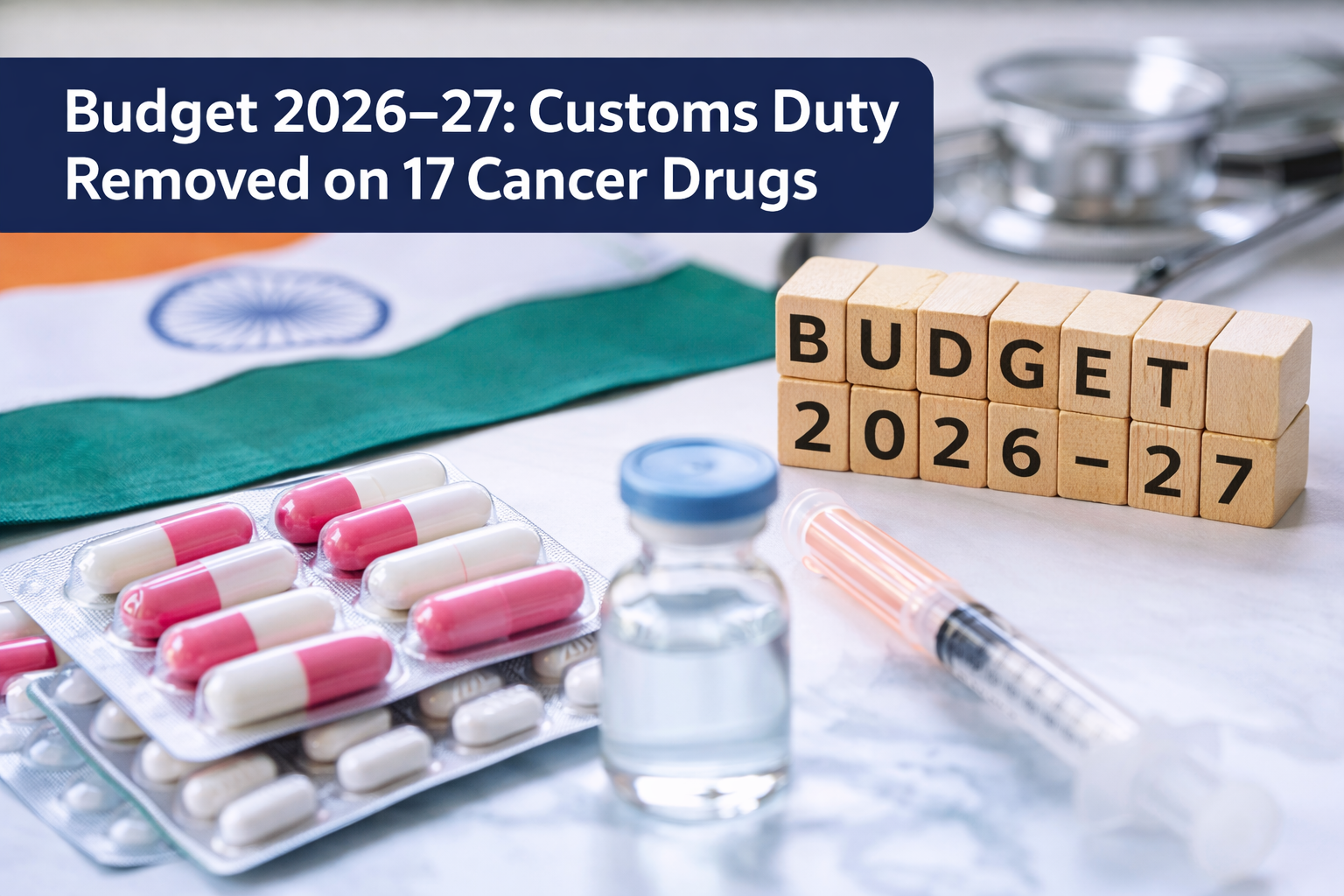
In a major healthcare-focused announcement under Budget 2026–27, the Government of India has taken a decisive step to reduce the financial burden on cancer patients. As part of its broader public health and affordability agenda, the government has extended customs duty exemptions on 17 critical cancer drugs, aiming to improve access to advanced and life-saving treatments across the country.
This policy move is expected to significantly lower treatment costs for patients suffering from serious conditions such as breast cancer, blood cancers, and other critical oncological indications. The decision reflects the government’s growing emphasis on patient-centric healthcare reforms and equitable access to essential medicines.
Addressing the Rising Cost of Cancer Treatment
Cancer treatment in India has long been associated with high out-of-pocket expenses, especially for therapies involving advanced biologics and targeted medicines. Many of these drugs are imported, making them subject to customs duties that increase their final retail price.
By lifting customs duties on selected cancer drugs, the government aims to:
-
Reduce the overall cost of cancer therapy
-
Improve affordability of advanced treatments
-
Support long-term treatment regimens for patients
-
Ease financial pressure on families battling cancer
This initiative aligns with the government’s commitment to strengthening the healthcare system while ensuring that cost does not become a barrier to survival.
Focus on Critical and Life-Saving Medicines
The list of 17 drugs includes therapies approved for treating high-burden and life-threatening cancers, particularly breast cancer and blood-related malignancies. These conditions often require prolonged and expensive treatment cycles, making affordability a critical concern.
By extending customs duty exemptions, the government ensures that patients requiring these therapies can access them at comparatively lower prices. This step is especially impactful for patients dependent on imported medicines where domestic alternatives may be limited or unavailable.
Impact on Patients and Healthcare Providers
The removal of customs duties is expected to have a cascading positive effect across the healthcare ecosystem.
Benefits for Patients
-
Lower medicine prices
-
Improved treatment continuity
-
Reduced dependency on financial assistance or loans
-
Greater access to advanced therapies
Benefits for Healthcare Institutions
-
Improved treatment planning
-
Greater availability of essential drugs
-
Enhanced patient adherence to prescribed regimens
This policy intervention could also reduce the gap between diagnosis and treatment initiation, which is often delayed due to cost constraints.
Strengthening India’s Healthcare Affordability Agenda
The customs duty exemption is part of a broader strategy to enhance healthcare affordability under Budget 2026–27. Over the years, the government has implemented multiple measures such as tax rationalization, price controls, and incentive-based manufacturing policies to ensure access to essential medicines.
This latest announcement reinforces the government’s intent to prioritize public health over revenue generation in critical therapeutic areas like oncology.
Implications for the Pharmaceutical Ecosystem
Policy changes such as customs duty exemptions influence not just patients, but also the pharmaceutical supply chain. Lower import costs can improve supply stability and encourage wider distribution of advanced therapies.
At the same time, such reforms also highlight the importance of domestic manufacturing and scalable production models. Businesses operating under exclusive distribution rights and third-party manufacturing frameworks continue to play a vital role in improving medicine availability.
For instance, working with a monopoly medicine company in India allows distributors to offer exclusive products in defined territories while maintaining competitive pricing.
Similarly, collaboration with a reliable pharma contract manufacturing company supports consistent production, regulatory compliance, and faster market supply—factors that become increasingly important as demand for affordable cancer medicines grows.
A Step Toward Equitable Cancer Care
Cancer incidence in India continues to rise, with early diagnosis and timely treatment being critical determinants of survival. High medicine costs often force patients to delay or discontinue therapy, negatively impacting outcomes.
By removing customs duties on essential cancer drugs, the government sends a strong signal toward building a more inclusive and equitable cancer care system. This move is likely to benefit not only urban patients but also those in semi-urban and rural regions where affordability remains a major challenge.
Long-Term Outlook
While customs duty exemptions provide immediate relief, experts believe sustained affordability will require a combination of measures, including:
-
Encouraging domestic production of complex therapies
-
Supporting innovation in biosimilars and generics
-
Strengthening public healthcare infrastructure
-
Enhancing insurance coverage for cancer treatments
The Budget 2026–27 announcement is a meaningful step in this direction, laying the foundation for long-term improvements in cancer care accessibility.
Conclusion
The decision to lift customs duty on 17 key cancer drugs under Budget 2026–27 marks a significant milestone in India’s healthcare policy landscape. By prioritizing patient welfare and affordability, the government has addressed one of the most pressing challenges faced by cancer patients today.
As healthcare reforms continue to evolve, policies that reduce treatment costs while ensuring quality and availability will play a crucial role in shaping a more resilient and patient-friendly healthcare system in India.