
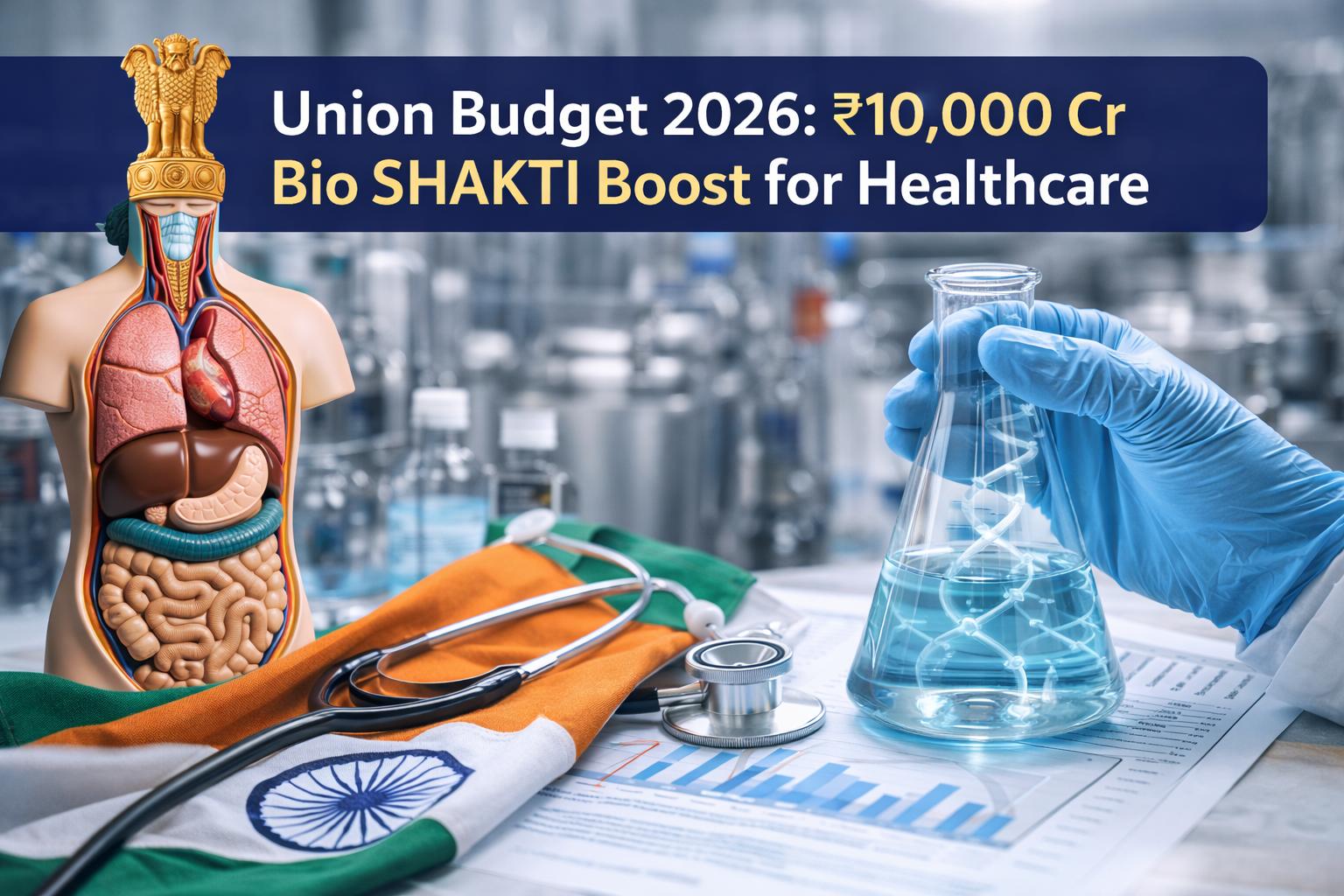
Union Budget 2026 has positioned healthcare and biopharmaceutical manufacturing as central pillars of India’s long-term economic and social development strategy. With the announcement of a ₹10,000 crore Bio SHAKTI initiative, the government has signaled its intent to transform India into a global hub for biologics, strengthen the healthcare workforce, and enhance access to affordable advanced medicines.
This budget marks a decisive shift toward innovation-driven healthcare growth, focusing on non-communicable diseases (NCDs), biologic therapies, medical tourism, and domestic manufacturing capabilities.
Bio SHAKTI: A Strategic Push for Biopharma Leadership
The flagship Bio SHAKTI program, backed by an outlay of ₹10,000 crore, aims to accelerate India’s capabilities in biologics and advanced therapeutic manufacturing. Biologics play a critical role in treating chronic and complex diseases such as cancer, autoimmune disorders, and metabolic conditions.
Key objectives of the Bio SHAKTI initiative include:
-
Establishing India as a global biologics manufacturing hub
-
Supporting innovation in affordable biological medicines
-
Strengthening research, development, and scale-up infrastructure
-
Reducing dependency on high-cost imports
By focusing on cost-efficient and scalable production models, the initiative is expected to make advanced therapies more accessible to Indian patients while boosting exports.
Focus on Non-Communicable Diseases and Affordable Care
Non-communicable diseases such as diabetes, cardiovascular disorders, cancer, and respiratory illnesses account for a significant share of India’s disease burden. Budget 2026 acknowledges this challenge by prioritizing affordable and long-term treatment solutions.
The emphasis on biologics under Bio SHAKTI aligns with the growing need for targeted therapies that offer improved outcomes for chronic conditions. By encouraging domestic production and innovation, the government aims to lower treatment costs and ensure consistent availability of critical medicines.
Strengthening the Allied Healthcare Workforce
Another major highlight of Budget 2026 is the expansion of the allied healthcare workforce. Recognizing that infrastructure alone cannot deliver quality care, the government has proposed targeted initiatives to train and deploy skilled healthcare professionals across the country.
This includes:
-
Expansion of allied health education programs
-
Skill development aligned with emerging healthcare technologies
-
Workforce readiness for biologics manufacturing and advanced care
A stronger workforce will support both patient care delivery and the growing biopharma manufacturing ecosystem.
Launch of Five Medical Tourism Hubs
To position India as a preferred destination for global healthcare seekers, Budget 2026 proposes the development of five dedicated medical tourism hubs. These hubs will integrate hospitals, diagnostic facilities, wellness services, and support infrastructure to attract international patients.
The medical tourism initiative is expected to:
-
Enhance foreign exchange earnings
-
Create employment opportunities
-
Improve healthcare infrastructure standards
-
Promote India’s strengths in cost-effective, high-quality care
This move complements the broader healthcare and biopharma push by linking service delivery with advanced therapeutic availability.
Boost to Domestic Manufacturing and Innovation
The budget reinforces the government’s broader objective of strengthening domestic manufacturing under healthcare and life sciences. Incentives under Bio SHAKTI are expected to encourage investments in:
-
Advanced biologics manufacturing facilities
-
Research and development ecosystems
-
Quality and regulatory compliance infrastructure
This approach not only supports self-reliance but also enhances India’s competitiveness in global pharmaceutical and biopharma markets.
Implications for the Healthcare Ecosystem
Union Budget 2026 creates a favorable policy environment for stakeholders across the healthcare value chain. From researchers and manufacturers to healthcare providers and patients, the benefits are expected to be widespread.
Key ecosystem impacts include:
-
Improved access to advanced biological medicines
-
Lower treatment costs over the long term
-
Increased employment in healthcare and biopharma sectors
-
Stronger global positioning for India in life sciences
The integration of workforce development, infrastructure expansion, and manufacturing incentives reflects a holistic approach to healthcare growth.
Long-Term Vision for Healthcare and Biopharma
The Bio SHAKTI initiative underscores a long-term vision where healthcare is not just a social priority but also a key economic growth driver. By investing in biologics, allied health skills, and medical tourism, the government is laying the foundation for a resilient, innovation-led healthcare system.
Sustained policy support, regulatory clarity, and industry participation will be crucial to fully realizing the potential of these initiatives.
Conclusion
Union Budget 2026 marks a significant milestone in India’s healthcare and biopharma journey. With a ₹10,000 crore Bio SHAKTI push, expanded workforce initiatives, and the creation of medical tourism hubs, healthcare has firmly emerged as a strategic growth engine.
By focusing on affordability, innovation, and global competitiveness, the budget sets the stage for a future where advanced healthcare solutions are accessible, sustainable, and globally relevant.