
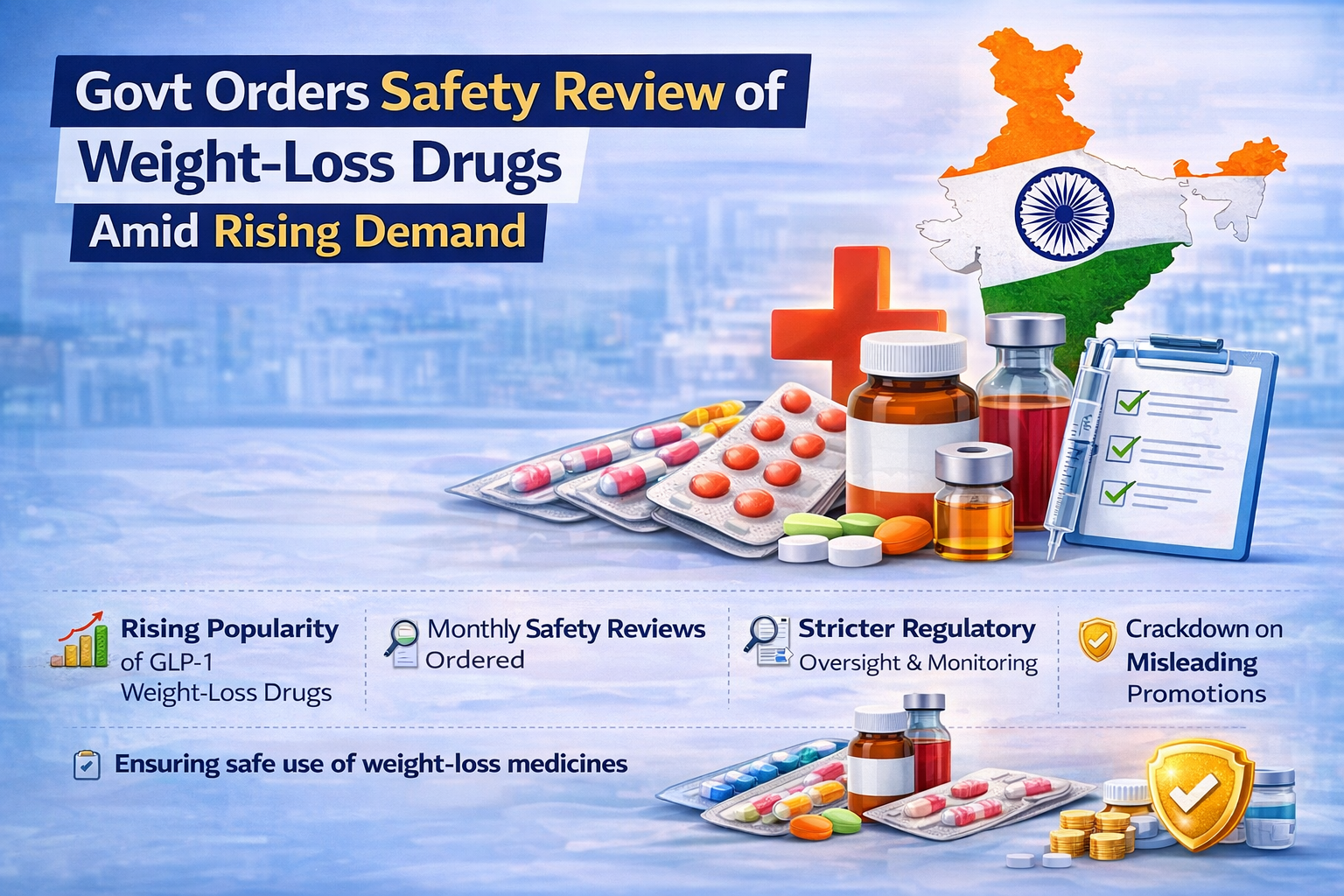
The demand for weight-loss drugs in India has surged dramatically in recent years, driven by increasing awareness of obesity, lifestyle-related disorders, and the desire for faster results. However, this rapid growth has also raised significant safety and regulatory concerns. In response, the government has initiated a comprehensive safety review of weight-loss drugs, particularly focusing on a class of medicines known as GLP-1 receptor agonists.
This move reflects a broader effort to ensure patient safety, promote ethical marketing practices, and strengthen regulatory oversight in the pharmaceutical sector.
Rising Popularity of Weight-Loss Drugs in India
India is witnessing a steady rise in obesity and metabolic disorders such as diabetes, which has fueled demand for advanced treatment options. Among these, GLP-1 receptor agonists have gained massive attention due to their dual benefits—helping in blood sugar control and supporting weight loss.
With the recent expiration of patents on certain key compounds, the market is expected to become more competitive and accessible. As a result, affordable generic versions of weight-loss medicines are likely to flood the market, making them available to a larger population.
Industry estimates suggest that the obesity drug market in India could grow exponentially, reaching thousands of crores in the coming years. While this growth presents opportunities, it also necessitates stricter monitoring.
Government Steps Up Safety Monitoring
To address the growing concerns, health authorities have directed the Indian Pharmacopoeia Commission (IPC) to conduct a detailed review of adverse events associated with these drugs. The IPC has been assigned the responsibility of preparing monthly or bi-monthly safety reports.
This initiative aims to strengthen post-marketing surveillance, ensuring that any side effects or risks linked to weight-loss drugs are promptly identified and managed. Such surveillance plays a critical role in maintaining drug safety after they are approved and widely used by patients.
Focus on Regulatory Oversight and Compliance
The issue was recently discussed in a high-level regulatory meeting, where authorities emphasized the need to tighten control over the promotion and use of prescription-only medicines.
One of the key concerns highlighted was the rise in surrogate advertising, where drugs that require a doctor’s prescription are indirectly promoted to the public. This practice can mislead consumers and encourage self-medication, which may lead to serious health risks.
To tackle this, a multi-layered enforcement strategy has been proposed, including:
- Increased vigilance by state and union territory drug regulators
- Strict monitoring of marketing practices
- Ensuring compliance with approved drug indications and labeling
- Enforcement of risk management plans
Authorities have also been empowered to take strict action against violations, ensuring accountability across the pharmaceutical supply chain.
Protecting Patients from Misleading Promotions
A major focus of the government’s initiative is to protect vulnerable populations from misleading or manipulative advertising practices. With the growing popularity of weight-loss drugs, there is a risk that individuals may seek these medications without proper medical consultation.
Experts warn that unsupervised use of such drugs can lead to serious side effects, especially in individuals with underlying health conditions. Therefore, it is crucial that these medicines are used strictly under medical guidance.
The regulatory bodies have clearly stated that ethical marketing practices must be followed, and any attempt to bypass regulations will invite strict penalties.
Importance of Post-Marketing Surveillance
While clinical trials provide initial safety data, real-world usage often reveals additional insights. This is where post-marketing surveillance becomes essential.
By collecting and analyzing data on adverse drug reactions, authorities can:
- Identify rare or long-term side effects
- Update safety guidelines
- Issue warnings or restrictions if needed
- Ensure continuous patient safety
The decision to implement regular safety reviews highlights the government’s proactive approach to managing emerging healthcare trends.
Future Outlook of the Weight-Loss Drug Market
The future of the weight-loss drug market in India looks promising, with increasing innovation and accessibility. However, sustainable growth will depend on maintaining a balance between market expansion and patient safety.
Key trends expected in the coming years include:
- Increased availability of affordable generic drugs
- Greater awareness about obesity management
- Stronger regulatory frameworks
- Enhanced pharmacovigilance systems
As demand continues to rise, stakeholders—including regulators, healthcare professionals, and pharmaceutical companies—must work together to ensure responsible usage.
Conclusion
The government’s decision to order a safety review of weight-loss drugs is a timely and necessary step in the evolving healthcare landscape. With the rapid rise in demand for GLP-1 receptor agonists and similar medicines, ensuring safety, transparency, and ethical practices has become more important than ever.
By strengthening regulatory oversight, enhancing post-marketing surveillance, and curbing misleading promotions, authorities aim to safeguard public health while supporting innovation in the pharmaceutical industry.
For patients, the key takeaway remains clear: weight-loss medications should only be used under proper medical supervision, ensuring both effectiveness and safety in the long run.