
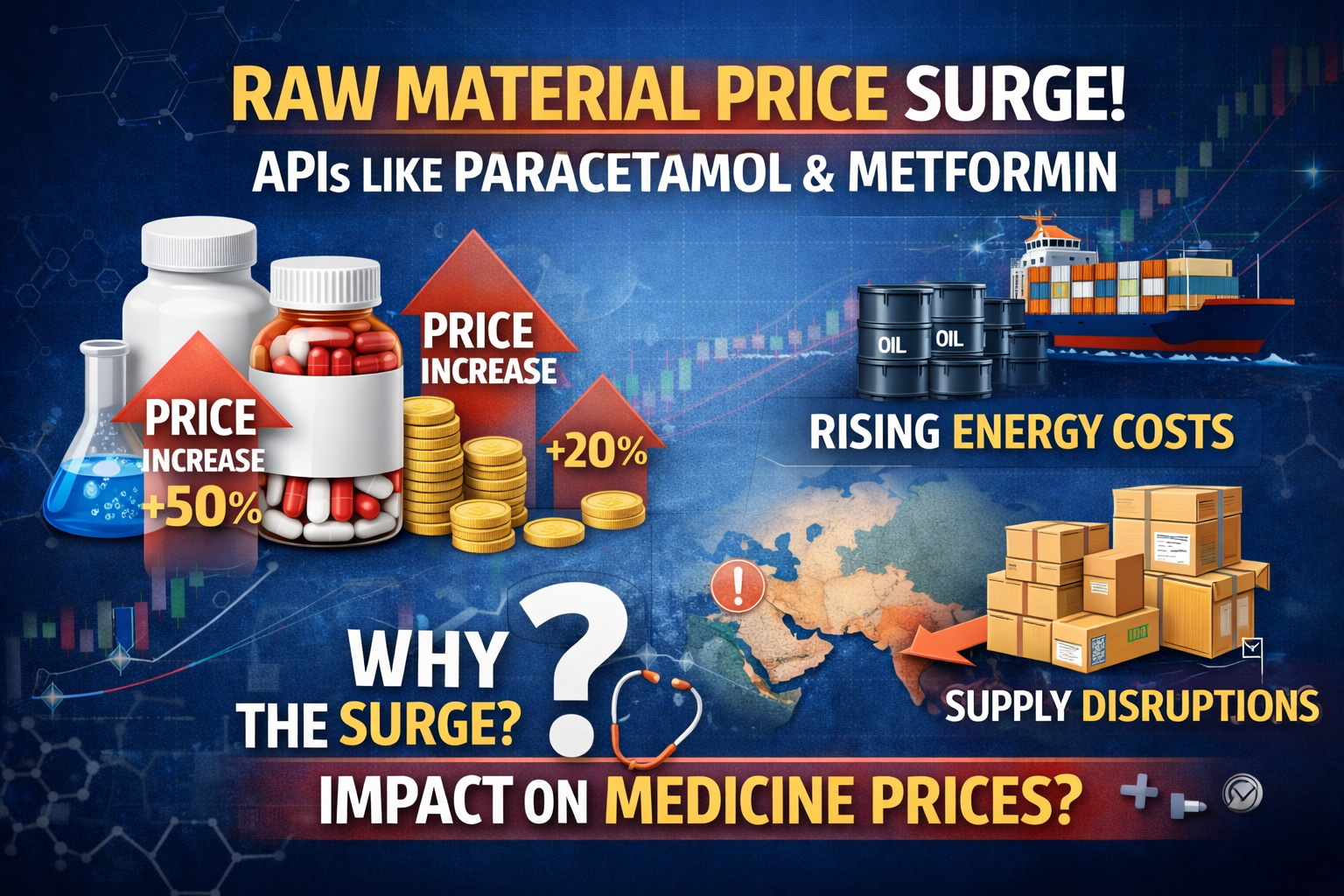
The pharmaceutical industry is currently facing a major challenge as raw material prices, especially Active Pharmaceutical Ingredients (APIs), continue to rise sharply. Essential medicines such as paracetamol and metformin, which are widely used across the world, are at the center of this cost surge.
This sudden increase is not just a temporary fluctuation—it reflects deeper issues in the global supply chain, energy markets, and geopolitical tensions. Let’s explore the reasons behind this trend and its impact on the healthcare sector.
What Are APIs and Why They Matter
Active Pharmaceutical Ingredients (APIs) are the core components used in the production of medicines. Without APIs, drug manufacturing cannot take place.
For example:
- Paracetamol API is used to produce fever and pain relief medicines
- Metformin API is essential for diabetes treatment
Since these medicines are used daily by millions, even a small increase in API prices can have a large-scale impact on healthcare costs.
Sharp Rise in API Prices
Recent reports indicate a significant spike in raw material costs:
- Paracetamol API prices have more than doubled, rising from around ₹220–240/kg to ₹550–600/kg
- In some cases, prices jumped from ₹250/kg to ₹450/kg within weeks
- Metformin prices have increased by 15–20%, while paracetamol rose by up to 50% or more
- Overall API costs have surged 20% to 60% in just a few days in certain markets
This level of volatility is unusual and has created serious concerns across the pharma industry.
Key Reasons Behind the Price Surge
1. Geopolitical Tensions and Supply Disruptions
One of the biggest factors driving this increase is ongoing conflict in West Asia, which has disrupted:
- Shipping routes
- Availability of raw materials
- Energy supply chains
These disruptions have reduced the availability of key chemicals and intermediates, pushing prices upward.
2. Dependence on Imports
Many pharmaceutical manufacturers rely heavily on imports for APIs and raw materials.
- A large portion of APIs is sourced from international markets
- Any disruption in global trade directly affects local production costs
This dependency makes the industry vulnerable to external shocks.
3. Rising Energy and Oil Prices
APIs are largely derived from petrochemical-based inputs.
- Around 90–99% of pharma raw materials are linked to oil-based chemicals
- Rising crude oil prices increase:
- Chemical costs
- Transportation expenses
- Manufacturing costs
This creates a cascading effect across the entire supply chain.
4. Increase in Supporting Materials
The cost surge is not limited to APIs alone.
Other components have also become expensive:
- Solvents and intermediates (up to 100% increase)
- Packaging materials like plastic, aluminum foil, and glass
- Excipients and chemical reagents
This means the total cost of producing medicines has increased significantly.
Impact on Pharmaceutical Manufacturers
Rising Production Costs
Manufacturers are facing:
- Reduced profit margins
- Increased operational costs
- Difficulty in maintaining price-controlled medicines
In some cases, companies are even:
- Reducing production hours
- Temporarily halting operations
Pressure on Small and Medium Units
Smaller pharmaceutical companies are the most affected because:
- They have limited financial flexibility
- They depend heavily on stable raw material pricing
Many are struggling to sustain operations under rising costs.
Impact on Medicine Prices
While retail medicine prices are often regulated, the rising input cost is creating pressure.
Current Situation:
- Prices of many essential medicines have already seen minor increases
- Over 700+ medicines have been revised in pricing recently
Future Risk:
- If the trend continues, medicine prices could rise by 20–25% in coming months
- Common drugs like:
- Paracetamol
- Metformin
- Antibiotics
may become more expensive
Supply Chain Challenges
The pharma supply chain is facing multiple issues:
- Delayed shipments due to geopolitical conflicts
- Increased freight and logistics costs
- Shortage of key raw materials
- Suppliers unwilling to lock prices due to volatility
In some cases, 40% of supply has already been affected, impacting production planning
Long-Term Implications
If the situation continues, the pharmaceutical industry may undergo structural changes:
1. Shift Toward Domestic API Manufacturing
Countries may invest more in local API production to reduce dependency.
2. Increased Focus on Supply Chain Diversification
Companies may:
- Source raw materials from multiple regions
- Build strategic reserves
3. Policy Intervention
Governments may:
- Introduce price control adjustments
- Provide subsidies or incentives
Opportunities Amid the Crisis
Despite challenges, this situation also presents opportunities:
- Growth in domestic manufacturing sector
- Investment in API production infrastructure
- Innovation in cost-efficient drug production methods
Companies that adapt quickly can gain a competitive advantage.
Conclusion
The sharp rise in API prices, especially for widely used medicines like paracetamol and metformin, highlights the fragile nature of the global pharmaceutical supply chain. Driven by geopolitical tensions, energy costs, and supply disruptions, this crisis is impacting manufacturers, suppliers, and consumers alike.
While the short-term outlook suggests cost pressure and possible price increases, the long-term impact could lead to a more resilient and self-reliant pharmaceutical industry. The key will be how quickly stakeholders adapt to these changing dynamics.