
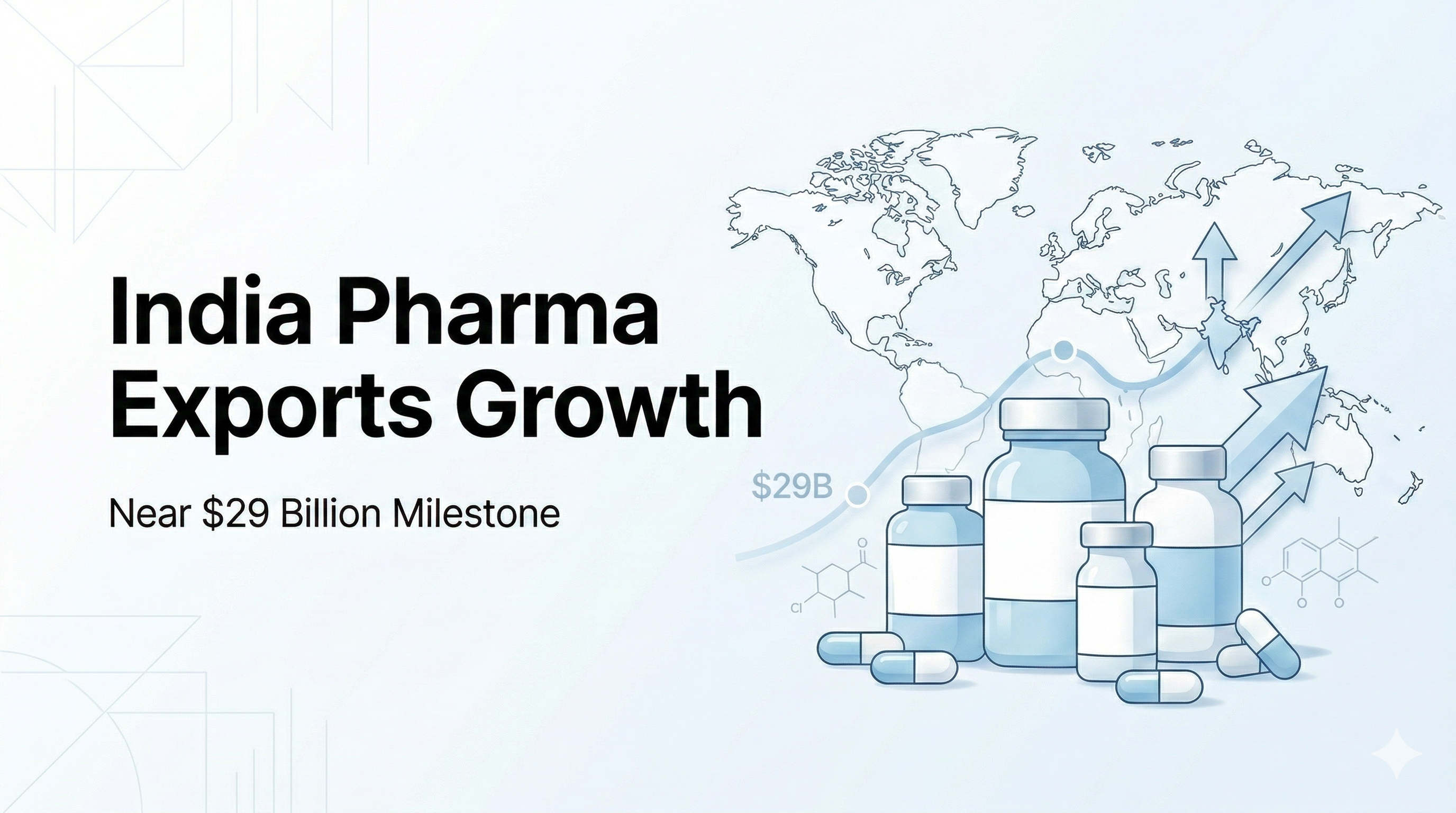
India’s pharmaceutical sector continues to demonstrate remarkable resilience despite ongoing global economic uncertainties. As per recent industry data, pharmaceutical exports from India have nearly reached the $29 billion mark by February in the current financial year. This steady growth highlights the strength of the Indian pharma ecosystem and its critical role in the global healthcare supply chain.
With consistent performance across key segments like formulations, biologicals, vaccines, and traditional medicine products, India has reinforced its position as a reliable and affordable medicine supplier worldwide.
Consistent Growth Amid Global Challenges
Global markets have been facing multiple headwinds, including pricing pressures, supply chain disruptions, and geopolitical uncertainties. Despite these challenges, India’s pharma sector has maintained a stable growth trajectory.
Exports during April–February FY26 stood at approximately $28.29 billion, reflecting a growth of over 5% compared to the previous year. This growth showcases the adaptability and efficiency of the pharma drug company ecosystem in India.
Many drug manufacturing companies have adopted advanced production techniques and diversified their export portfolios to remain competitive in international markets.
Key Drivers Behind Export Growth
The strong performance of pharmaceutical exports can be attributed to multiple high-demand segments:
1. Formulations
Finished dosage forms continue to dominate export volumes. Indian manufacturers are known for producing high-quality, cost-effective formulations that meet global standards.
2. Biologicals and Vaccines
India has emerged as a global leader in vaccine production and biological products, contributing significantly to export revenues.
3. Ayush and Traditional Medicines
The increasing global demand for herbal and alternative medicine has boosted exports from this segment, strengthening India’s image as a holistic healthcare provider.
These factors collectively support the growth of the medicine production company sector and enhance India’s competitiveness globally.
Expanding Global Footprint
India supplies medicines to more than 200 countries, making it one of the largest exporters of generic drugs in the world. The presence of top indian pharmaceutical companies in regulated and semi-regulated markets has further strengthened this global reach.
Additionally, businesses searching for pharmaceutical companies near me or international buyers are increasingly relying on Indian suppliers due to:
- Cost efficiency
- High-quality standards
- Regulatory compliance
- Large-scale production capabilities
This global trust has helped India maintain its leadership among the top 10 pharmaceutical companies in india ecosystem.
Industry Growth Projections
The Indian pharmaceutical industry, currently valued at around $60 billion, is expected to grow to nearly $130 billion by 2030. This rapid expansion is driven by:
- Increasing healthcare demand worldwide
- Rising chronic diseases
- Growing focus on affordable treatment solutions
The pharmaceutical industry in chandigarh and other major pharma hubs are playing a vital role in supporting this growth by contributing to manufacturing, distribution, and innovation.
Role of Regional Pharma Hubs
Regions like Chandigarh, Baddi, and other industrial clusters have become key contributors to India’s pharma exports. The presence of multiple pharmaceutical company in chandigarh has boosted production capacity and export readiness.
Many firms listed among the top 10 pharma companies in chandigarh and top 10 pcd pharma companies in india are actively participating in global trade, offering a wide range of products across therapeutic segments.
These regional hubs are essential for:
- Scaling manufacturing operations
- Supporting export logistics
- Enhancing supply chain efficiency
Strengthening India’s Position as a Global Supplier
India is widely recognized as the “pharmacy of the world” due to its ability to provide affordable medicines without compromising quality. The contribution of each indian drugs company plays a crucial role in maintaining this reputation.
The country’s pharmaceutical exports are not just about volume but also about value and trust. Continuous investments in research, quality control, and compliance have made Indian pharma products highly acceptable in international markets.
Challenges and Opportunities Ahead
While the sector is growing steadily, it still faces certain challenges:
- Pricing pressure in regulated markets
- Strict compliance requirements
- Supply chain disruptions
However, these challenges also present opportunities for innovation and improvement. Companies that invest in technology, automation, and regulatory expertise will continue to lead the market.
The evolution of drug manufacturing companies into globally competitive entities is a positive sign for the future of Indian pharma exports.
Conclusion
India’s pharmaceutical export performance nearing the $29 billion milestone is a testament to the sector’s resilience, efficiency, and global relevance. Despite economic uncertainties, the industry has maintained steady growth, driven by strong demand for formulations, vaccines, and alternative medicines.
With the continued efforts of top 10 healthcare company in india, expanding infrastructure, and increasing global demand, the future of Indian pharmaceutical exports looks highly promising. As more businesses and buyers search for reliable pharmaceutical companies near me, India is well-positioned to meet global healthcare needs with quality, affordability, and innovation.
The coming years will further solidify India’s status as a global pharmaceutical powerhouse, making it a key player in shaping the future of healthcare worldwide.