
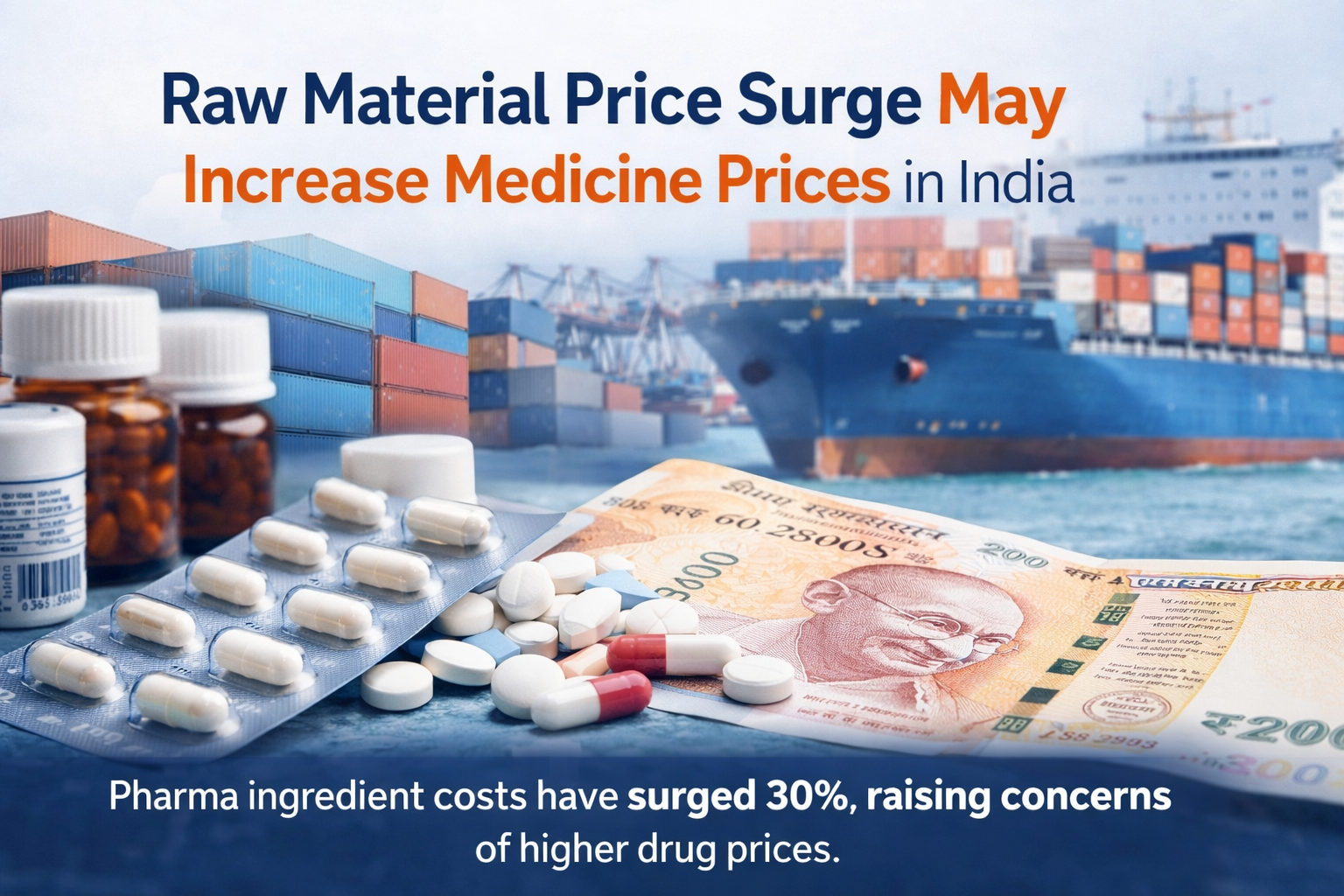
The pharmaceutical industry plays a critical role in ensuring that essential medicines remain accessible and affordable for millions of people. However, recent developments in the global supply chain have created new challenges for drug manufacturers. A sharp increase in the cost of key pharmaceutical raw materials is now raising concerns that medicine prices may soon rise in India. Reports indicate that the prices of several active pharmaceutical ingredients (APIs) and raw materials have surged by nearly 30% in recent weeks, creating pressure on pharmaceutical production costs.
Why Raw Material Prices Are Rising
One of the primary reasons behind the sudden increase in raw material prices is the disruption in global shipping logistics. The ongoing geopolitical tensions and conflicts in certain regions have created shortages in the availability of container ships. This shortage has slowed the movement of essential pharmaceutical ingredients that are commonly imported from international markets.
India’s pharmaceutical sector depends on the timely import of various APIs and intermediates required to manufacture medicines. When shipping availability becomes limited, transportation costs rise significantly. These increased logistics expenses are eventually reflected in the price of the raw materials being supplied to manufacturers.
As a result, pharmaceutical companies are now facing higher procurement costs, which is creating pressure across the entire supply chain.
Impact on Pharmaceutical Manufacturing
The pharmaceutical manufacturing ecosystem relies heavily on stable supply chains and predictable raw material costs. When prices of APIs increase rapidly, manufacturers must reassess their production budgets and operational expenses.
In many cases, companies operate with tight profit margins, especially when producing essential medicines. A sudden rise in raw material costs can disrupt these margins and make production more expensive. If these cost increases continue over an extended period, pharmaceutical manufacturers may have no choice but to adjust the prices of finished medicines.
This situation can affect both generic medicines and specialized drug formulations that require imported raw materials.
Dependence on Imported Pharmaceutical Ingredients
India is widely recognized as one of the largest producers of generic medicines in the world. However, the country still relies on imports for several important pharmaceutical ingredients. Many APIs and intermediates are sourced from international suppliers due to cost efficiency and large-scale production capabilities available overseas.
When disruptions occur in global shipping routes or international trade, the availability and pricing of these imported ingredients can fluctuate significantly. Such fluctuations directly impact domestic pharmaceutical manufacturing.
This dependence on global supply chains highlights the importance of strengthening local production capabilities for key pharmaceutical ingredients in the future.
Possible Impact on Medicine Prices
If the cost of pharmaceutical ingredients continues to rise, medicine prices in the market may also increase. Manufacturers often try to absorb temporary cost fluctuations, but sustained increases in production expenses can make price adjustments unavoidable.
Higher medicine prices may affect healthcare affordability for consumers, especially for those who rely on long-term treatments and essential drugs. Healthcare providers and policymakers often monitor such situations closely to ensure that essential medicines remain accessible to the public.
The impact may vary depending on the type of medicine and the extent of raw material cost increases associated with its production.
Supply Chain Challenges in the Pharmaceutical Industry
Global supply chain disruptions have become a recurring challenge for many industries, including pharmaceuticals. Shipping delays, container shortages, rising freight charges, and geopolitical tensions can all influence the cost and availability of raw materials.
For pharmaceutical companies, maintaining uninterrupted access to APIs and intermediates is crucial to ensure continuous production. Any delay or price spike can affect manufacturing schedules and product availability in the market.
To address these challenges, many manufacturers are exploring strategies such as diversifying suppliers, increasing inventory levels, and improving supply chain resilience.
The Need for Domestic API Production
The recent surge in raw material prices has once again highlighted the importance of developing strong domestic capabilities for pharmaceutical ingredient manufacturing. Increasing local production of APIs can help reduce dependency on imports and protect the industry from global supply disruptions.
Government initiatives and industry investments aimed at boosting domestic API production could strengthen the pharmaceutical supply chain in the long term. This approach may also help stabilize medicine prices by reducing exposure to international market fluctuations.
Building a robust local ecosystem for pharmaceutical raw materials will be an important step toward ensuring consistent and affordable drug manufacturing.
Future Outlook for the Pharmaceutical Sector
Despite the current challenges, the pharmaceutical industry remains one of the most resilient sectors in the global economy. Demand for medicines continues to grow due to increasing healthcare awareness, population growth, and expanding medical treatments.
However, the recent surge in raw material costs serves as a reminder that the industry must continuously adapt to evolving global conditions. Strengthening supply chains, investing in domestic production, and improving logistics infrastructure can help minimize future disruptions.
If these measures are implemented effectively, the pharmaceutical sector will be better prepared to manage cost fluctuations while ensuring that essential medicines remain available to those who need them most.
Conclusion
The recent rise in pharmaceutical raw material prices has created uncertainty within the drug manufacturing industry. With ingredient costs increasing by nearly 30%, manufacturers are facing growing pressure on production expenses. If these trends continue, medicine prices may eventually increase as companies attempt to manage higher costs.
However, the situation also presents an opportunity to strengthen domestic production and improve supply chain resilience. By reducing dependency on imported ingredients and investing in local manufacturing, the pharmaceutical industry can better safeguard medicine affordability and ensure long-term stability in drug production.