
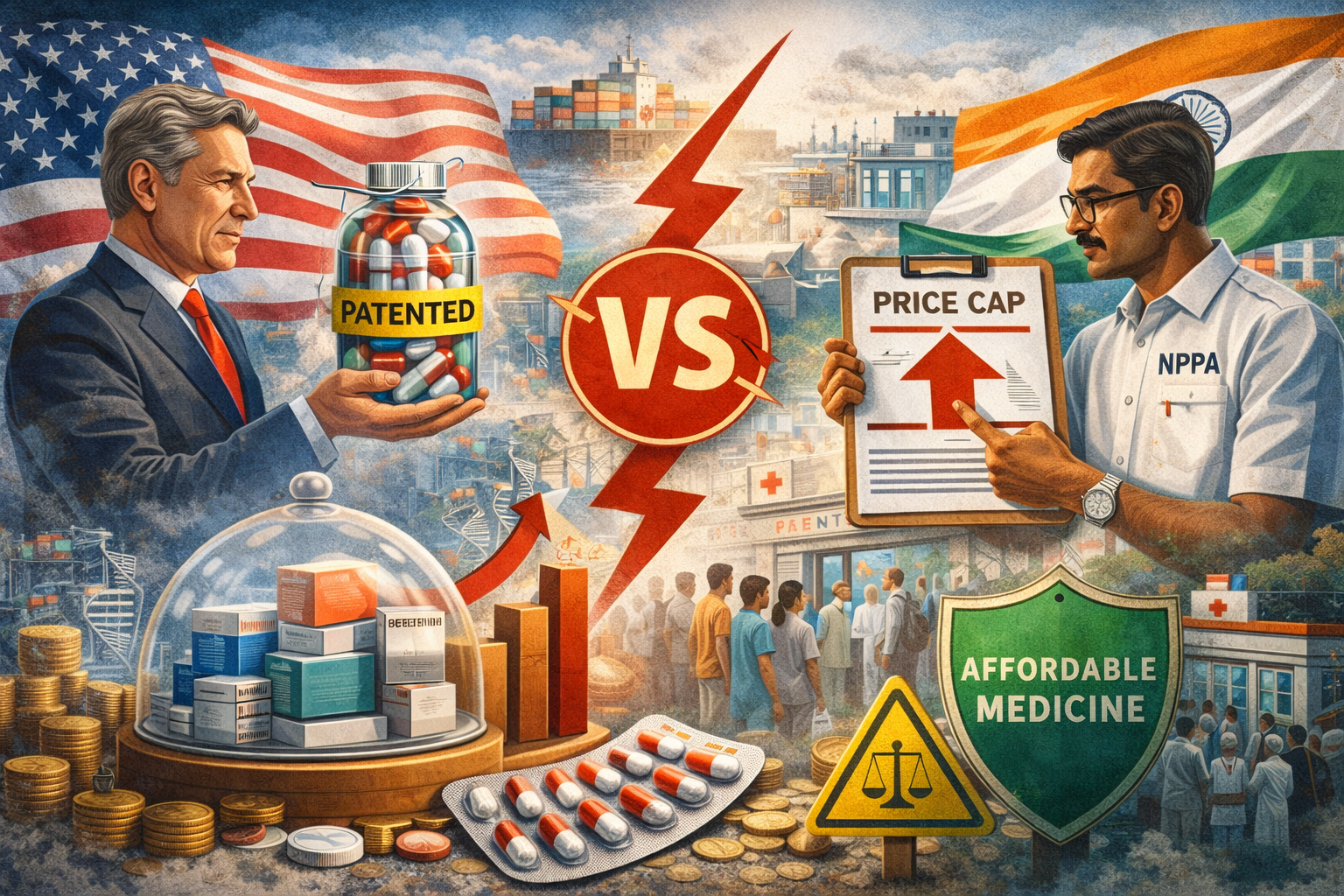
India’s pharmaceutical pricing framework has once again come under scrutiny as global stakeholders raise concerns over existing price control mechanisms. The debate has intensified around the role of the National Pharmaceutical Pricing Authority (NPPA) and whether patented medicines should be exempt from pricing regulations for a longer duration. At the heart of this discussion lies a complex balance between encouraging innovation and ensuring affordable access to life-saving drugs.
Understanding India’s Drug Pricing Framework
India regulates the prices of essential medicines through the Drug Price Control Order (DPCO), implemented in 2013. Under this system, the NPPA sets ceiling prices for a wide range of medicines to prevent excessive pricing and ensure accessibility for the general population.
Currently, patented and orphan drugs are granted a limited exemption period from price controls. After this window, these medicines fall under regulatory pricing, with only marginal annual increases allowed based on inflation indicators such as the Wholesale Price Index (WPI).
This framework has played a crucial role in making medicines affordable, especially in a country where out-of-pocket healthcare expenses remain high.
Concerns Raised by Global Pharma Stakeholders
International pharmaceutical stakeholders, particularly those focused on innovation-driven therapies, have expressed concerns that India’s pricing regulations do not adequately reflect the high costs associated with drug development.
Developing a new drug involves years of research, clinical trials, and regulatory approvals, often requiring substantial financial investment. Stakeholders argue that strict price caps limit their ability to recover these costs, potentially discouraging them from introducing advanced therapies in the Indian market.
One of the key demands is the extension of price control exemptions for patented drugs throughout their entire patent life, which typically spans around 20 years. This, they claim, would create a more favorable environment for innovation and investment.
The Case for Market-Based Pricing
Another major point of contention is the pricing of off-patent drugs. Stakeholders advocate for a market-based pricing model instead of the current ceiling price mechanism.
Under the existing system, medicines often experience a significant price reduction once their patent expires. While this benefits consumers, it also impacts revenue potential for manufacturers. Proponents of market-based pricing argue that allowing prices to be determined by competition could create a more sustainable business environment.
However, critics caution that such a shift could lead to price volatility and reduced affordability for essential medicines.
Inflation and Cost Pressures
A critical argument presented by stakeholders is that drug price revisions have not kept pace with inflation or rising production costs. Factors such as increasing raw material prices, logistics expenses, and compliance costs have added pressure on manufacturers.
Without adequate adjustments in pricing policies, companies may find it economically unviable to continue supplying certain medicines. This could lead to reduced availability, particularly for specialized or high-cost treatments.
Public Health Perspective: Ensuring Affordable Access
On the other side of the debate, public health advocates strongly support the continuation of price controls. They argue that removing or relaxing these safeguards could make medicines unaffordable for a large section of the population.
Access to healthcare is closely linked to the right to life, and ensuring affordable medicines is a key component of public health policy. Critics of extended exemptions warn that allowing unrestricted pricing for patented drugs could lead to monopolistic practices and significantly higher treatment costs.
They emphasize that any policy changes must prioritize patient welfare over commercial interests.
Data Protection and Innovation Debate
Another important aspect of the discussion is regulatory data protection. Innovator companies seek stronger safeguards for clinical trial data and proprietary information submitted during drug approvals.
They argue that protecting this data for a longer period would prevent competitors from leveraging it to develop generic versions quickly, thereby preserving incentives for innovation.
However, opponents believe that easier access to such data helps reduce research costs and accelerates the availability of affordable alternatives. This has been a key factor in the growth of the generic medicine sector.
Intellectual Property and Patent Challenges
Intellectual property rights also play a significant role in shaping the pharmaceutical landscape. Concerns have been raised about delays in resolving patent disputes and the interpretation of patent laws.
Certain provisions in India’s patent framework are designed to prevent “evergreening,” a practice where minor modifications are used to extend patent life. While this ensures fair competition, it has also been a point of contention for innovation-focused stakeholders.
The challenge lies in creating a system that protects genuine innovation without allowing misuse of patent protections.
Impact on the Indian Pharmaceutical Market
The outcome of this ongoing debate could have far-reaching implications for India’s pharmaceutical sector. A shift towards extended exemptions or relaxed price controls may attract greater investment in innovative therapies.
However, it could also lead to higher medicine prices, affecting affordability and access. Conversely, maintaining strict price regulations ensures accessibility but may limit the introduction of cutting-edge treatments.
The Way Forward
Finding a balanced approach is essential. Policymakers must carefully evaluate both sides of the argument to create a framework that supports innovation while safeguarding public health interests.
Potential solutions could include:
- Differential pricing models for innovative drugs
- Targeted subsidies for high-cost treatments
- Periodic revision of price caps to reflect inflation
- Strengthening domestic research and development capabilities
Such measures can help bridge the gap between affordability and innovation.
Conclusion
The debate over drug price controls and patented medicine exemptions highlights the broader challenge of managing healthcare economics in a rapidly evolving global landscape. While innovation is vital for advancing medical science, accessibility remains equally important.
A well-calibrated policy approach that aligns economic incentives with public health priorities will be key to ensuring sustainable growth in the pharmaceutical sector while protecting the interests of patients.