
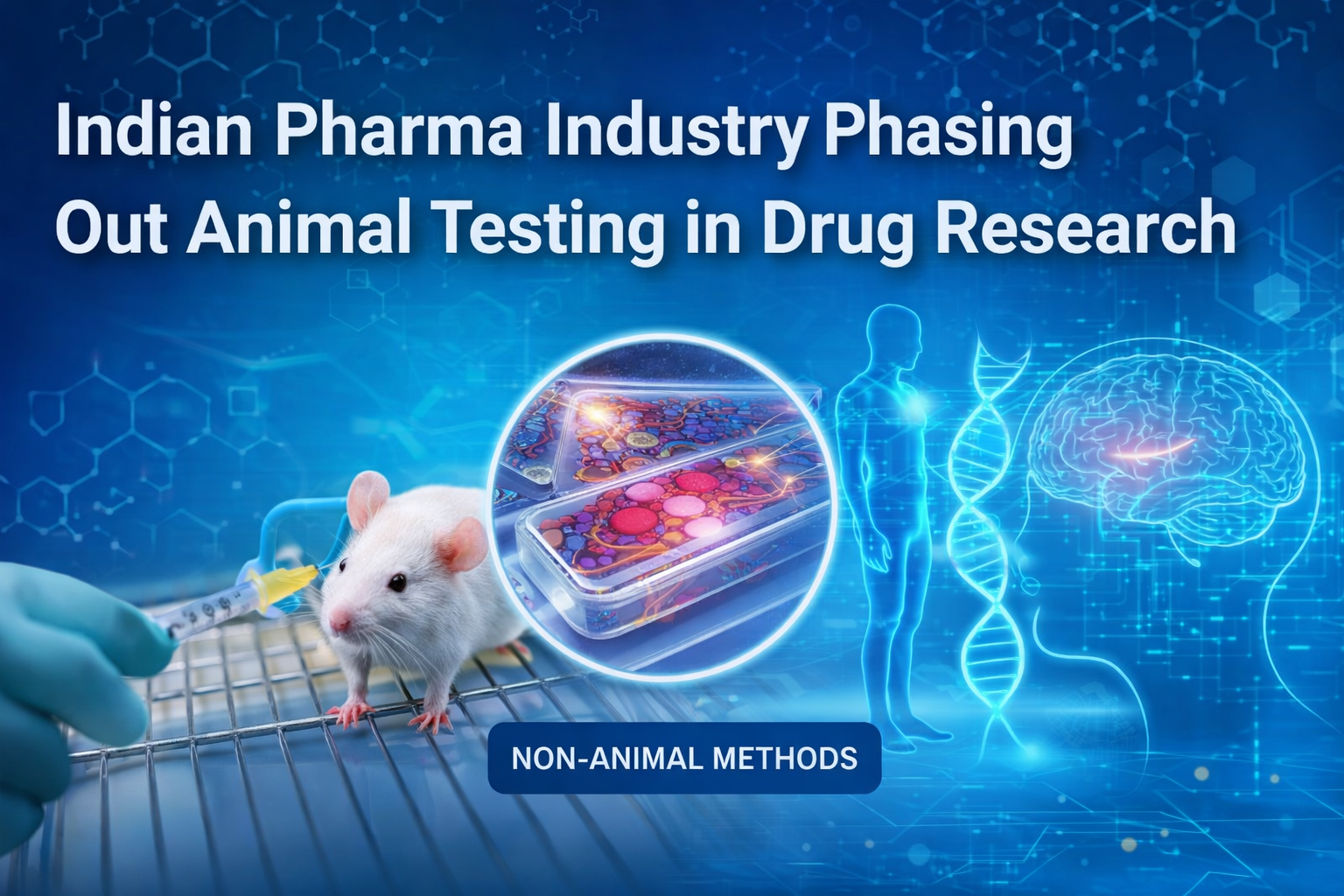
The Indian pharmaceutical sector is entering a transformative phase as it begins to reduce dependence on animal testing in drug development. For decades, animal studies have been considered a regulatory requirement before human clinical trials. However, advancements in non-animal methods (NAMs)—including organ-on-chip technology, in vitro systems, and AI-enabled computational models—are reshaping the future of preclinical research.
This shift is not merely ethical; it is scientific, economic, and strategic. As India strengthens its position as a global pharmaceutical hub, adopting innovative research models will enhance credibility, speed, and global competitiveness.
Why Animal Testing Is Being Reconsidered
Animal testing has long been used to evaluate drug toxicity, pharmacokinetics, and safety profiles. However, several limitations have driven the industry to explore alternatives:
-
Species Differences: Animal biology does not always accurately predict human responses.
-
High Costs: Maintaining animal facilities increases R&D expenditure.
-
Time-Intensive Protocols: Animal trials slow down drug development timelines.
-
Ethical Concerns: Growing public and regulatory pressure demands humane alternatives.
With the global scientific community moving toward validated non-animal systems, Indian pharma companies are aligning their strategies accordingly.
Emerging Alternatives: The Rise of NAMs
1. Organ-on-Chip Technology
Microfluidic devices simulate human organ systems, allowing researchers to study drug effects in a controlled environment. These chips mimic liver, heart, or lung functions with remarkable accuracy.
2. Advanced In Vitro Testing
Human cell-based assays provide more predictive toxicity data compared to animal models.
3. AI-Driven In Silico Models
Artificial intelligence and machine learning tools simulate drug interactions, predict toxicity, and analyze large datasets. These computational models significantly reduce experimental requirements.
Collectively, these innovations increase predictive accuracy while reducing costs and development timelines.
Regulatory Momentum in India
Indian regulators are gradually acknowledging global regulatory trends. Countries such as the United States and members of the European Union have begun relaxing mandatory animal testing requirements for certain categories of drugs and cosmetics.
In India, policymakers and research councils are encouraging:
-
Validation of alternative testing platforms
-
Collaboration between academia and industry
-
Investments in biotechnology infrastructure
-
Skill development in computational toxicology
Such reforms will strengthen India’s global standing as a responsible and innovation-driven pharmaceutical leader.
Business Implications for Indian Pharma Companies
Pharmaceutical companies that integrate non-animal research methodologies stand to gain multiple competitive advantages:
-
Faster Time-to-Market
-
Reduced R&D Costs
-
Improved Global Compliance
-
Enhanced Ethical Branding
For organizations operating as a monopoly medicine company in india, adopting modern research standards can significantly boost credibility and market authority. Monopoly-based pharma franchise models already emphasize exclusive rights and quality differentiation. Incorporating advanced research practices further strengthens their value proposition.
Impact on Pharma Contract Manufacturing
The evolution of drug research methods also influences manufacturing partners. A forward-thinking pharma contract manufacturing company must adapt to:
-
New validation standards
-
Biotech-driven production requirements
-
Stricter quality control benchmarks
-
Data-driven compliance documentation
Contract manufacturers aligned with innovative R&D practices will attract global collaborations and export opportunities. As India aims to expand its pharmaceutical exports, harmonizing research and manufacturing standards becomes essential.
Economic and Strategic Advantages for India
India is already recognized as the “Pharmacy of the World” due to its robust generic drug manufacturing capabilities. Transitioning toward non-animal research technologies could further elevate its global leadership.
Key Strategic Benefits:
-
Boost in Innovation Ecosystem
Investment in biotechnology startups and AI-driven pharma research. -
Attraction of Foreign Investment
Global pharma giants prefer regions with modern research compliance. -
Expansion of High-Value Exports
Advanced research infrastructure enhances trust in Indian-made formulations. -
Reduction in Long-Term Costs
Digital and lab-based simulations cut recurring operational expenses.
By integrating cutting-edge technologies, India can shift from being primarily a manufacturing powerhouse to becoming a research-driven pharmaceutical innovation hub.
Challenges in the Transition
Despite clear benefits, certain obstacles remain:
-
High initial investment in organ-on-chip and AI platforms
-
Limited trained professionals in computational toxicology
-
Need for global validation and regulatory harmonization
-
Industry hesitation due to legacy systems
However, with government incentives, academic partnerships, and private investment, these challenges can be systematically addressed.
The Road Ahead
The Indian pharma industry’s move toward phasing out animal testing represents more than regulatory compliance—it signals a structural transformation in how medicines are researched and developed.
Future success will depend on:
-
Collaborative public-private research initiatives
-
Integration of digital health technologies
-
Policy support for biotech innovation
-
International regulatory alignment
Companies that proactively adopt non-animal research methodologies will likely dominate the next decade of pharmaceutical growth.
Conclusion
India’s pharmaceutical sector stands at a pivotal crossroads. As ethical responsibility converges with scientific advancement, the gradual reduction of animal testing marks a progressive milestone. By embracing non-animal methods, strengthening manufacturing partnerships, and fostering innovation, India can redefine its global pharmaceutical identity.
Organizations operating under monopoly-based distribution models and those partnering with advanced contract manufacturers will particularly benefit from this transformation. The integration of ethical research, technological advancement, and scalable manufacturing will shape the future of Indian pharma—making it faster, smarter, and globally competitive.