
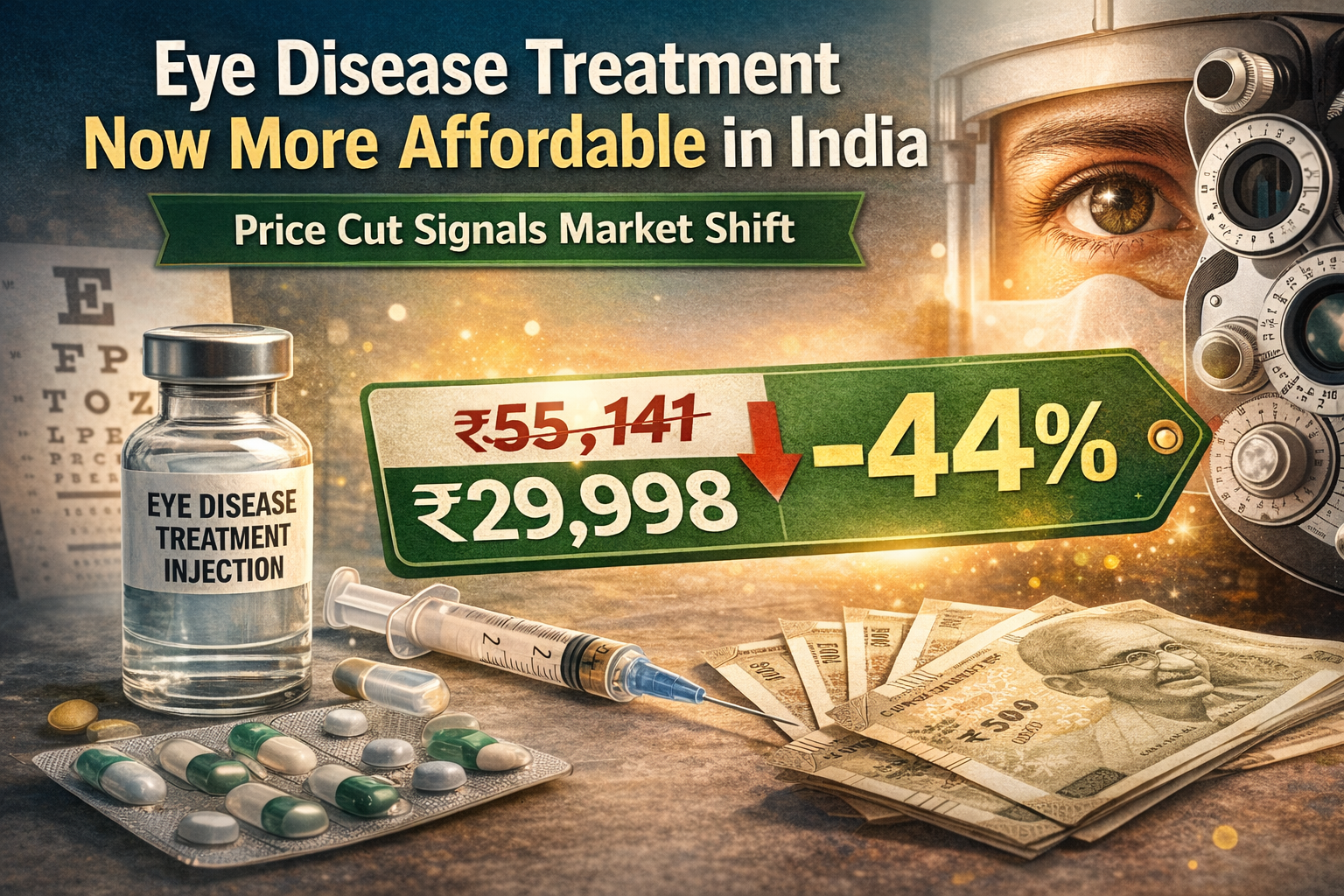
In a significant development for India’s healthcare sector, the price of a leading eye disease treatment injection has been reduced by nearly 44%, making it far more accessible to patients. This strategic move is expected to expand treatment reach, improve affordability, and reshape the competitive landscape in ophthalmology.
With rising cases of retinal disorders and vision-related diseases in India, such pricing decisions can have a transformational impact on patient care and pharmaceutical dynamics.
Major Price Reduction: A Game-Changer for Patients
The cost of a widely used 2 mg eye injection has dropped from approximately ₹53,141 to ₹29,998, marking a steep decline. This reduction is aimed at increasing patient access and ensuring that more individuals can begin treatment without financial barriers.
Why This Matters:
- High treatment costs often lead to delayed or skipped therapies
- Eye conditions like retinal diseases require timely and consistent treatment
- Lower pricing can significantly increase treatment adherence
By integrating affordability at the initial stage, the revised pricing model simplifies the patient journey and encourages early intervention.
Understanding the Therapy: How It Works
The injection belongs to a class of drugs known as VEGF (Vascular Endothelial Growth Factor) inhibitors. These therapies are crucial in managing several serious eye conditions.
Mechanism of Action:
- Blocks VEGF, a protein responsible for abnormal blood vessel growth
- Reduces swelling and fluid leakage in the retina
- Prevents further damage to vision
Conditions Treated by This Therapy
This advanced treatment is widely prescribed for multiple ophthalmic conditions, including:
- Age-related Macular Degeneration (AMD)
- Diabetic Macular Edema (DME)
- Retinal Vein Occlusion (RVO)
- Other forms of visual impairment linked to retinal damage
These conditions are major contributors to vision loss, especially among the aging population and individuals with diabetes.
Rising Demand for Affordable Eye Care in India
India is witnessing a steady increase in vision-related disorders, driven by:
- Growing diabetic population
- Aging demographics
- Increased screen exposure and lifestyle changes
Despite advancements in treatment, affordability remains a key challenge. High-cost therapies often limit access to a smaller segment of patients, leaving a large population untreated.
The recent price revision directly addresses this issue by:
- Expanding the eligible patient pool
- Supporting equitable healthcare access
- Enhancing treatment penetration in Tier 2 and Tier 3 cities
Impact of Biosimilars on Pricing Strategy
One of the major factors influencing this price reduction is the growing competition from biosimilars.
What Are Biosimilars?
Biosimilars are highly similar versions of biologic drugs that offer comparable efficacy and safety but at a lower cost.
Market Dynamics:
- Biosimilars are gaining traction due to cost advantages
- They create pricing pressure on original biologic therapies
- Increased competition leads to better affordability for patients
In India, the introduction of interchangeable biosimilars has significantly altered the market, providing more choices to doctors and patients.
Strategic Pricing: More Than Just Cost Reduction
The price cut is not just a reaction to competition—it reflects a broader strategy focused on:
1. Expanding Market Reach
Lower prices enable companies to tap into underserved patient segments.
2. Improving Treatment Initiation
Upfront affordability encourages patients to start therapy earlier, leading to better outcomes.
3. Simplifying Access
Integrating access support into pricing reduces the need for complex reimbursement or assistance programs.
Implications for the Pharmaceutical Industry
This move signals a shift in how pharmaceutical companies approach pricing, especially in emerging markets like India.
Key Industry Impacts:
- Increased competition in the ophthalmology segment
- Greater emphasis on value-based pricing models
- Acceleration of biosimilar adoption
- Focus on patient-centric strategies
Companies may increasingly adopt flexible pricing models to stay competitive and maintain market share.
Benefits for Healthcare Providers and Patients
For Patients:
- More affordable treatment options
- Reduced financial burden
- Improved treatment adherence and outcomes
For Healthcare Providers:
- Ability to recommend effective therapies without cost concerns
- Better patient compliance
- Expanded treatment access across different income groups
Future Outlook: A More Accessible Healthcare Ecosystem
The reduction in price could set a precedent for other high-cost therapies in India. As competition intensifies and healthcare awareness increases, more pharmaceutical companies may adopt similar strategies.
Expected Trends:
- Growth in biosimilar market share
- Continued price rationalization in specialty drugs
- Increased focus on preventive and early-stage treatment
- Stronger push toward affordable innovation
Conclusion
The sharp reduction in the price of a leading eye disease therapy marks a significant milestone in India’s healthcare journey. It highlights the growing importance of affordability, competition, and patient-centric strategies in the pharmaceutical sector.
As biosimilars continue to reshape the market and demand for accessible healthcare rises, such initiatives will play a crucial role in ensuring that life-changing treatments reach a wider population.
Ultimately, the move represents a step toward a more inclusive and sustainable healthcare system, where advanced therapies are no longer limited by high costs but are accessible to those who need them most.