
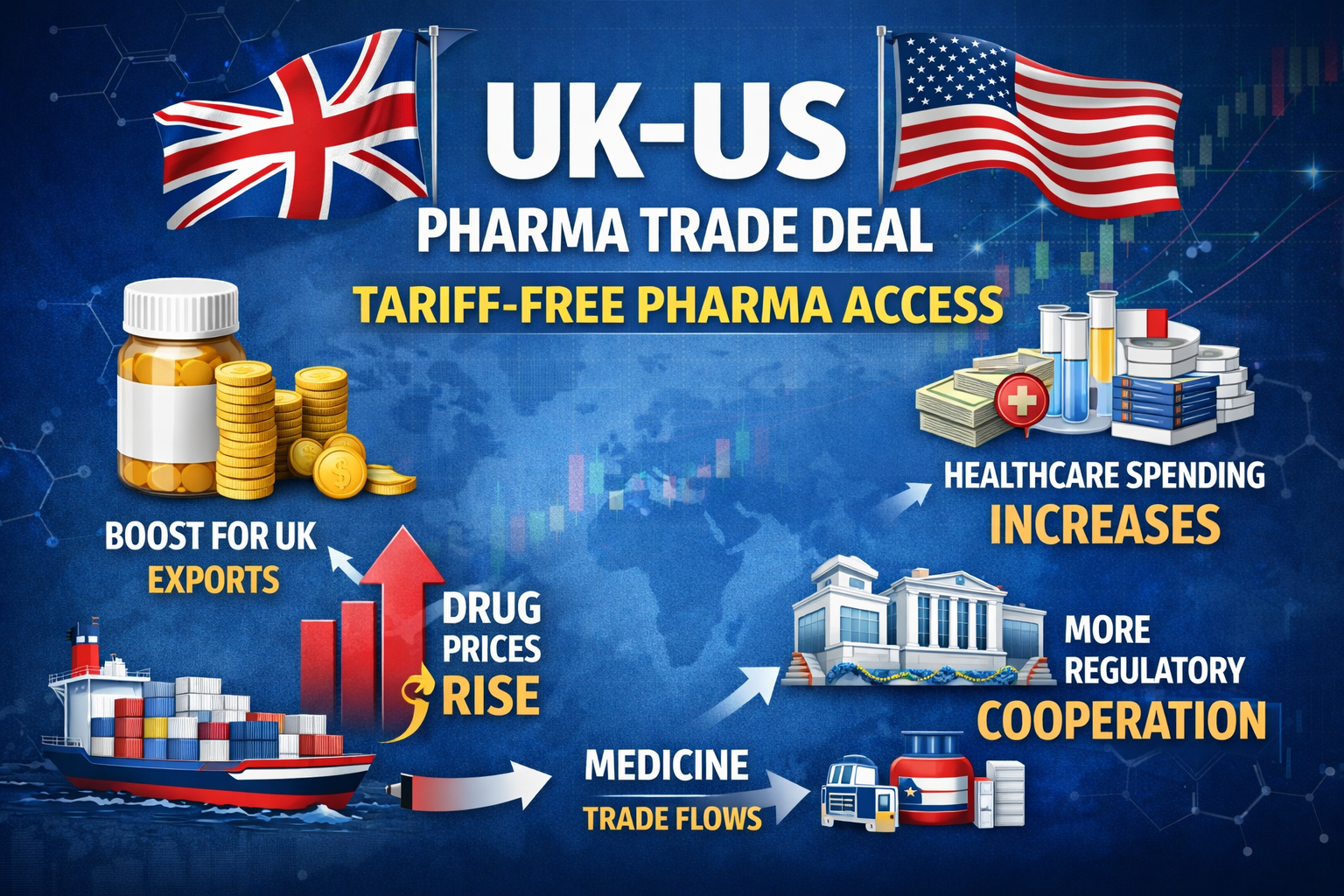
The global pharmaceutical industry is witnessing a major transformation as new trade agreements reshape pricing, access, and innovation. One of the most significant recent developments is the finalization of a pharmaceutical trade deal between the United Kingdom and the United States, granting tariff-free access for UK-made medicines to the US market.
This agreement is not just about trade—it reflects a deeper shift in how countries are negotiating drug pricing, healthcare spending, and pharmaceutical innovation. Let’s explore what this deal means and its broader impact on the pharma sector.
What the UK–US Pharma Deal Includes
The newly finalized agreement provides:
- Zero tariffs on pharmaceutical exports from the UK to the US
- A minimum duration of three years for tariff-free access
- Expanded cooperation in medical technology and regulatory alignment
In return, the UK has agreed to make significant adjustments in its domestic pharmaceutical framework, especially in terms of drug pricing and healthcare spending.
Why This Deal Matters
This agreement is part of a broader strategy to reshape global pharmaceutical trade. It stands out because:
1. Exclusive Market Advantage
The UK becomes the only country with tariff-free access to the US pharmaceutical market under this arrangement. This creates a strong competitive edge for UK-based manufacturers.
2. Strengthening Economic Ties
The deal highlights the growing economic and healthcare collaboration between the two countries, especially in high-value sectors like pharmaceuticals and medical technology.
3. Focus on Fair Pricing
The agreement reflects a shared goal of ensuring that countries contribute fairly to the cost of drug research and development, which has long been a concern in global healthcare policy.
Changes in Drug Pricing and Healthcare Spending
One of the most critical aspects of this deal is the shift in how medicines are priced and funded in the UK.
Key Adjustments Include:
- A 25% increase in the price paid for new medicines starting April 2026
- Gradual rise in healthcare spending on medicines:
- From 0.3% of GDP to 0.35% by 2028
- Further increase to 0.6% by 2035
Additionally, the UK will revise its cost-effectiveness evaluation framework, allowing higher thresholds for approving new and innovative medicines.
Impact on the Pharmaceutical Industry
Positive Outcomes
✔ Boost for UK Exports
With zero tariffs, pharmaceutical exports from the UK to the US are expected to grow significantly.
✔ Encouragement for Innovation
Higher drug pricing and improved valuation models may incentivize companies to invest more in research and development (R&D).
✔ Faster Access to New Technologies
Closer regulatory cooperation could lead to:
- Quicker approvals
- Faster patient access to innovative treatments
Challenges and Concerns
Rising Healthcare Costs
Increased spending on medicines may put pressure on public healthcare systems and budgets.
Pricing Pressure on Patients
Higher drug prices could indirectly affect affordability, depending on how costs are managed.
Conditional Benefits
Tariff exemptions are tied to compliance with pricing agreements and policy conditions, which may limit flexibility for manufacturers.
Supply Chain and Global Market Impact
This deal comes at a time when global pharma supply chains are already under pressure due to:
- Trade policy changes
- Rising production costs
- Geopolitical uncertainties
Expected Effects:
- Shift in trade dynamics, favoring UK exports
- Potential disruption for other exporting countries
- Increased competition in the US pharmaceutical market
Countries that previously relied on exporting medicines to the US may now face reduced market share due to this preferential treatment.
Role of Pricing Policies in the Deal
A major element of the agreement is alignment with a “most-favored nation” pricing approach, which aims to:
- Benchmark drug prices against the lowest global rates
- Ensure fair pricing across countries
- Reduce excessive cost burdens on specific markets
This model is increasingly becoming a key tool in global pharmaceutical negotiations.
Regulatory Collaboration and Future Innovation
Another important feature of the deal is enhanced cooperation between regulatory bodies.
Key Focus Areas:
- Alignment of medical device regulations
- Streamlining of approval processes
- Joint efforts to improve healthcare access
This collaboration could accelerate the introduction of advanced medical technologies and treatments, benefiting patients in both countries.
Long-Term Outlook for the Pharma Sector
The UK–US pharmaceutical deal signals a broader shift in the industry toward:
- Trade-driven healthcare policies
- Increased emphasis on domestic economic benefits
- Greater integration of pricing and access strategies
What to Expect:
- More countries may negotiate similar bilateral agreements
- Increased focus on value-based pricing models
- Growing importance of regulatory harmonization
Conclusion
The tariff-free pharmaceutical trade agreement between the UK and the US marks a significant milestone in global healthcare policy. While it offers clear advantages in terms of market access, innovation, and economic growth, it also introduces challenges related to pricing and healthcare spending.
As the pharmaceutical industry adapts to these changes, the balance between affordability, innovation, and accessibility will remain at the center of future developments. This deal is not just a bilateral agreement—it is a glimpse into the future of how medicines will be priced, traded, and delivered worldwide.