
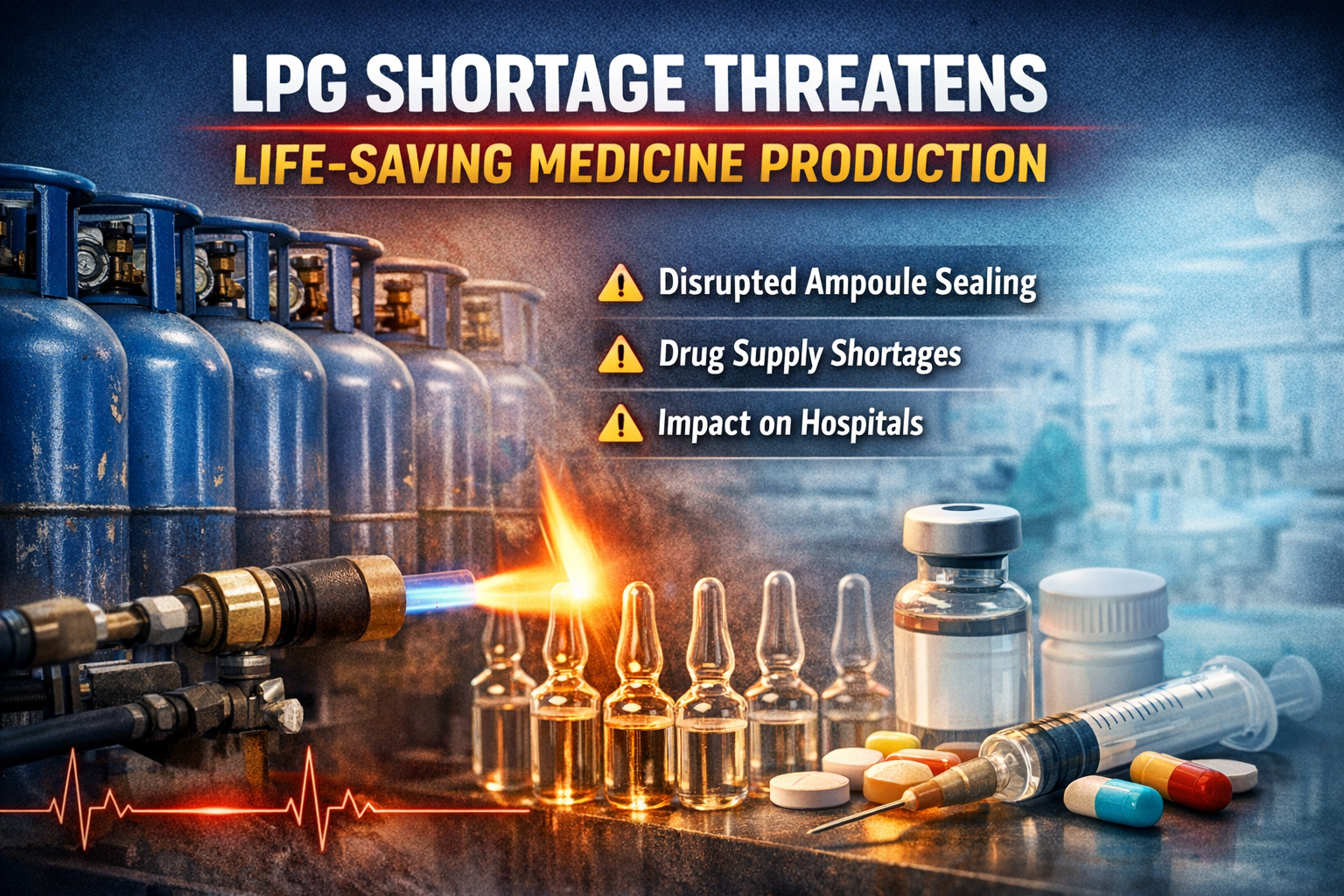
India’s pharmaceutical industry plays a crucial role in supplying essential medicines to hospitals, clinics, and healthcare facilities across the country and around the world. However, recent concerns from pharmaceutical manufacturers indicate that irregular supply of industrial LPG cylinders may disrupt the production of several life-saving drugs. Industry representatives have warned that if the situation is not resolved quickly, the shortage could affect the availability of critical medicines used in hospitals.
Importance of LPG in Pharmaceutical Manufacturing
Industrial LPG is not only used as a fuel source in manufacturing units but also plays a vital role in the packaging process of injectable medicines. Many injectable drugs are stored in glass ampoules, which must be sealed immediately after the medicine is filled to maintain sterility and prevent contamination.
To seal these ampoules, manufacturers use a high-temperature flame generated by combining LPG with oxygen. This process ensures that the glass ampoule is sealed hermetically, protecting the medicine from air exposure and maintaining its safety for medical use. Without a stable LPG supply, pharmaceutical companies cannot continue this critical step in production.
Because of this dependency, even a short-term disruption in LPG supply can slow down or completely halt the manufacturing of certain medicines.
Rising Concern Among Pharma Manufacturers
Several pharmaceutical companies have raised alarms regarding the irregular supply of industrial LPG cylinders. According to industry sources, some manufacturers have enough LPG stock for only a few days of production. If supplies are not restored quickly, the manufacturing of several essential injectable drugs could stop temporarily.
The issue has been formally highlighted by industry associations that represent pharmaceutical manufacturers. These organizations have urged government authorities to intervene and ensure an uninterrupted supply of LPG cylinders to avoid disruptions in medicine production.
Manufacturers argue that the situation is serious because injectable drugs are often used in emergency medical situations. A shortage could directly affect hospitals and healthcare providers that rely on these medicines daily.
Medicines That Could Be Affected
The potential disruption could impact several important medicines widely used in hospitals and healthcare facilities. These medicines are critical for treating serious medical conditions and post-treatment complications.
Some of the treatments that could be affected include:
-
Medicines used in malaria and falciparum infections
-
Drugs for metabolic acidosis treatment
-
Injectable medicines for nausea and vomiting
-
Post-surgery and chemotherapy-related treatments
Many of these drugs are administered in emergency settings or critical care environments. As a result, even a short supply interruption could create challenges for healthcare providers managing patients in hospitals.
Production Requirements for LPG Cylinders
Pharmaceutical manufacturers require a consistent monthly supply of industrial LPG cylinders to maintain normal production levels. In many cases, a single manufacturing facility may need multiple cylinders each month to keep packaging and sealing operations running smoothly.
These cylinders are specifically used for generating the flame required in ampoule sealing machines. Without them, companies cannot complete the final packaging stage of injectable medicines.
The challenge becomes more serious when supply disruptions occur without prior notice. Manufacturing lines that depend on continuous processes can face delays, leading to production backlogs and delayed medicine shipments.
Impact on Hospitals and Healthcare Facilities
If LPG shortages continue for an extended period, hospitals and healthcare facilities could experience reduced availability of certain injectable medicines. Since these medicines are often used in emergency treatments, maintaining an uninterrupted supply chain is essential.
Healthcare providers rely heavily on pharmaceutical manufacturers to ensure that medicines are available when needed. Any disruption at the manufacturing stage can eventually affect hospital inventories, patient treatment schedules, and emergency medical care.
In extreme situations, shortages may force hospitals to look for alternative medicines or adjust treatment plans, which may not always be ideal for patient care.
Lessons From the Pandemic
During the COVID-19 pandemic, governments and healthcare authorities implemented special policies to ensure priority access to essential industrial gases and raw materials for pharmaceutical companies. These measures helped maintain uninterrupted production of critical medicines during a global health crisis.
Industry experts believe a similar approach may be required now to ensure that manufacturers producing essential medicines receive priority access to industrial LPG supplies. Such measures could help stabilize the production process and avoid shortages in the healthcare system.
Strengthening the Pharma Supply Chain
The current situation highlights the importance of strengthening supply chains in pharmaceutical manufacturing. Essential resources like industrial gases, packaging materials, and energy supplies must remain consistently available to ensure stable medicine production.
To avoid future disruptions, experts suggest several possible steps:
-
Ensuring priority allocation of LPG cylinders for pharmaceutical manufacturing
-
Creating emergency reserve supplies for critical production processes
-
Improving coordination between gas suppliers and pharmaceutical companies
-
Implementing policy support for essential drug manufacturers
By strengthening supply chains and improving coordination among stakeholders, the pharmaceutical sector can reduce the risk of production interruptions.
Conclusion
The pharmaceutical industry depends on a complex supply chain that includes raw materials, packaging resources, and industrial gases. The recent concerns about low LPG supply affecting injectable medicine production highlight how even a single resource shortage can impact the healthcare system.
Ensuring a consistent supply of industrial LPG cylinders is essential for maintaining the production of life-saving medicines. With timely intervention, improved coordination, and supportive policies, the pharmaceutical sector can continue delivering essential treatments to hospitals and patients without disruption.