
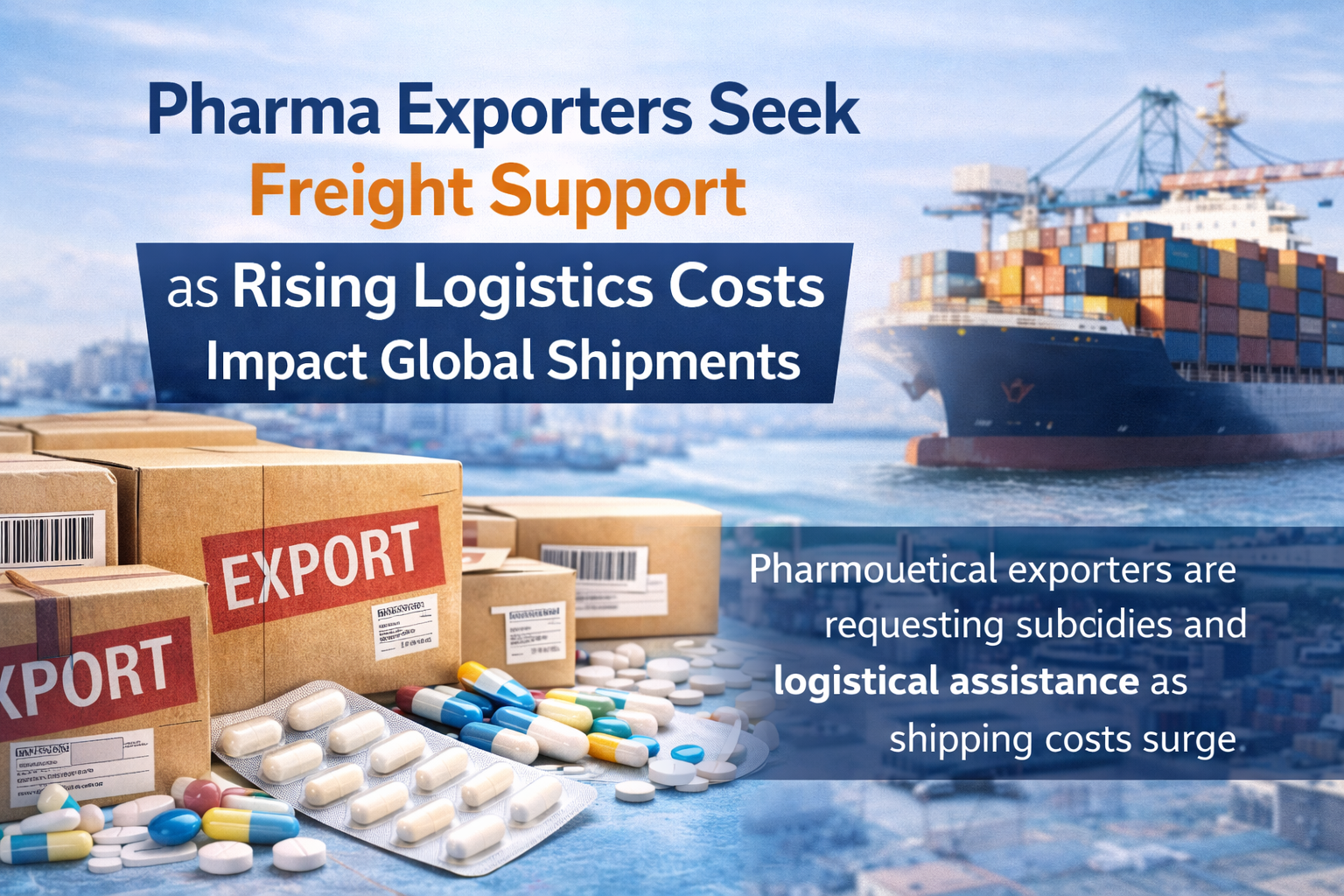
India’s pharmaceutical export sector plays a vital role in supplying affordable medicines to countries across the world. However, recent geopolitical tensions and disruptions in international shipping routes have created new challenges for pharmaceutical exporters. Rising freight charges and logistical hurdles are increasing the cost of exporting medicines, prompting industry stakeholders to seek government support to maintain global competitiveness.
As transportation expenses surge, exporters are requesting freight incentives and improved logistics infrastructure to ensure smooth and cost-effective delivery of pharmaceutical products to international markets.
Growing Importance of Pharmaceutical Exports
India has established itself as one of the leading suppliers of generic medicines and pharmaceutical products worldwide. The country exports medicines to more than 200 nations, including several developing and emerging economies that depend on affordable drug supplies.
The pharmaceutical export sector contributes significantly to the national economy while strengthening India’s position as a reliable healthcare partner for many countries. However, maintaining a strong export ecosystem requires stable shipping networks, efficient logistics, and competitive freight costs.
When transportation expenses increase sharply, exporters face challenges in sustaining profit margins while maintaining affordable product pricing in international markets.
Impact of Rising Freight Costs
Freight charges have risen substantially in recent months due to disruptions in global shipping routes and limited availability of container vessels. Escalating tensions in certain regions have affected maritime trade corridors, forcing shipping companies to adopt alternative routes that are longer and more expensive.
For pharmaceutical exporters, these changes mean higher transportation expenses and longer delivery times. Increased fuel costs, port congestion, and insurance charges have also contributed to the overall rise in shipping expenses.
Since pharmaceutical exports rely heavily on timely and temperature-controlled logistics, even minor disruptions can impact supply schedules and increase operational costs.
Request for Freight Subsidies
To address these challenges, industry representatives are urging policymakers to introduce freight subsidies and supportive measures for exporters. Freight incentives can help offset rising transportation costs and enable exporters to remain competitive in global markets.
Government support in the form of logistical assistance and financial incentives could help stabilize export operations, particularly for small and medium-sized pharmaceutical manufacturers that may struggle to absorb additional shipping expenses.
Such initiatives may also help maintain India’s reputation as a reliable supplier of essential medicines across international markets.
Exploring Alternative Shipping Routes
In response to the ongoing logistical disruptions, many pharmaceutical exporters are exploring alternative shipping routes to avoid affected regions. While these routes help maintain trade continuity, they often involve longer transit times and higher operational costs.
Exporters are also coordinating closely with logistics partners to identify more efficient transportation strategies. These include optimizing shipment schedules, consolidating cargo, and improving coordination with international shipping agencies.
Although these strategies help manage short-term disruptions, long-term solutions require stronger logistics infrastructure and policy support.
Increasing Buffer Stocks for Supply Stability
To reduce the risk of supply interruptions, pharmaceutical exporters are also increasing their inventory levels and building buffer stocks of finished products and raw materials. Maintaining additional inventory helps companies respond quickly to unexpected shipping delays or supply chain disruptions.
However, storing larger inventories also requires additional investment in warehousing and inventory management systems. For many companies, this adds another layer of operational cost on top of rising freight expenses.
Despite these challenges, exporters are taking proactive steps to ensure that global medicine supplies remain uninterrupted.
Strengthening Logistics Infrastructure
The current situation highlights the importance of strengthening logistics infrastructure within the pharmaceutical export ecosystem. Efficient ports, reliable shipping networks, and advanced cargo handling systems can significantly reduce transportation delays and costs.
Investments in cold chain logistics, cargo tracking systems, and faster customs clearance processes can further enhance the efficiency of pharmaceutical exports. Improving these areas can help exporters respond more effectively to global disruptions and maintain steady supply chains.
A strong logistics network is essential not only for export growth but also for maintaining the quality and safety of pharmaceutical products during transit.
Importance of Policy Support
Supportive policies play a critical role in sustaining export growth during challenging economic conditions. Financial incentives, freight assistance programs, and export promotion initiatives can help manufacturers manage rising operational costs while continuing to serve international markets.
Strategic collaboration between industry stakeholders and policymakers can lead to solutions that protect the competitiveness of pharmaceutical exports. These measures can also encourage further investment in pharmaceutical manufacturing and supply chain infrastructure.
By addressing logistical challenges proactively, policymakers can help ensure that the pharmaceutical sector continues to contribute to global healthcare accessibility.
Future Outlook for Pharmaceutical Exports
Despite the current logistical challenges, the long-term outlook for pharmaceutical exports remains positive. Global demand for affordable and high-quality medicines continues to grow, creating opportunities for exporters to expand their presence in international markets.
Advancements in manufacturing technology, research capabilities, and supply chain management will further strengthen the sector’s growth potential.
However, adapting to changing global trade conditions will remain essential. Companies must continue investing in supply chain resilience, logistics optimization, and diversified shipping strategies to maintain stability during uncertain periods.
Conclusion
Rising freight costs and logistical disruptions are creating new challenges for pharmaceutical exporters. As shipping expenses increase and global trade routes face uncertainty, exporters are seeking freight support and logistical assistance to maintain their competitiveness in international markets.
At the same time, companies are adapting by exploring alternative shipping routes and increasing inventory levels to ensure uninterrupted medicine supplies. With the right combination of policy support, infrastructure development, and industry innovation, the pharmaceutical export sector can overcome these challenges and continue playing a crucial role in global healthcare supply chains.