
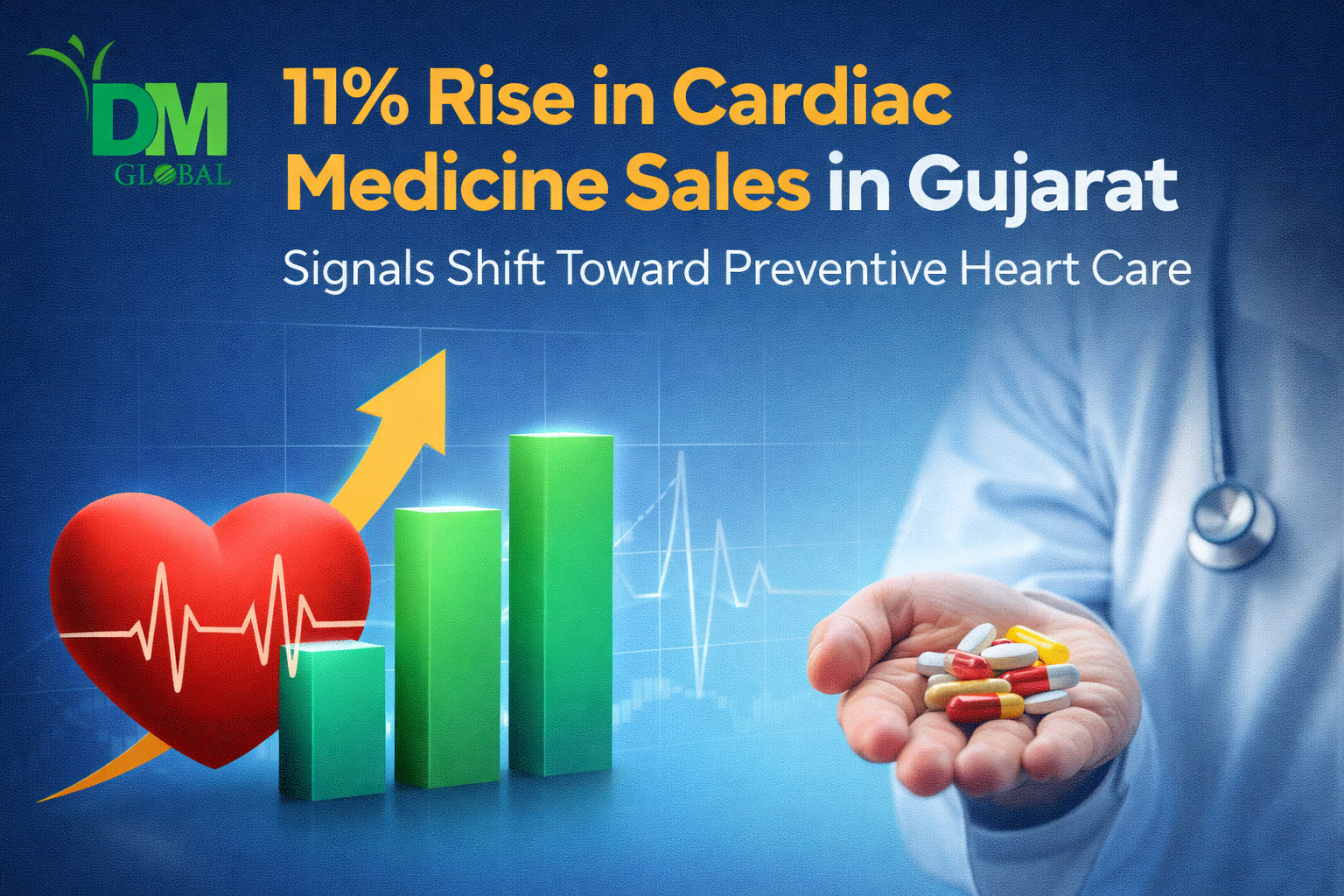
India is witnessing a silent but significant transformation in the way cardiovascular diseases (CVDs) are being managed. Recent data highlights that Gujarat has recorded an 11% year-on-year increase in cardiac medicine sales, reflecting not only a rise in cardiovascular episodes but also a fundamental shift in treatment strategies. This trend points toward a growing emphasis on early risk control, preventive therapy, and long-term disease management, rather than reactive treatment after major cardiac events.
Cardiac Drug Market Growth: What the Numbers Reveal
According to industry sales data, the moving annual total (MAT) value of cardiac therapy drugs in Gujarat reached ₹1,731 crore, compared to ₹1,557 crore during the same period last year. This growth is substantial and indicates increasing demand for cardiovascular medications across the state.
However, the rise in sales is not solely driven by emergency treatments for heart attacks or acute episodes. Instead, the expansion is largely anchored in chronic cardiovascular risk management, suggesting that physicians are focusing more on preventing complications before they arise.
Anti-Hypertensives and Lipid-Lowering Drugs Dominate the Market
A closer look at the sales mix shows that anti-hypertensive and lipid-lowering drugs together contribute over 70% of total cardiac therapy sales value. Among these, anti-hypertensive medications remain the largest segment, crossing ₹830 crore MAT, while lipid-lowering agents account for approximately ₹420 crore MAT.
This dominance highlights two major realities:
-
Hypertension remains one of the most widespread cardiovascular risk factors.
-
Lipid control is increasingly being recognized as a critical component of heart disease prevention.
The growing reliance on these therapies signals a shift from short-term symptom management to long-term cardiovascular protection.
Shift from Single-Drug Therapy to Combination Treatments
One of the most notable changes in prescription behavior over the last few years has been the move away from single-drug therapy, especially in hypertension management. Between 2021 and 2025, clinicians have increasingly adopted dual and triple fixed-dose combinations (FDCs) even for patients in earlier stages of the disease.
These combinations often involve:
-
Angiotensin receptor blockers paired with calcium channel blockers
-
Beta-blockers combined with other antihypertensive agents
-
Diuretics added to improve blood pressure control
What was once reserved for resistant or severe hypertension is now being prescribed earlier to ensure tighter control and reduce long-term cardiovascular and renal complications.
Why Early Combination Therapy Is Gaining Preference
The shift toward combination therapy is driven by multiple clinical and practical factors. Cardiovascular disease is multifactorial, meaning that controlling just one parameter is often insufficient. Blood pressure, lipid levels, inflammation, and platelet aggregation all contribute to disease progression.
Combination therapies offer several advantages:
-
Better blood pressure and lipid control
-
Reduced pill burden, improving patient compliance
-
Faster achievement of therapeutic targets
-
Lower risk of treatment failure over time
Rather than waiting for monotherapy to fail, clinicians are proactively tightening control to prevent hospitalizations, disease progression, and costly interventions later.
Decline of Older Standalone Therapies
Alongside the rise of combination treatments, there has been a steady decline in reliance on older standalone therapies, including traditional ACE inhibitors and earlier generations of beta-blockers. While these drugs still have clinical value, prescription trends indicate a preference for modern regimens that provide broader and more consistent control.
This evolution reflects growing clinical evidence supporting early, aggressive management of cardiovascular risk factors, especially in patients with diabetes, obesity, or a family history of heart disease.
Lipid Management: From Single Statins to Target-Driven Therapy
Lipid management in Gujarat is also undergoing a major transformation. Prescriptions are increasingly focused on achieving specific LDL-cholesterol targets, rather than simply prescribing statins as a standalone solution.
Newer prescription patterns include:
-
Statins combined with antiplatelet agents
-
Add-on lipid-lowering therapies for high-risk patients
-
Greater emphasis on combination lipid control
This approach aligns with global guidelines that recommend individualized, target-driven lipid management to reduce long-term cardiovascular risk.
Implications for the Pharmaceutical Industry
The evolving treatment landscape presents significant opportunities for pharmaceutical manufacturers and distributors. Demand is shifting toward high-quality fixed-dose combinations, chronic therapy medicines, and consistently reliable formulations.
To meet these expectations, collaboration with a dependable pharma contract manufacturing company becomes essential. Such partnerships help ensure:
-
Regulatory compliance
-
Consistent quality and efficacy
-
Scalable production for chronic therapy drugs
👉 Learn more about the importance of working with a trusted pharma contract manufacturing company
Role of Monopoly-Based Distribution Models
With the rise in long-term cardiovascular therapy, structured distribution models are gaining relevance. A monopoly medicine company in India allows for better territory control, streamlined supply chains, and improved accountability. This model supports faster recalls, better stock monitoring, and stronger relationships with healthcare professionals.
👉 Explore the benefits of partnering with a monopoly medicine company in India
Conclusion
The 11% rise in cardiac medicine sales in Gujarat is more than a market statistic—it reflects a paradigm shift in cardiovascular care. Physicians are prioritizing early intervention, combination therapy, and preventive strategies to reduce long-term complications and improve patient outcomes.
As demand for chronic cardiac therapies continues to grow, pharmaceutical companies must focus on quality manufacturing, innovative combinations, and reliable distribution models. DM Pharma Global stands aligned with this evolving healthcare approach by emphasizing quality-driven manufacturing and sustainable pharma business practices that support modern cardiac care in India.